German
 Japanese
 Portuguese
 Korea
 Mexico
 Dutch


Step-by-Step Guide on Installing SSDs on Your PC

What are SSDs?

SSDs (Solid-State Drives) are hard drives using flash storage. As opposed to the spinning platters of HDDs (Hard Disk Drives), there are no moving parts at all in an SSD. Flash memory is simply a very fast form of memory, often implemented using MOS transistors or a form of MOSFETs – MOS-controlled field effect transistors.
Video related to SSDs
What do SSDs do?
The truth is, that SSDs do perform the same task as HDDs. But while the former used to be slower than the latter, they are essentially on par now that they have shed, for the most part, their moving parts. It’s about efficiency.
When were SSDs Invented?
The flash memory itself is a concept from the 1970s, but the first commercial SSDs surfaced only in the late 1990s. In the intervening years, SSD technology has become more affordable and reliable to use every day.
How are SSDs Made?
SSDs consist of several key components:
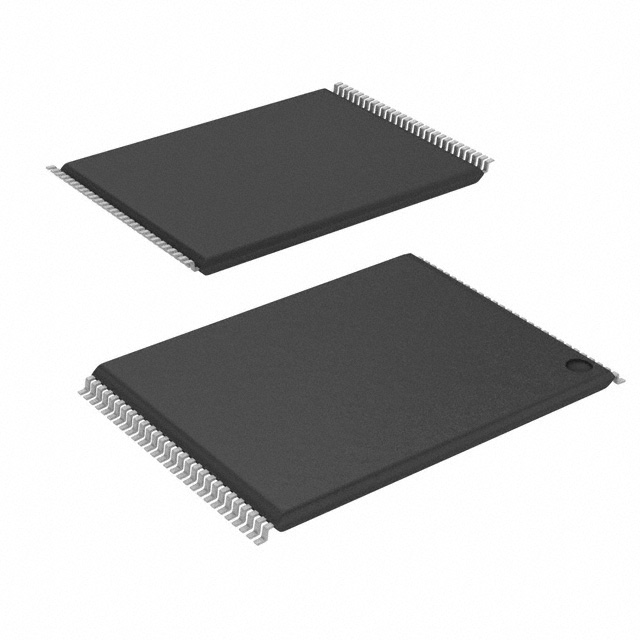
- Flash Memory Chips: These chips store the actual data. Different types of flash memory exist, with NAND flash being the most common in consumer SSDs.
- Controller: The controller acts as the brain of the SSD, managing data transfer and ensuring optimal performance.
- Firmware: Built-in software that controls the operation of the SSD, including wear leveling and garbage collection.
- PCB (Printed Circuit Board): Holds all the components together.
How do SSDs Work?
- Data Request: Your computer asks for a file stored on the SSD.
- Flash Controller Takes Charge: The SSD's brain, the flash controller, locates the data's place within the flash memory cells.
- Reading the Data: The controller electronically reads the data from the specific cells.
- Translation Time: The controller translates the data from the flash memory format into a language your computer understands.
- Data Delivery: The retrieved data is delivered to your computer's RAM for further use.
How do SSDs Store Data?
Data on an SSD is stored in interconnected flash memory cells. Each cell contains a floating gate that traps electrons to represent a binary state (1 or 0). By manipulating the presence or absence of electrons, the SSD stores and retrieves digital information.
How Many SSDs Can a PC Have?
The number of SSDs a PC can accommodate depends on the available storage bays and SATA or M.2 slots on the motherboard. Most desktops have space for at least two drives, allowing you to use an SSD for your operating system and programs and an HDD for bulk storage.
How to Install SSD on Your PC?
Before You Begin:
- Gather your tools: In that regard, you would require the screwdriver, which can match that of your computer's case screws, and if you do not have any extra SATA cables, you would have to use them from your motherboard.
- Back up your data: This will serve as the foundation! Copy all the important files to an external drive outside the period of installation.
- Check compatibility: Check to ensure that the motherboard can support the new SSD, which will be used. Nowadays, motherboards can facilitate PCI-Express or SATA III connections for SSDs. However, before you make any decision, please refer to either your motherboard's manual or the manufacturer's website.
- Identify SSD type: There are currently two types of SSDs available on consumer PCs for the Market:
- 2.5-inch SATA SSD: It is universal and uses an analog SATA interface like the conventional HDDs.
- M.2 NVMe SSD: The storage devices often coming in the form of SSDs, will use the slot called M.2 for connecting directly to the motherboard. Hence, the speed of SSDs is much faster.
Installation Steps:
- Power Down and Disconnect: Switch off your computer and detach it from the electricity supply. And, it is advisable to also remove the battery from your laptop (if it is battery-operated).
- Open the Case: Proceed to locate the case screws and then loosen them or remove them to expose the side panel of your desktop PC. For laptops, have a look at your model’s product guide or instructions thereof separately.
- Locate Storage Bay: Locate the storage bay where the SSD has to be fitted. Most desktop multibays have room for 2.5-inch drives installed in them. M.2 slots are mostly positioned near the central processor on the motherboard.
- Remove Existing Drive (Optional): If you're updating an existing HDD, de-connect the data and power cables as well as loosen up the mounting brackets.
- Install the SSD: For a 2.5-inch SATA SSD, first, secure it with the mounting screws that came together, or better use the older HDD brackets. For this step, you should insert the M.2 drive into the corresponding slot at a slight angle, then screw it down to ensure it does not fall.
- Connect the Cables: Attach an unallocated SATA cable from the SSD to an available SATA port on the motherboard. As well as this, link a SATA power cable from your power supply to the SSD's power connection. Instead, M.2 NVMe SSDs work without additional cables they directly connect to the motherboard slot only.
- Close the Case: Go over that every cable is plugged in properly and nowhere in the way of any fans or components. Be sure to take special care when attaching the case and tightening it up.
- Boot Up and Install OS (Optional): If you have the SSD as the main storage or for instance, you already have the operating system (OS) installed on it, you must reinstall your OS onto it. Installation of Operating systems is of many kinds, refer to the website of your OS supplier for specific instructions. However, you might come to use cloning software to migrate your current OS from the HDD to the SSD instead.
Can SSDs Go Bad?
As with any ceramic device, SSDs can fail as well. But, this risk is very low on the other hand. Generally, producers take Mean Time Between Failures (MTBF) as a measure of the lifetime before which a probable failure may take place.
How Long do SSDs Last?
The life cycle of an SSD (Solid-State Drive) depends on many factors, but the normal, typical operation should produce a service life exceeding five years (often much more) until it fails.
Are SSDs Faster than HDDs?
Yes. Considering the importance of new technologies, SSDs can read and write the data up to 10 times faster than HDDs. This in turn means shorter up-time seconds, less waiting for an app to open, and superior system performance.
Where are SSDs Used?
SSDs are becoming increasingly popular for various applications, including:
- Personal Computers: Desktops and notebooks are greatly improved in performance through the interface of SSDs.
- Gaming PCs: As gamers prefer fast games and support systems, SSDs remain a fan favorite.
- Laptops: SSDs are a main source of the extended battery life and responsiveness improvement of laptops.
- Workstations: Some of the people who work with very demanding applications also get advantages from the disc storage device of the SSD.
Conclusion
The process described above will facilitate the successful installation of an SSD on your PC, especially if it has the performance enhancement you have been looking for. The virtually instantaneous startup of the PCs, faster loading of the applications, and increased responsiveness with substituted hard drives will transform your whole computing experience. To know more and for support and troubleshooting kindly reach the SSD website or online forum communities.

Related Articles
- ·Qualcomm PM8550 vs. PM8550B vs. PM8550VS: Features, Differences, Applications, and Selection Guide
- ·Qualcomm PM8350 vs. PM8350C: Architecture, Features, Applications, and Selection Guide
- ·Qualcomm PM8150 vs. PM8150B vs. PM8150L: Functions, Architecture, Applications, and Selection Guide
- ·SGM41541 vs. SGM6605: Battery Charger and Synchronous Boost Converter Comparison
- ·ADI LTM4630A vs. LT8645S: Power Module and Silent Switcher Regulator Comparison
- ·Richtek RT8206A vs. RT9013: Architecture, Specifications, Applications, and Design Considerations
- ·MPS MP2657, MPQ6610GJ-AEC1-Z, and MP2856: Identification, Functions, and Application Comparison
- ·TPS6594-Q1 vs. TPS65219-Q1 vs. TPS653860-Q1 vs. LP87745-Q1: TI Automotive PMIC Comparison
- ·Electronic Components Monthly Market Report
- ·MediaTek MT6369, MT6360, MT6365, and MT6375: Functions, Architecture, and Selection Guide