German
 Japanese
 Portuguese
 Korea
 Mexico
 Dutch


Thyristor vs Transistor: Understanding the Power Players in Electronics

What is a Thyristor?
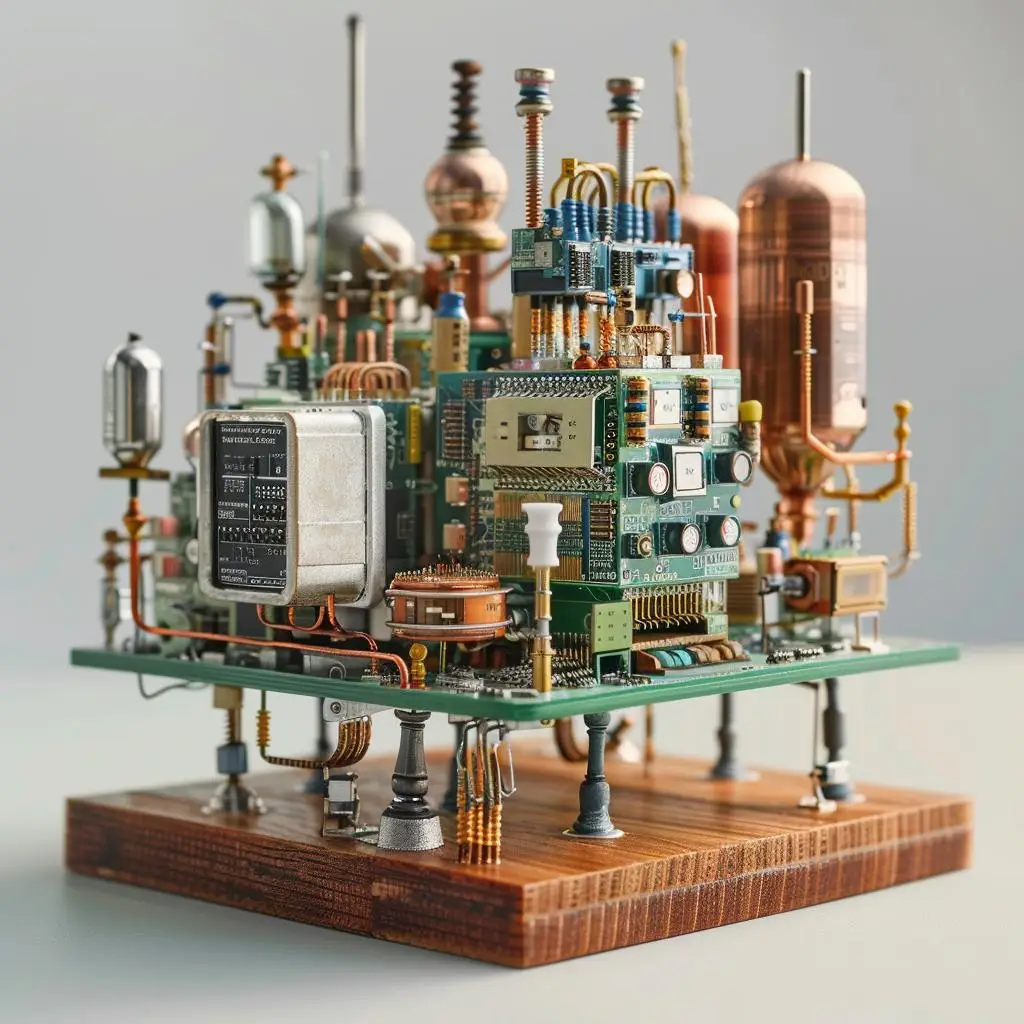
A Thyristor is a three-terminal, latching semiconductor device that only permits current to flow from anode to cathode in response to an applied trigger signal to its gate. Once triggered, it stays locked "on" and continues to conduct until the current falls below a certain threshold (holding current), even if the gate signal is removed.
Video related to Thyristor
What is a Transistor?

The Transistor, a three-terminal marvel invented in 1947 by Bell Labs researchers, revolutionized electronics. With a little current at its base, it functions as a variable resistor to switch or amplify electrical signals by regulating the current flowing between its collector and emitter. Transistors have several on/off settings, in contrast to thyristors.
When were Transistors Invented?
Three Bell Labs researchers, Walter Brattain, William Shockley, and John Bardeen, came up with the idea for the transistor in 1947. Through their inventive efforts, the field of electronics was transformed, opening the door to greater processing capacity, miniaturization, and the creation of contemporary technology.
What does Thyristor do?
The thyristor functions as a highly robust and switchable diode. Here's an overview of its main functions:
Current Flow Control: Thyristors allow electric current to flow in one direction (ahead), but considerably inhibit current flow in the opposing direction. They act similarly to ordinary diodes for forward current flow. Unlike normal diodes, thyristors have a control gate that may be "turned on" or "triggered" to start the current flow in the forward direction.
High Power Handling: Thyristors can manage large quantities of voltage and current, making them ideal for high-power applications. When it comes to power handling capacity, they outperform ordinary transistors.
Switching Applications: Thyristors are commonly utilized in switching applications because they can be turned on and off with a control signal. They can be used to regulate the power supplied to a variety of loads, including motors, lighting systems, and power converters.
Here are some real-world examples of how to use thyristors:
AC Motor Speed Control: Thyristors can be used in AC motor drives to control the speed of the motor by adjusting the voltage delivered to it.
Power Transmission: High-voltage direct current (HVDC) power transmission systems frequently use thyristors to convert alternating current (AC) to direct current (DC) for efficient transmission over long distances.
Light Dimmers: Thyristors control the portion of the AC waveform that reaches the lamp, allowing the brightness level to be adjusted effectively.
Overall, thyristors play an important part in many power control applications because of their capacity to handle high power, switch currents effectively, and be turned on and off using a control signal. They are a key component in many industrial and commercial systems that require precision power management.
What does a Transistor do?
The Transistor functions as an electronic valve, controlling the passage of electrical current. Here's an overview of its main functions:
Current Amplification: One of a transistor's principal functions is to magnify a modest electrical signal (input current) into a much larger output current. This amplification is useful for a variety of purposes, such as amplifying signals for transmission or powering large electronic components.
Switching: Transistors can also serve as electronic switches. A modest control voltage can be applied to a specific terminal (the base) to switch the transistor "on" (allowing current to flow) or "off" (blocking current flow) in the main circuit route. They are required for digital circuits and logic processes due to their switching capacity.
Signal Regulation: Transistors can regulate or control the strength of an electrical signal. By varying the control voltage given to the base, the amount of current permitted to pass through the transistor can be varied, thereby changing the output signal strength.
Here's a simplistic analogy to explain how a transistor works: Consider a water faucet with a smaller valve. The little valve (the transistor's base) controls the flow of current (water) via the main opening (the channel between the collector and emitter). A weak signal sent to the little valve can control a significantly bigger volume of water.
How Thyristors Work?
Think of a cake: Three slices (anode, cathode, and gate) and four layers (semiconductor).
Start "closed": The anode and cathode are not connected by current.
Start the gate: The resistance is lowered when a positive pulse "opens the gate".
The device is turned "on" as current flows from the anode to the cathode.
Latching: Maintains its "on" state in the absence of a trigger pulse.
Remain "on" as long as The current exceeds a predetermined threshold (holding current).
Cut off: Use reverse voltage or cut current below the holding level.
How do Transistors Work?
Think of a faucet: Base, Collector, and Emitter are the three handles.
Start "closed": There is no current flowing via the emitter and collector.
Turn the base handle: As you turn the base handle, Resistance is lowered when a small current "opens the valve".
Water flow: When the gadget is turned "on," water flows from the collector to the emitter.
Control flow: Increase the collector-emitter current to control the flow of water by increasing the base current.
Turn off: Lower the base current, shut off the valve, and stop the water.
Where are Thyristors Used?
Battery chargers: regulating currents during charging to ensure safe and effective battery operation.
Induction heating: In industrial processes, high-frequency currents are generated to heat metal.
Static synchronous compensators (STATCOMs): Enhancing transmission grid stability and power quality.
Solid-state relays: They offer high-power switching without deteriorating mechanically.
Where are Transistors Used?
Motor speed control: Modulating the phase-angle control with thyristors that regulate the power supplied to AC motors.
Dimming circuits: Using thyristors to control the power supplied to lamps, precisely control the amount of light.
Battery chargers: Using thyristors to provide lead-acid and other battery types with controlled charging currents.
Power supplies: A variety of power supply devices use thyristors to rectify and convert AC electricity to DC.
Circuit protection: To protect circuits from damaging current surges, thyristors are used as overcurrent protection devices.
Thyristor vs Transistor
|
Feature |
Thyristor |
Transistor |
|
Current flow direction |
Unidirectional (anode to cathode) |
Bidirectional (collector to emitter) |
|
Control mechanism |
Latching with a single trigger |
Variable control with base current |
|
Power handling |
High |
Low to medium |
|
Switching speed |
Slower |
Faster |
|
Applications |
High-power control, overcurrent protection |
Amplification, switching, signal processing |
Mosfet vs Transistor
Both MOSFETs and transistors are versatile electronic workhorses, but they have distinct strengths:
MOSFETs: Having a high input impedance makes them perfect for circuits with high impedance, such as amplifiers. Their efficient switching capabilities also make them excellent choices for low-power applications.
Transistors: BJTs have a greater capacity to handle current and are frequently chosen for high-power applications such as motor control.
Relay vs Transistor
Relays and transistors serve as electronic switches, but with key differences:
Relays: Relays are mechanical devices that include movable contacts that provide high voltage/current management and circuit separation. They can, however, become worn out with time and have decreased switching speeds.
Transistors: Solid-state, no-moving-parts electronics that enable quicker switching and more compact designs. In general, they are not appropriate for applications requiring high voltage or high current.
Diode vs Transistor
Diodes and transistors both handle current flow, but in distinct ways:
Diodes: Serve as one-way valves by allowing current to flow only in one direction. Compared to transistors, these are less complex devices with less functionality.
Transistors: Provide variable control over current flow, allowing for functions such as switching, amplification, and signal processing that go beyond the basic diode rectification function.
Conclusion
In the world of electronics, transistors and thyristors are distinct entities, despite their frequent association. Transistors provide flexibility in signal processing, switching, and amplification, while thyristors are the industry standard for high-power control and latching applications. Knowing these power players' applications and differences will enable you to explore the intriguing world of these influential figures and make well-informed decisions for your electronic projects.

Related Articles
- ·Qualcomm PM8550 vs. PM8550B vs. PM8550VS: Features, Differences, Applications, and Selection Guide
- ·Qualcomm PM8350 vs. PM8350C: Architecture, Features, Applications, and Selection Guide
- ·Qualcomm PM8150 vs. PM8150B vs. PM8150L: Functions, Architecture, Applications, and Selection Guide
- ·SGM41541 vs. SGM6605: Battery Charger and Synchronous Boost Converter Comparison
- ·ADI LTM4630A vs. LT8645S: Power Module and Silent Switcher Regulator Comparison
- ·Richtek RT8206A vs. RT9013: Architecture, Specifications, Applications, and Design Considerations
- ·MPS MP2657, MPQ6610GJ-AEC1-Z, and MP2856: Identification, Functions, and Application Comparison
- ·TPS6594-Q1 vs. TPS65219-Q1 vs. TPS653860-Q1 vs. LP87745-Q1: TI Automotive PMIC Comparison
- ·Electronic Components Monthly Market Report
- ·MediaTek MT6369, MT6360, MT6365, and MT6375: Functions, Architecture, and Selection Guide