German
 Japanese
 Portuguese
 Korea
 Mexico
 Dutch


The Explanation of Neural Processing Unit (NPU)

What is a Processing Unit?
A processing unit, also known as a central processing unit (CPU), is a fundamental component of a computer system responsible for executing instructions and performing calculations. It is often referred to as the "brain" of the computer. The CPU performs a wide range of tasks, including interpreting and executing program instructions, managing data storage and retrieval, and coordinating communication between different hardware components.
The primary function of a processing unit is to process and manipulate data. It carries out this task by performing a series of basic operations, such as arithmetic calculations, logical comparisons, and data movements.
Types of Processing Units
Below I list some common types of processing units:
Central Processing Unit (CPU): The main "brain" of a computer that handles general computing tasks like running programs, performing calculations, and managing data.
Graphics Processing Unit (GPU): Specialized for handling graphics-related tasks, such as rendering images and videos, and commonly used in gaming and visual applications.
Digital Signal Processor (DSP): Designed for processing digital signals like audio and video, often used in devices like smartphones, digital cameras, and audio equipment.
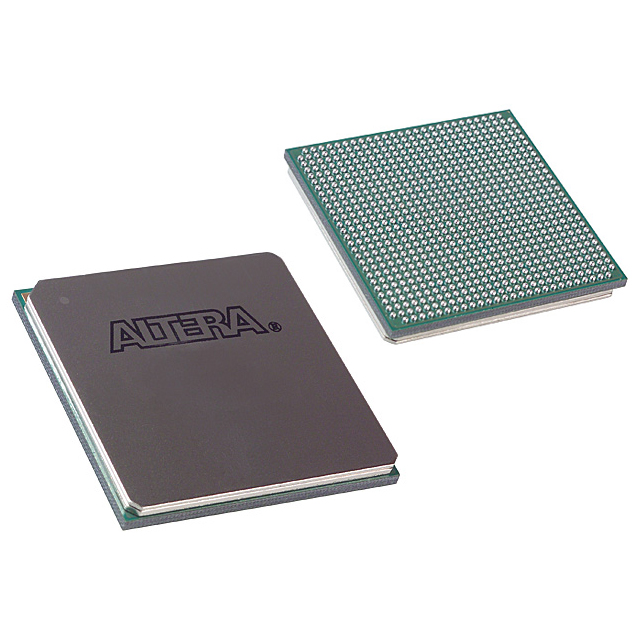
Field-Programmable Gate Array (FPGA): A customizable processing unit that can be programmed to perform specific tasks, often used in applications requiring high-performance computing and real-time processing.
Application-Specific Integrated Circuit (ASIC): Custom-designed for a specific function or task, offering high performance and efficiency, but not reprogrammable. Used in specialized fields like cryptography and network processing.
Neural Processing Unit (NPU): Optimized for accelerating artificial intelligence and machine learning tasks, such as facial recognition and language processing.
Now let’s move on to the Neural Processing Unit (NPU), and I will explore it step by step.
What is a Neural Processing Unit?
A Neural Processing Unit (NPU) is a specialized processing unit designed to accelerate artificial intelligence (AI) and machine learning (ML) tasks. It is specifically optimized to handle the computational requirements of neural networks, which are a fundamental component of many AI and ML algorithms.
Neural networks are mathematical models inspired by the human brain, consisting of interconnected nodes or "neurons" that process and transmit information. These networks are used for tasks such as image recognition, natural language processing, speech recognition, and recommendation systems.
The NPU is designed to efficiently execute the complex mathematical operations required by neural networks. It employs parallel processing techniques to perform multiple calculations simultaneously, which significantly speeds up the execution of AI and ML algorithms.

The Features of the Neural Processing Unit
Neural Processing Units possess several key features that enable them to efficiently accelerate artificial intelligence (AI) and machine learning (ML) tasks. Here are some of the notable features of NPUs:
Parallel Processing: NPUs can perform multiple calculations simultaneously, speeding up computations for neural networks.
Fast Matrix Operations: NPUs are optimized for quick matrix operations, which are essential for neural network computations.
Deep Learning Optimization: NPUs are designed to efficiently handle the complex calculations involved in training and running deep learning models.
Low-Precision Arithmetic: NPUs can use reduced precision to process data faster and consume less power.
Power Efficiency: NPUs are built to deliver high performance while minimizing power consumption.
Integration with CPUs and GPUs: NPUs can work together with CPUs and GPUs to accelerate AI and ML tasks.
Model Compression and Pruning: NPUs can reduce the size of neural network models without sacrificing accuracy, improving memory usage and inference speed.
Neural Network Compiler and Optimizer: NPUs come with software tools that help optimize and deploy neural network models for maximum performance.
Neural Processing Unit vs GPU

Neural Processing Units (NPUs) and Graphics Processing Units (GPUs) are both specialized processing units, but they have distinct differences in their design and functionality when it comes to accelerating AI and machine learning (ML) tasks.
GPUs have traditionally been the go-to choice for accelerating neural network computations due to their parallel processing capabilities. They excel at handling large-scale parallel tasks, making them well-suited for graphics rendering and processing. GPUs consist of a large number of cores, allowing them to perform multiple calculations simultaneously. This parallelism is beneficial for running neural networks as they involves operations like matrix multiplications and convolutions that can be parallelized. GPUs are widely used for training deep learning models and performing computationally intensive tasks.
On the other hand, NPUs are specifically designed for AI and ML workloads. They are optimized to handle the computational requirements of neural networks more efficiently than GPUs. NPUs often have dedicated hardware and instruction sets tailored for neural network operations. They excel at executing the specific mathematical operations involved in neural networks, such as matrix multiplications and activation functions, with higher performance and reduced power consumption compared to GPUs.
One of the key differences between NPUs and GPUs lies in their architecture. GPUs are designed to handle a wide range of graphics and general-purpose computing tasks, providing versatility but with some overhead. NPUs, on the other hand, are purpose-built for AI and ML workloads, allowing for more specialized and optimized processing. They often feature a higher number of specialized cores, memory structures, and optimized instruction sets that are specifically tailored for neural network computations.
Another important distinction is in the memory hierarchy. GPUs typically have larger and more general-purpose memory, allowing them to handle a wide range of tasks efficiently. NPUs, however, often feature specialized memory structures, such as on-chip memory and caches, that are optimized for the specific access patterns and data requirements of neural networks. This can result in faster memory access and reduced data movement, leading to improved performance for AI and ML workloads.
While GPUs have a broader range of applications beyond AI and ML, NPUs offer advantages in terms of performance, power efficiency, and optimized hardware for neural network computations. As a result, NPUs are increasingly being integrated into devices such as smartphones, edge computing devices, and dedicated AI accelerators. However, it's worth noting that GPUs still play a crucial role in AI and ML, especially for tasks that involve graphics processing and workloads that benefit from more general-purpose parallel computing.
In summary, while GPUs have been the traditional choice for accelerating neural network computations, NPUs provide specialized and optimized hardware specifically designed for AI and ML workloads. NPUs offer advantages in terms of performance and power efficiency, leveraging dedicated hardware and optimized architectures for neural network operations. GPUs, on the other hand, provide more versatility and are still valuable for a wide range of applications, including AI and ML tasks that benefit from general-purpose parallel processing capabilities. The choice between an NPU and a GPU depends on factors such as the specific AI workload, performance requirements, power constraints, and overall system design considerations.
The Applications of Neural Processing Unit
NPUs find applications in various domains where artificial intelligence (AI) and machine learning (ML) tasks are prevalent. Here are some key areas where NPUs are commonly utilized:
Smartphones and Mobile Devices: NPUs are integrated into smartphones and other mobile devices to accelerate AI-based applications. They enhance tasks such as image recognition, natural language processing, voice assistants, augmented reality (AR), and computational photography.
Autonomous Vehicles: NPUs play a vital role in autonomous vehicles by enabling real-time perception and decision-making capabilities. They process sensor data from cameras, lidar, and radar, assisting in object detection, lane tracking, pedestrian recognition, and overall scene understanding.
Surveillance and Security Systems: NPUs are used in surveillance and security systems for tasks like facial recognition, people counting, anomaly detection, and event prediction. These capabilities enhance video analytics and improve the efficiency of security monitoring.
Robotics and Industrial Automation: NPUs are employed in robotics and industrial automation to enhance perception and control. They enable robots to recognize objects, navigate environments, perform complex tasks, and adapt to changing conditions.
Healthcare and Medical Imaging: NPUs contribute to medical imaging tasks, such as analyzing radiology images, detecting abnormalities, and aiding in diagnosis. They assist in medical research, drug discovery, and personalized medicine by accelerating data analysis and pattern recognition.
Natural Language Processing (NLP): NPUs are utilized in NLP applications, including language translation, sentiment analysis, chatbots, and voice assistants. They enable faster and more accurate understanding and generation of human language.
Data Centers and Cloud Computing: NPUs are employed in data centers and cloud computing environments to accelerate AI and ML workloads. They improve inference and training times, reducing latency and enhancing overall performance.
Internet of Things (IoT) Devices: NPUs are integrated into IoT devices to enable on-device AI processing, reducing the need for cloud connectivity and enhancing privacy and security. They support intelligent edge computing in applications like smart home devices, wearables, and industrial IoT.
Gaming and Virtual Reality (VR): NPUs can enhance gaming experiences by accelerating graphics rendering, physics simulations, and AI-based game mechanics. They also contribute to VR applications by improving immersive environments and real-time interactions.
Financial Services: NPUs are utilized in financial services for tasks such as fraud detection, risk assessment, algorithmic trading, and credit scoring. They enhance data analysis and decision-making processes in the financial domain.
Conclusion
As AI and ML continue to advance, NPUs are expected to find utility in an increasing number of industries and domains, driving innovation and enabling new possibilities for intelligent systems.

Related Articles
- ·Qualcomm PM8550 vs. PM8550B vs. PM8550VS: Features, Differences, Applications, and Selection Guide
- ·Qualcomm PM8350 vs. PM8350C: Architecture, Features, Applications, and Selection Guide
- ·Qualcomm PM8150 vs. PM8150B vs. PM8150L: Functions, Architecture, Applications, and Selection Guide
- ·SGM41541 vs. SGM6605: Battery Charger and Synchronous Boost Converter Comparison
- ·ADI LTM4630A vs. LT8645S: Power Module and Silent Switcher Regulator Comparison
- ·Richtek RT8206A vs. RT9013: Architecture, Specifications, Applications, and Design Considerations
- ·MPS MP2657, MPQ6610GJ-AEC1-Z, and MP2856: Identification, Functions, and Application Comparison
- ·TPS6594-Q1 vs. TPS65219-Q1 vs. TPS653860-Q1 vs. LP87745-Q1: TI Automotive PMIC Comparison
- ·Electronic Components Monthly Market Report
- ·MediaTek MT6369, MT6360, MT6365, and MT6375: Functions, Architecture, and Selection Guide