German
 Japanese
 Portuguese
 Korea
 Mexico
 Dutch


Demystifying Thyristors: What They Do and How They Work

What is a Thyristor?
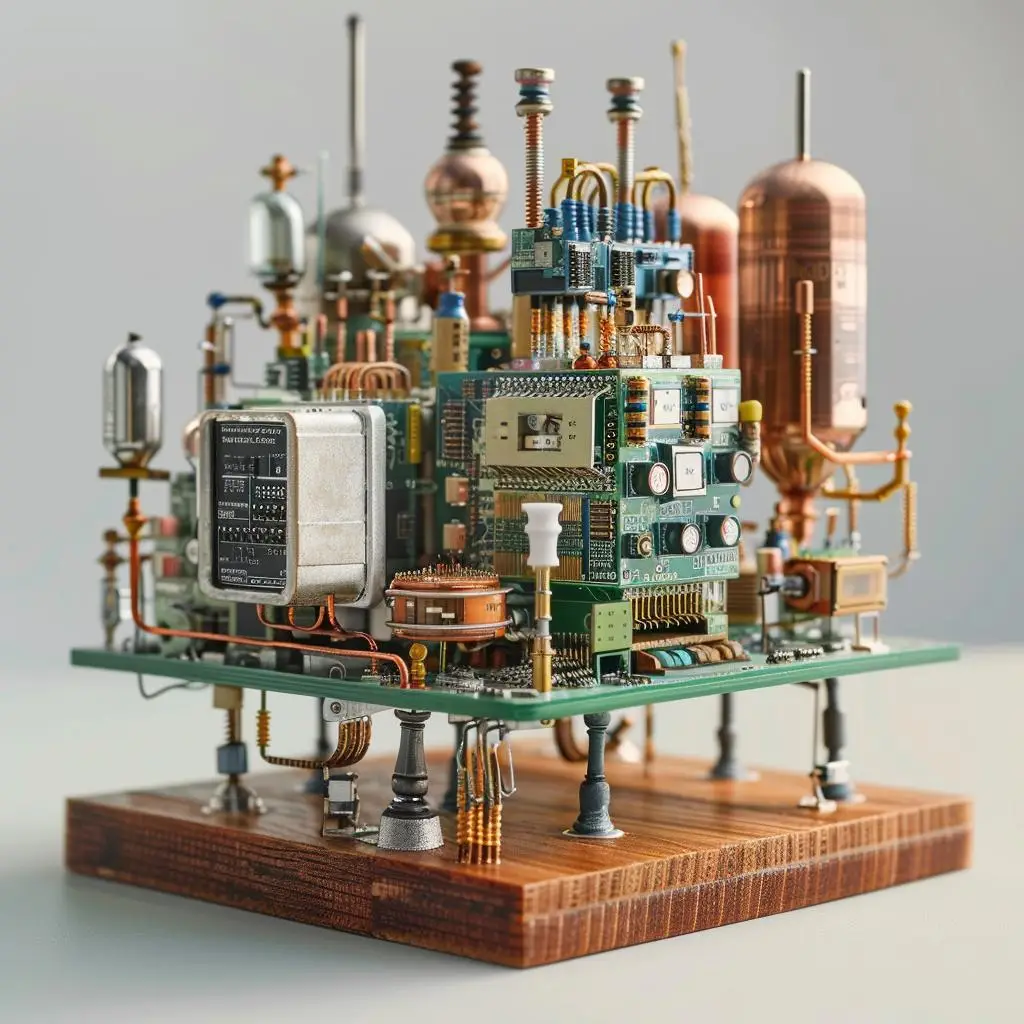
A thyristor is a solid-state semiconductor device containing four layers of alternating P-type and N-type materials. It is sometimes referred to as a silicon-controlled rectifier (SCR). As a bistable switch, it can only be in one of two states: either on (conducting) or off (non-conducting). Thyristors are frequently utilized in high-power applications because of their effective handling of high currents and voltages.
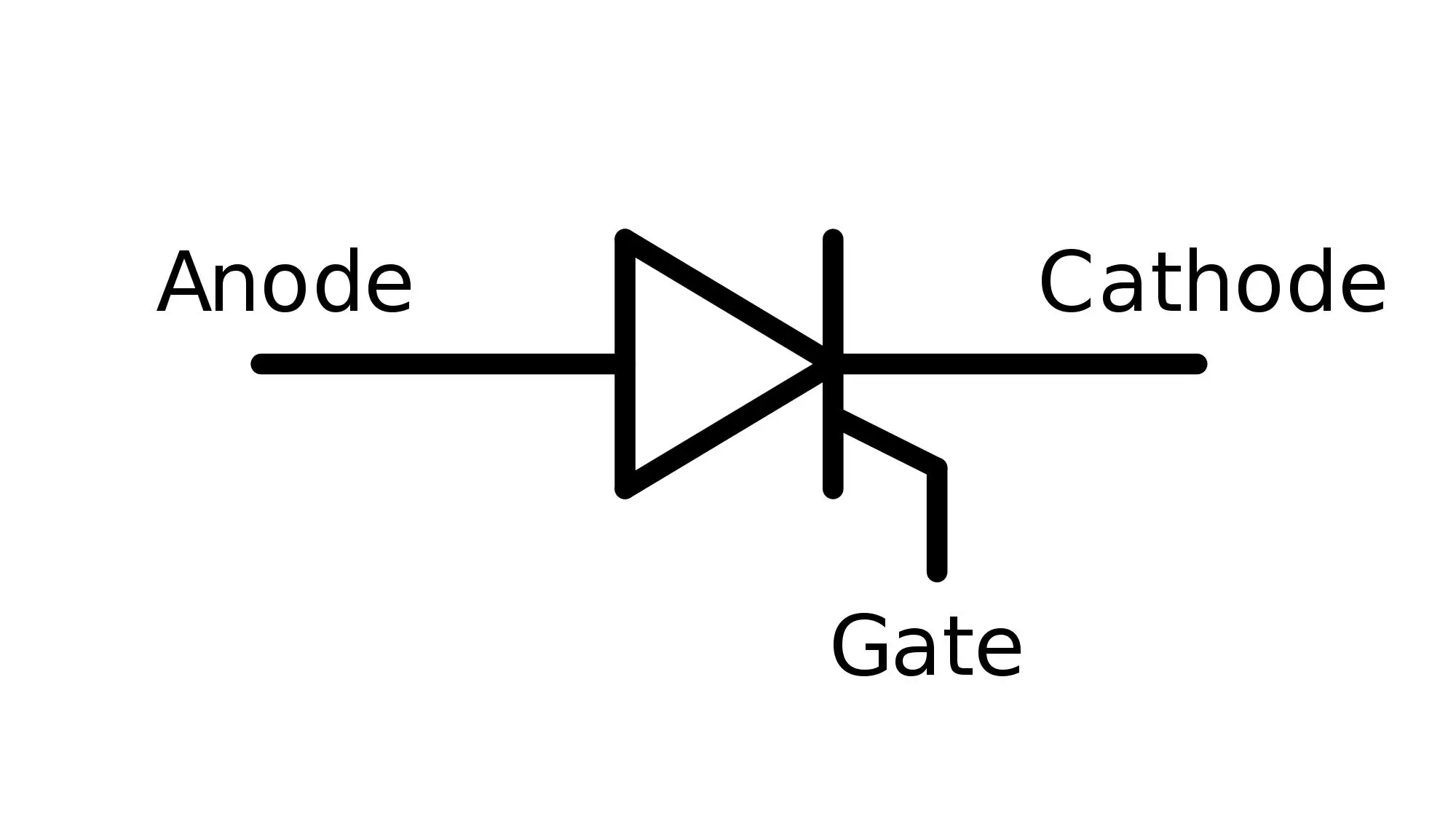
Thyristor Symbol
What are Thyristors Made of?
Silicon, a semiconductor element recognized for its capacity to carry electricity under specific circumstances, is the main component used to create thyristors. However, a single silicon piece is insufficient to provide a thyristor's unique characteristics. Rather, the manufacturing process entails atomic-level manipulation of silicon to produce a certain structure:
Doping: Doping is the process of deliberately introducing minute amounts of other elements, such as phosphorus for N-type regions and boron for P-type regions, into the silicon lattice. As a result, the material's conductivity changes, resulting in the silicon wafer's alternating P- and N-type areas.
Diffusion and epitaxy: These methods are employed to accurately regulate the doped regions' depth and profile, guaranteeing the intended four-layer structure (P-N-P-N) with particular electrical characteristics.
Metallization: To serve as electrodes, metallic connections are deposited in particular areas of the wafer once the P-N-P-N structure has developed.
Anode: Permits the thyristor to receive current.
Cathode: Permits the thyristor's current to leave.
Gate: The control electrode responsible for triggering the on-state.
Packaging: After being manufactured, the silicon wafer is divided into individual thyristor chips and placed into appropriate packages so that they can be connected to circuits and dissipate heat.
What does Thyristor do?
Power Conversion: Thyristors are the mainstays of AC-to-DC conversion; they provide power to devices such as electric car traction systems, adjustable-speed motors, and battery chargers. Additionally, they are essential for DC-to-AC conversion, which makes it possible to use High-Voltage Direct Current (HVDC) lines to transmit electricity efficiently over long distances.
Motor Control: Thyristors, which are utilized in equipment, railroads, and industrial automation, offer exact control over the speed and direction of DC motors.
Lighting Control: Thyristors are perfect for dimmer switches and dramatic lighting control since they can smoothly dim lights.
Heater Control: They manage the amount of energy supplied to heating components in industrial operations, furnaces, and irons.
Video related to Thyristor
Thyristor vs Transistor
Structure:
Thyristor: A P-N-P-N structure made up of four layers of alternating P-type and N-type semiconductor material.
Transistor: P-N-P or N-P-N structure formed by three layers of alternating P-type and N-type material.
Operation:
Thyristor: Functions as a bistable switch, which means it has two possible states: conducting when on and non-conducting when off. needs a trigger signal to activate, and after the trigger is withdrawn, it stays active. only shuts off when the voltage is inverted or the current drops below a predetermined threshold.
Transistor: Functions as a variable resistor by permitting the flow of current in both directions at different intensities of amplification. controlled by a tiny amount of current or voltage applied to the gate, which modifies the current between the other two terminals in a proportionate way.
Applications:
Thyristor: High-power applications like motor control, power transmission, dimming, and welding.
Transistor: Amplification, switching, logic circuits, and microprocessors.
Key Differences:
|
Feature |
Thyristor |
Transistor |
|
Structure |
P-N-P-N |
P-N-P or N-P-N |
|
Operation |
Bistable switch |
Variable resistor |
|
Trigger |
Requires trigger signal to turn on, remains on even after removal |
Controlled by small voltage/current at the gate |
|
Advantages |
Simple, rugged, cost-effective |
Versatile, precise control, low power |
|
Limitations |
Once-per-cycle turn-on, no soft turn-on/off |
Lower power handling, more complex |
How Thyristors Work?
Blocking State (Off): In its natural state, the thyristor functions as an open circuit, preventing current flow from the anode to the cathode. This occurs because the P-N connections between the layers are predominantly reverse-biased, limiting considerable current flow.
Triggering with Gate Signal: Applying a small positive voltage or current pulse to the gate terminal disturbs the internal resistance of the P-N junctions. This allows a tiny current to travel through the device, initiating the regeneration process.
Latching Effect: When the gate signal causes an initial current flow through the thyristor, charge carriers avalanche across the P-N junctions. This further reduces resistance, allowing a greater current to flow. This process continues in a positive feedback loop, eventually resulting in a considerable current flow from the anode to the cathode even after the gate signal has been eliminated. The thyristor simply "latches on" to the conducting condition.
Maintaining Conduction: Once triggered and in the "on" state, the thyristor will continue to conduct current as long as a positive voltage is applied between the anode and cathode. The gate loses control in this state, and the current flow is mostly dictated by the load and applied voltage.
Turning Off (Optional): In some thyristor types, a specific gate signal or a sudden reduction in anode-to-cathode voltage can disable the device. However, the turn-off procedure is often more sophisticated than turning it on.
Where can Thyristor be Used?
Power transmission: Regulating the flow of electricity through power grids to facilitate effective power distribution and voltage control.
Dimming: Adjusting the brightness of lights in stadiums, theaters, and architectural lighting.
Battery chargers: Controlling the current used to charge batteries in different cars and devices.
Welding: Supplying strong currents to arc welding processes is welding.
Soft starters: These devices save energy and lessen equipment stress by gradually increasing the speed of powerful motors.
Variable speed drives: Accurately regulating the speed of industrial gear to ensure smooth functioning.
Conclusion
Despite being frequently hidden in plain sight, thyristors are essential to keeping our planet running. For many years, their adaptability and high-power handling capacities have been essential for everything from regulating the din of electric motors to achieving the ideal lighting atmosphere. The history of thyristors, however, goes beyond the uses they have today.

Related Articles
- ·Qualcomm PM8350 vs. PM8350C: Architecture, Features, Applications, and Selection Guide
- ·Qualcomm PM8150 vs. PM8150B vs. PM8150L: Functions, Architecture, Applications, and Selection Guide
- ·SGM41541 vs. SGM6605: Battery Charger and Synchronous Boost Converter Comparison
- ·ADI LTM4630A vs. LT8645S: Power Module and Silent Switcher Regulator Comparison
- ·Richtek RT8206A vs. RT9013: Architecture, Specifications, Applications, and Design Considerations
- ·MPS MP2657, MPQ6610GJ-AEC1-Z, and MP2856: Identification, Functions, and Application Comparison
- ·TPS6594-Q1 vs. TPS65219-Q1 vs. TPS653860-Q1 vs. LP87745-Q1: TI Automotive PMIC Comparison
- ·Electronic Components Monthly Market Report
- ·MediaTek MT6369, MT6360, MT6365, and MT6375: Functions, Architecture, and Selection Guide
- ·Southchip SC8547, SC8551, and SC89890: Charging Architecture, Key Differences, and Selection Guide