German
 Japanese
 Portuguese
 Korea
 Mexico
 Dutch


Top Picks for LR1130 Battery Equivalent

What is an LR1130 Battery?
The LR1130 battery is a widely used alkaline button cell, valued for its compact size and reliability. It has key specifications that include a 1.5V nominal voltage, dimensions of 11.6mm in diameter and 3.1mm in height, and a typical capacity between 50 and 80mAh, depending on the device's current drain. Its cutoff voltage ranges from 0.8 to 1.0V. Equivalent batteries include the AG10, LR54, 389, 390, and SR1130 (a silver oxide version with 1.55V and higher capacity).
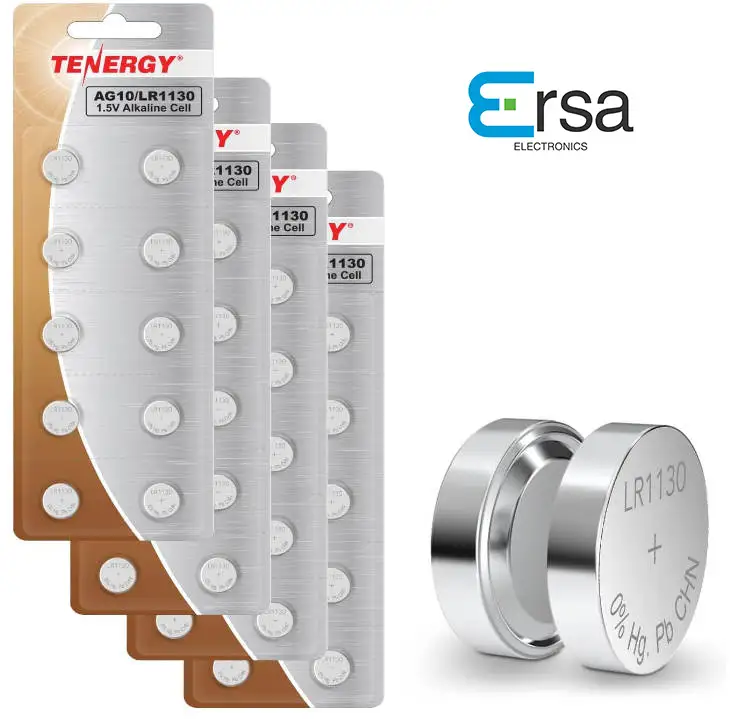
Common applications for the LR1130 battery include digital thermometers, calculators, laser pens, flashlights, security systems, wristwatches, and medical devices. Despite its affordability and reliability, the LR1130 has a shorter shelf life of about 2 to 3 years, and its voltage may drop quickly under heavy loads. For devices requiring longer-lasting or more stable power, the SR1130 silver oxide variant is often a better option. In summary, the LR1130 battery is a versatile power source, frequently used in consumer electronics and medical applications.
LR1130 Battery Features
The LR1130 battery has several key features that make it widely used in small electronic devices:
- Type: Alkaline button cell
- Size: 11.6 mm in diameter, 3.1 mm in height
- Nominal Voltage: 1.5V
- Capacity: Typically between 50 and 80 mAh
- Cutoff Voltage: Ranges from 0.8V to 1.0V
- Shelf Life: 2 to 3 years
- Performance: Reliable under moderate loads, but may experience quick voltage drops under heavy loads
- Affordability: Inexpensive and easy to find
- Equivalents: AG10, LR54, 389, 390, and SR1130 (silver oxide version, which has higher capacity and a slightly higher voltage of 1.55V)
These features make the LR1130 battery ideal for small devices like watches, calculators, and medical instruments.
LR1130 Battery Dimensions
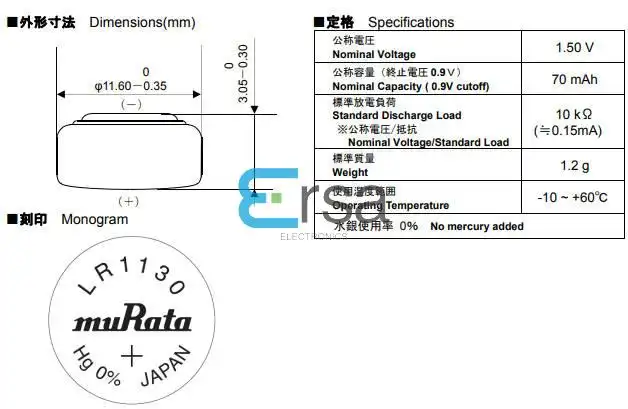
LR1130 Battery Specifications
| Specification of LR1130 Battery | Details |
| Battery Type | Alkaline Button Cell |
| Dimensions | 11.6 mm (diameter) x 3.1 mm (height) |
| Nominal Voltage | 1.5V |
| Cutoff Voltage | 0.8V to 1.0V |
| Capacity | 50-80 mAh (depending on device) |
| Shelf Life | 2-3 years |
| Equivalents | AG10, LR54, 389, 390, SR1130 |
| Performance | Reliable under moderate load, may drop under heavy load |
| Applications | Watches, calculators, medical devices, etc. |
| Silver Oxide Equivalent | SR1130 (1.55V, higher capacity) |
LR1130 Battery Applications
The LR1130 battery is commonly utilized in a variety of electronic devices due to its compact size and reliable performance. Here are the main applications of the LR1130 battery:
Wrist Watches: The LR1130 is frequently used in analog and digital watches, providing essential power for timekeeping.
Calculators: Its stable voltage output makes it ideal for calculators, where low power consumption is critical.
Digital Thermometers: The battery powers thermometers, ensuring accurate readings with minimal energy use.
Remote Controls: Used in various remote controls, the LR1130 offers reliable performance for household electronics.
Electronic Toys: Many small toys utilize LR1130 batteries for sound and movement functions.
Laser Pointers: The compact size and sufficient voltage make it suitable for laser pointers.
Medical Devices: Commonly found in medical instruments like glucose monitors and digital thermometers, where consistent power is crucial.
Security System Panels: Provides backup power for alarm systems, ensuring functionality during outages.
Memory Backup: Used in devices that require memory retention, such as certain types of clocks and settings in electronics.
The LR1130 battery's alkaline chemistry allows it to deliver a nominal voltage of 1.5 volts, making it suitable for low-drain applications. It is also available in various equivalent forms, such as AG10 and 389, which can be used interchangeably depending on the device requirements. Its versatility and reliability make the LR1130 a popular choice across many everyday electronic devices.
See also our ADC types & IC selection for medical and precision devices.
LR1130 Battery Equivalent
The LR1130 battery is a popular alkaline button cell battery, widely used in various electronic devices. It has several equivalents that can be used as replacements. Here’s a detailed overview of the LR1130 battery equivalents:
Key Equivalents of LR1130 Battery
AG10: Often interchangeable with the LR1130, the AG10 is also an alkaline battery with similar dimensions (11.6 mm diameter and 3.1 mm height) and nominal voltage (1.5V). It is commonly used in watches and calculators.
LR54: Another equivalent, the LR54 shares the same physical dimensions and voltage as the LR1130. It is suitable for low-drain applications.
SR1130: This is a silver oxide variant of the LR1130, providing a nominal voltage of 1.55V and a higher capacity (typically 80-100 mAh). The SR1130 is ideal for devices requiring stable voltage over time, such as medical instruments and high-precision electronics.
389/390: These batteries are also compatible with LR1130. The 389 is a high-drain silver oxide battery, while the 390 is a low-drain variant. Both share the same dimensions as the LR1130.
LR1131: This designation follows the IEC standard and is effectively equivalent to the LR1130 in terms of size and voltage.
Performance Characteristics of LR1130 Battery
- Voltage and Capacity: The LR1130 typically delivers 1.5V with a capacity ranging from 50 to 80 mAh, depending on the brand and specific application conditions. In contrast, silver oxide equivalents like SR1130 provide slightly higher voltage and better performance under load.
- Shelf Life: Alkaline batteries like the LR1130 generally have a shelf life of about 2-3 years, while silver oxide batteries (e.g., SR1130) can last up to 4-6 years due to their lower self-discharge rates.
Considerations for Replacement of LR1130 Battery
When replacing an LR1130 battery:
- Ensure compatibility with your device's requirements, particularly regarding voltage and drain characteristics.
- While alkaline batteries are suitable for most low-drain applications, silver oxide variants are recommended for devices needing consistent performance over time.
The LR1130 battery has multiple equivalents, including AG10, LR54, and SR1130, among others. Each equivalent may offer different advantages in terms of performance and longevity, making it essential to choose the right type based on your specific device needs. Always consult your device's manual or specifications to confirm compatibility before selecting a replacement battery.
Advantages of Using LR1130 Battery
The LR1130 battery offers several advantages that make it a popular choice for powering various electronic devices. Here are the key benefits:

Reliable Power Supply: The LR1130 battery provides a consistent nominal voltage of 1.5 volts, which is essential for the reliable operation of low-drain devices such as watches, calculators, and remote controls. This stability ensures that devices function effectively without unexpected power failures.
Long Shelf Life: With a shelf life of up to 5 years, the LR1130 is designed for long-term storage without significant loss of performance. This makes it an excellent choice for devices that may not be used frequently but need to be ready when required.
Low Self-Discharge Rate: The battery features a low self-discharge rate, meaning it retains its charge well over time. This characteristic is particularly beneficial for devices that are used intermittently, ensuring they remain operational when needed.
Wide Operating Temperature Range: The LR1130 can operate effectively in temperatures ranging from -4°F to 140°F (-20°C to 60°C), making it suitable for both indoor and outdoor applications. This versatility allows it to power devices in various environmental conditions.
Mercury-Free Design: Modern LR1130 batteries are mercury-free and designed with anti-leak technology, enhancing safety and reducing environmental impact. This feature is particularly important for consumers concerned about hazardous materials in batteries.
Cost-Effective: The LR1130 is generally affordable and widely available, making it an economical choice for consumers. Its cost-effectiveness is especially appealing for powering everyday items like toys and household gadgets.
Compatibility with Various Devices: The LR1130 battery is compatible with a wide range of devices, including medical instruments, digital thermometers, laser pointers, and security systems. Its ability to deliver sustained power enhances the user experience across these applications.
In summary, the LR1130 battery's reliability, long shelf life, low self-discharge rate, and compatibility with numerous devices make it an excellent choice for powering small electronics efficiently and effectively.
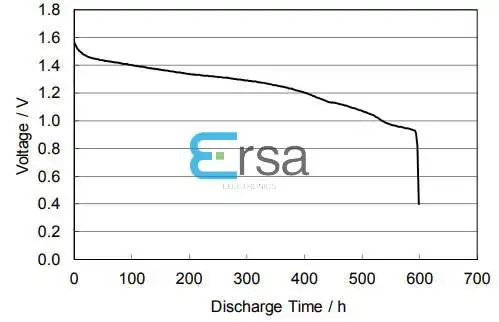
Discharge Characteristics of LR1130 Battery
Comparison Between LR1130, AG10, 389, 390 Batteries
| Battery Model | Type | Nominal Voltage | Capacity (mAh) | Dimensions (mm) | Shelf Life | Key Features | Common Applications |
| LR1130 | Alkaline Button Cell | 1.5V | 50-80 mAh | 11.6 (diameter) x 3.1 (height) | 2-3 years | Affordable, reliable for low to moderate drain, voltage drops under heavy load | Watches, calculators, laser pointers |
| AG10 | Alkaline Button Cell | 1.5V | 50-80 mAh | 11.6 (diameter) x 3.1 (height) | 2-3 years | Similar to LR1130, commonly used in a wide variety of small electronics | Flashlights, toys, remote controls, laser pens |
| 389 | Silver Oxide Button Cell | 1.55V | 70-80 mAh | 11.6 (diameter) x 3.1 (height) | 3-5 years | Stable voltage output, longer lifespan, suitable for higher drain devices | Watches, medical instruments, thermometers |
| 390 | Silver Oxide Button Cell | 1.55V | 70-80 mAh | 11.6 (diameter) x 3.1 (height) | 3-5 years | Longer-lasting power holds voltage well, ideal for critical devices | Security systems, hearing aids, cameras, medical devices |
The LR1130 and AG10 are both 1.5V alkaline batteries, providing moderate capacity (50-80 mAh), and are designed for use in low-drain devices like watches and calculators. These batteries are affordable but have shorter lifespans, typically 2-3 years, and their voltage may drop quickly when used in high-drain applications.
On the other hand, the 389 and 390 are 1.55V silver oxide batteries, offering higher stability and better performance under load. Silver oxide batteries are more suitable for devices that need consistent power output and are often preferred in higher-drain or sensitive applications like medical instruments, security systems, and digital thermometers. With a lifespan of 3-5 years, they provide more long-term reliability compared to their alkaline counterparts.
All four batteries share the same dimensions (11.6mm in diameter and 3.1mm in height), making them interchangeable in many devices. However, for devices that require stable power over longer periods or under high-load conditions, silver oxide batteries (389/390) are often the better choice.
AG10 Battery: A Viable Equivalent to LR1130 Battery
The AG10 battery is indeed a viable equivalent to the LR1130 battery. Both batteries share identical specifications, making them interchangeable in most applications:
Battery Specifications and Compatibility
- Dimensions: Both AG10 and LR1130 batteries have a diameter of 11.6 mm and a height of 3.1 mm.
- Voltage: They both provide a nominal voltage of 1.5 volts.
- Capacity: The capacity for these batteries typically ranges from 70 mAh to 90 mAh, depending on the specific type (alkaline or silver oxide) and usage conditions.
Although LR1130, AG10, 389, and 390 batteries share the same physical size, their actual runtime can vary depending on chemistry, capacity, and device current draw. To estimate how long a specific battery may last in real-world usage, you can use this battery life calculator to compare battery capacity, load current, voltage, and expected operating time before selecting the most suitable option.
Other Equivalent Names
The AG10 battery is also known by several other designations, including:
- LR54
- 189
- G10A
- SR1130 (silver oxide variant)
These batteries can be used interchangeably in devices designed for AG10 or LR1130 batteries due to their matching physical dimensions and electrical characteristics134.
Applications
AG10 and LR1130 batteries are commonly found in various low-drain devices such as:
- Digital thermometers
- Calculators
- Laser pointers
- Toys
- Watches
These batteries are favored for their compact size and long shelf life, making them suitable for devices with limited space.
In summary, the AG10 battery is an excellent substitute for the LR1130 battery. Users can confidently replace one with the other without concerns about compatibility or performance, as they are fundamentally the same battery under different naming conventions.
Differences between LR1130 and SR1130 batteries
| Feature | LR1130 (Alkaline) | SR1130 (Silver Oxide) |
| Battery Type | Alkaline Button Cell | Silver Oxide Button Cell |
| Nominal Voltage | 1.5V | 1.55V |
| Capacity | 50-80 mAh | 80-100 mAh |
| Shelf Life | 2-3 years | 3-5 years |
| Voltage Stability | Voltage drops more quickly under load | Stable voltage throughout use |
| Performance under Load | Weaker under heavy load | Better performance under heavy load |
| Price | More affordable | More expensive |
| Applications | Low- to moderate-drain devices | Higher-drain, sensitive devices |
| Common Uses | Watches, calculators, toys | Medical instruments, precision devices, watches |
The LR1130 is an alkaline battery with a 50–80mAh capacity and a nominal voltage of 1.5V. It is less expensive and performs well in toys and calculators with low to moderate discharge. It is less appropriate for delicate or high-drain devices, though, because its voltage tends to drop more quickly under load.

On the other hand, the SR1130 is a silver oxide battery that has a longer lifespan (three to five years) and a slightly higher voltage (1.55V). It works better under load and maintains a more consistent voltage throughout the operation, which makes it perfect for higher-drain devices like precision and medical equipment. The SR1130 is frequently used for applications needing dependable, long-lasting power while being more costly.
How to Properly Dispose of LR1130 and its Equivalent Batteries?
It is crucial to dispose of LR1130 batteries and their equivalents properly for both environmental protection and local law compliance. The ingredients in these button cell batteries, which are frequently found in watches, calculators, and other small electronic gadgets, could be dangerous if not handled properly.
Consult your local waste management authority before disposing of LR1130 batteries. Batteries can be recycled or disposed of securely in a number of locations with particular regulations and facilities. This guarantees that the batteries are treated to have the least possible negative influence on the environment.
For example, recycling operations might be able to recover precious components that are frequently present in these kinds of batteries, such as lithium, silver, and mercury.
If your community does not allow recycling, you should seek out a household hazardous waste (HHW) facility. Materials that are hazardous to dispose of with ordinary garbage can be handled by these facilities. Because LR1130 batteries can eventually leak dangerous substances, it's crucial to avoid disposing of them in the trash or recycling bins.
Additionally, a lot of public organizations and stores provide battery recycling programs. These offer a simple and ethical method of getting rid of unwanted batteries and are frequently given out for free. One easy method to be sure your batteries are disposed of correctly is to keep a look out for these programs.
Where to Buy LR1130 Batteries?
You can purchase LR1130 batteries from various retailers, both online and in-store. Here are some options:
- Amazon: Maxell LR1130 batteries are available in packs, like a 2-pack for $2.20.
- Walmart: Offers a 20-pack of LiCB LR1130 batteries for $5.39.
- Cotchear: 10-pack of AG10/LR1130 batteries priced at $3.99 on Amazon.
- Maxell: Available at Walmart for $5.75.
- Ersa Electronics: As a reliable electronic components distributor, Ersa Electronics will provide original goods to you and welcome your inquiry.
These options provide a range of quantities and prices to suit your needs.
Related Articles:
LR41 Battery Equivalent: A Complete Guide
The Essential Guide to LR44 Batteries: Specifications and Use
LR44 vs 357: Comparing Battery Performance and Suitability

Related Articles
- ·Qualcomm PM8550 vs. PM8550B vs. PM8550VS: Features, Differences, Applications, and Selection Guide
- ·Qualcomm PM8350 vs. PM8350C: Architecture, Features, Applications, and Selection Guide
- ·Qualcomm PM8150 vs. PM8150B vs. PM8150L: Functions, Architecture, Applications, and Selection Guide
- ·SGM41541 vs. SGM6605: Battery Charger and Synchronous Boost Converter Comparison
- ·ADI LTM4630A vs. LT8645S: Power Module and Silent Switcher Regulator Comparison
- ·Richtek RT8206A vs. RT9013: Architecture, Specifications, Applications, and Design Considerations
- ·MPS MP2657, MPQ6610GJ-AEC1-Z, and MP2856: Identification, Functions, and Application Comparison
- ·TPS6594-Q1 vs. TPS65219-Q1 vs. TPS653860-Q1 vs. LP87745-Q1: TI Automotive PMIC Comparison
- ·Electronic Components Monthly Market Report
- ·MediaTek MT6369, MT6360, MT6365, and MT6375: Functions, Architecture, and Selection Guide
 FAQ