
 German
 Japanese
 Portuguese
 Korea
Korea
 Mexico
 Dutch
Dutch


What is a Rocker Switch

Table of Contents
- What is a Rocker Switch?
- Core Structure and Working Principle
- Core Types
- Typical Application Scenarios
- Key Selection Parameters
- How to Wire a Rocker Switch
- How Does a Rocker Switch Work?
- How to Wire in a Rocker Switch
- How to Wire a Rocker Switch With 3 Prongs
- How to Wire a Rocker Switch With 4 Prongs
- How to Wire Illuminated Rocker Switch
- FAQ
What is a Rocker Switch?
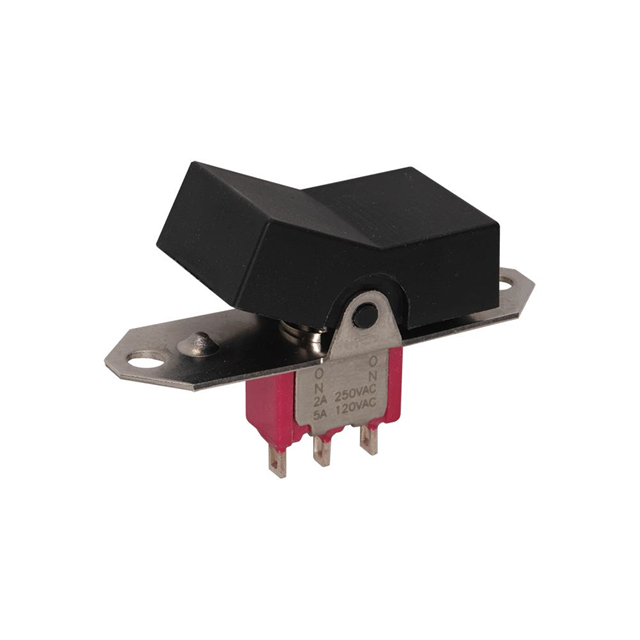
A rocker switch is a manual mechanical switch that operates by moving a lever or handle. This action switches the internal contact group, enabling the connection, disconnection, or switching of multiple circuits. It is one of the most commonly used basic control components in electronic and electrical equipment.

Key features include intuitive operation, clear tactile feedback, fixed positions, simple structure, and low cost. Rocker switches are primarily used in low-voltage, low-current scenarios, although high-current and sealed types are also available.
Core Structure and Working Principle
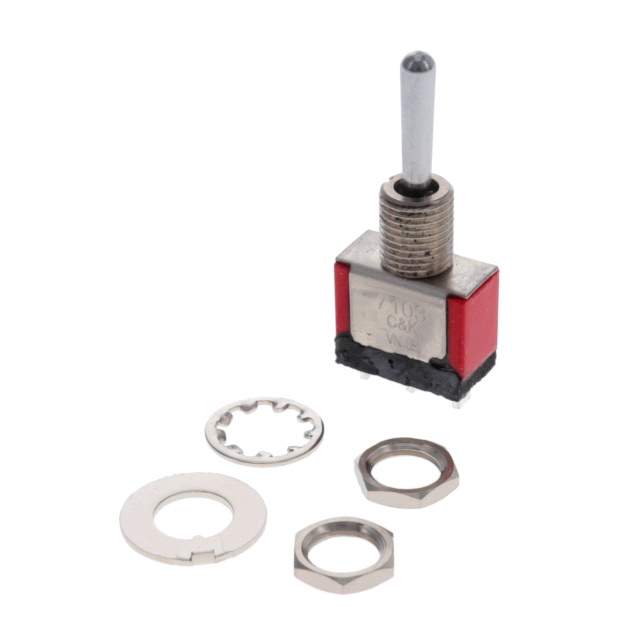
Main Components: Lever (Operating Handle), Moving Contact, Stationary Contact, Spring (Positioning/Resetting), Insulating Housing (PC/Nylon/POM), Pins (Terminals).
Working Principle: Moving the lever drives the internal slider/lever, causing the moving contact to engage or disengage with different stationary contacts under spring force. This action switches the circuit state, with positions secured by slots or latches, ensuring they remain fixed until intentionally moved (unless it is a self-resetting type).
Core Types (by Circuit Pole Number/Positions)
The four most commonly used types are:
- SPST (Single-pole Single-throw, 2-pin): Controls 1 circuit with 2 positions (on/off), the most basic type (e.g., desk lamp, small appliance power supply).
- SPDT (Single-pole Double-throw, 3-pin): Controls 1 circuit with two positions (A on/B off and A off/B on), used for signal source switching.
- DPST (Double-pole Single-throw, 4-pin): Controls the on/off state of 2 independent circuits simultaneously (e.g., dual power supplies).
- DPDT (Double-pole Double-throw, 6-pin): Simultaneously switches 2 paths for 2 independent circuits, often used for complex control (e.g., motor forward/reverse rotation).
Other subcategories include miniature/ultra-miniature, high-current, waterproof and sealed, lockable/self-resetting, and various mounting types.
Typical Application Scenarios
Rocker switches are widely used in:
- Consumer Electronics: Mobile phone modes (ring/vibrate/silent), toy power supplies, audio/radio mode switching.
- Home Appliances/Instruments: Power and function switching for lamps, fans, instruments, and medical equipment.
- Industrial/Automotive: Control panels, machine tool power supplies, automotive lighting switches, and equipment mode selection.
Key Selection Parameters
When selecting a rocker switch, consider:
- Rated Voltage/Current (to match load and avoid overload).
- Number of Poles/Throws (e.g., SPST, SPDT).
- Installation method (through-hole, surface mount, panel mount).
- Protection level (waterproof/dustproof, IP rating).
- Contact material (silver or gold plating for improved conductivity and lifespan).
How to Wire a Rocker Switch

I. Most Common: 2-Pin Toggle Switch
Function: Controls the on/off state of a circuit (lights, power off, device power).
Wiring Method:
- Connect the power input (positive/live wire) to one pin of the switch.
- Connect the other pin to the load (light/motor/device).
- Connect the negative/neutral wire directly, bypassing the switch.
Principle: Moving the lever connects or disconnects the two pins, controlling the power supply.
II. 3-Pin Toggle Switch
Pin Definitions:
- Middle Pin: Common Terminal (COM)
- Left Pin: Position 1
- Right Pin: Position 2
Wiring:
- Connect the power positive to the middle common pin.
- Connect the left pin to Device A.
- Connect the right pin to Device B.
Effect: Moving left activates A; moving right activates B, allowing mode switching.
III. Household High Voltage Wiring
For 220V lights (socket): Only connect the live wire to the switch; do not connect the neutral wire for safety. For high-power appliances (e.g., water heaters), choose a high-current model (10A/16A) and ensure tight connections to prevent sparking.
IV. Circuit Board / Low Voltage DC Wiring
For 5V/12V applications: Can be used regardless of terminal polarity, but connecting the positive terminal to the switch is recommended. Ensure clean soldering to avoid cold solder joints and short circuits.
V. Quickly Distinguishing Between Good and Bad Switches
To test without a multimeter: Toggle the switch to one side; both pins should be conductive. Switch to the other side; they should be disconnected. This indicates a working switch.
How Does a Rocker Switch Work?
1. Core Principle: The switch controls the circuit by manually moving a slider, compressing the internal spring and metal contact spring, which switches the contact state:
- Contact on = Circuit connected (powered)
- Contact off = Circuit disconnected (powerless)
2. Internal Structure: Consists of three main components:
- Sliding lever: The push-button switch
- Movable metal contact spring: Conductive piece sliding with the switch
- Fixed contact pins: Metal feet soldered to the circuit board for wire connections
- Small spring: Locks the switch in place, providing a crisp feel.
3. Working Process:
- Toggle the switch manually;
- The internal slider moves the movable metal contact spring;
- The spring engages or disengages from the fixed contact;
- Moved to one side: The spring contacts the two pins → Power on;
- Moved to the other side: The spring is offset → Power off;
- The spring locks in place, preventing erratic movement.
4. Difference Between Two Common Types:
- Two-prong switch: Only one circuit on and one off.
- Three-prong switch: Common terminal in the middle with one contact on each side, allowing mode switching.
How to Wire in a Rocker Switch
Toggle Switch Complete Installation Method (Two Common Methods: Circuit Board Soldering + Housing Panel Fixing). Simple enough for beginners.

I. Understanding the Structure
Components include:
- Toggle Handle: Toggled by hand from the outside.
- Snap-in Slot: Holds the switch in place on the plastic housing.
- Metal Pins: For wiring/soldering.
- Internal Positioning Feet: Prevent twisting.
II. First Method: Housing Panel Installation
Installation Steps:
- Drill a small rectangular hole in the plastic housing, matching the switch frame size.
- Push the toggle switch from the inside out.
- The elastic snaps on both sides will click into place when pushed in.
- Removal: Pinch the snaps with tweezers to remove the switch.
III. Second Method: Circuit Board Installation
1. Through-hole Type:
- Align the switch pins with the circuit board holes and insert.
- Press firmly to ensure the base is flush against the board and solder each pin on the back.
- Trim excess pins to prevent short circuits.
2. Surface Mount Type: Directly attached to the circuit board surface, soldered with a hot air gun. Commonly used in factories.
How to Wire a Rocker Switch With 3 Prongs
Three-Prong Toggle Switch - Simplest Wiring Method.
I. Understanding the 3 Pins
Middle Pin = Common Pin (Incoming Wiring)
Left Pin = Position 1
Right Pin = Position 2
Principle: Toggle the left pin → connects middle and left pins; toggle the right pin → connects middle and right pins.
II. Wiring Method 1: One-button Switching
Power positive (red wire) connected to the middle pin.
Left pin connected to load A (e.g., LED 1).
Right pin connected to load B (e.g., LED 2).
All negative terminals share a single black wire.
Effect: Left switch = A on, B off; Right switch = B on, A off.
III. Wiring Method 2: Single Device On/Off
Power positive connected to the middle pin.
Connect either the left or right pin to the device.
Negative terminal directly connected.
Effect: One side switched = power on; the other side switched = power off.
IV. Wiring Method 3: Motor Forward/Reverse Switching
For reversing small motors, cross-connect the wires.
How to Wire a Rocker Switch With 4 Prongs
I. Understanding the 4-Pin Principle
4 pins = Two independent switches (double-pole switch). The left two pins form one group, and the right two pins form another group, allowing simultaneous control.
II. Wiring Method 1: Regular Switch
Connect the positive power supply to the first left pin, the second left pin to the load, and the negative power directly to the device.
III. Wiring Method 2: Dual-Circuit Simultaneous Control
For example, simultaneously cutting off battery positive and negative terminals or 220V live and neutral wires.
IV. Wiring Method 3: Differentiating Positions
Some 4-pin switches have one position for continuity and one for disconnection.
How to Wire Illuminated Rocker Switch

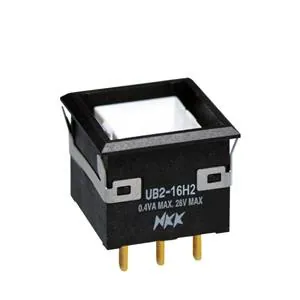
Illuminated toggle switch = switch contacts + built-in LED indicator. The light illuminates when toggled to "On" and turns off when toggled to "Off".
I. Common Type: 4-Pin Illuminated Toggle Switch
Pin Division (Face to You):
Pin 1, Pin 2: Power switch (controls device on/off)
Pin 3, Pin 4: Power supply for built-in LED.
Standard Wiring (DC 5V/12V):
- Device Positive → Connect to switch [Switch Input]
- Switch [Switch Output] → Connect to load (lamp/fan)
- LED Negative: Connect to power supply negative
- LED Positive: Automatically illuminates when the switch is turned on.
II. Most Common: 5-Pin Illuminated Toggle Switch
5-Pin Definition:
- Pin 2 = Switch group (connects/disconnects main circuit)
- Pin 2 = Indicator light circuit
- Pin 1 = Common Negative Terminal
Correct Wiring Steps:
- Power Supply Positive → Switch [Input Pin]
- Switch Output Pin → Connect to appliance (LED, motor)
- Indicator Light Negative Terminal → Connect to power supply negative terminal (GND)
- Indicator Light Positive Terminal → Internal linkage of the switch, automatically turns on when activated.
Effect: ON = Device works + indicator light illuminates; OFF = Device is powered off + indicator light goes out.
III. AC 220V Illuminated Rocker/Toggle Switch
Connect directly to:
Live Wire L → Switch Input
Switch Output → Appliance
Neutral Wire N → Switch LED Pin + Appliance Neutral Wire.
IV. Key Precautions
To prevent light burnout:
- Low Voltage DC (5V/12V): Do not connect to reverse polarity.
- Overvoltage is strictly prohibited; a 12V switch cannot be connected to 24V.
- Do not short-circuit the LED pin.
FAQ
1. What is the difference between SPST and SPDT switches?
SPST switches have two positions (on/off) and control a single circuit, while SPDT switches can switch between two circuits, having a common terminal.
2. Can I use a rocker switch for high voltage applications?
Yes, but you must choose a switch rated for the specific voltage and current requirements of your application.
3. How do I know if my rocker switch is faulty?
You can test the switch by checking for continuity between the pins when toggled. If there’s no continuity when it should be on, the switch may be faulty.
4. Are illuminated rocker switches more complicated to wire?
Illuminated rocker switches have additional pins for the LED, but the wiring principles remain similar. Just ensure the LED circuit is correctly connected.








.png?x-oss-process=image/format,webp/resize,h_32)


