
 German
 Japanese
 Portuguese
 Korea
Korea
 Mexico
 Dutch
Dutch



Texas Instruments
LF444CMX


Why Choose Us?
Professional Platform
B2B & B2C purchasingDelivery at full speed
1-2 days deliveryWide variety
Original manufacturers365 days guarantee
Responsible quality

.png)


Tech Specifications
LF444CMX Description
LF444CMX Description
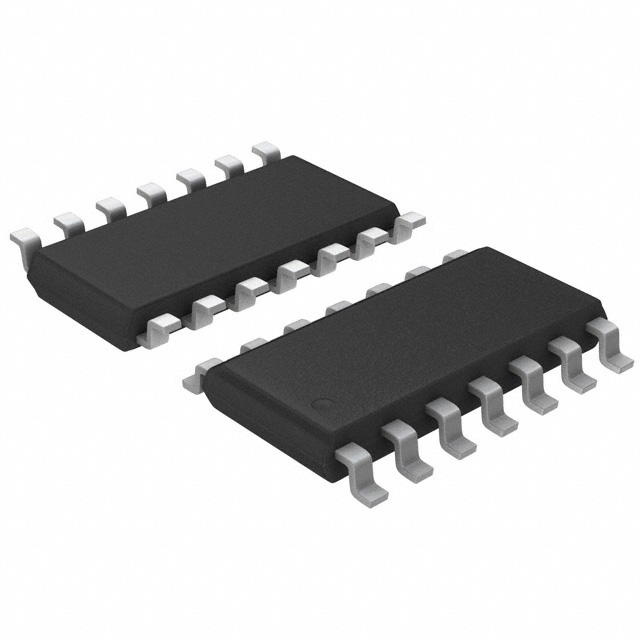
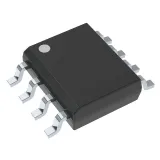
The LF444CMX from Texas Instruments is a quad JFET-input operational amplifier designed for precision analog applications. Packaged in a 14-SOIC surface-mount form factor, this IC integrates four independent op-amps with low input bias current (10 pA) and high slew rate (1V/µs), making it suitable for high-impedance signal conditioning. Operating within a 36V supply range and consuming 600µA per channel, it balances performance with power efficiency. Though marked obsolete, its 1 MHz gain bandwidth product and 14 mA output current capability ensure reliable performance in legacy systems requiring stable, low-noise amplification.
LF444CMX Features
- Low Input Bias Current (10 pA): Ideal for high-impedance sensor interfaces and precision instrumentation.
- JFET Input Stage: Delivers high input impedance and minimal offset voltage drift.
- Quad-Channel Design: Integrates four op-amps in a compact 14-SOIC package, saving board space.
- Wide Supply Range (±18V or 36V single-supply): Supports flexible power configurations.
- Low Power Consumption (600µA/channel): Suitable for battery-operated devices.
- Moderate Slew Rate (1V/µs): Balances speed and power efficiency for general-purpose applications.
LF444CMX Applications
The LF444CMX excels in:
- Active Filters & Signal Conditioning: Its low noise and stable bandwidth suit audio and data acquisition systems.
- Medical Instrumentation: High input impedance minimizes loading effects in ECG/EEG front-ends.
- Test & Measurement Equipment: Precision DC amplification for sensors and transducers.
- Legacy Industrial Systems: Replacement for obsolete designs requiring JFET op-amps with robust performance.
Conclusion of LF444CMX
While obsolete, the LF444CMX remains a viable choice for designs demanding low input bias, moderate speed, and multi-channel integration. Its JFET architecture and low-power operation make it particularly useful in high-impedance analog circuits and legacy upgrades. Engineers seeking alternatives should consider TI’s modern equivalents but may still leverage this IC for its proven reliability in niche applications.
FAQ
Not available to buy online? Want the lower wholesale price? Please Send RFQ to get best price, we will respond immediately










.png?x-oss-process=image/format,webp/resize,h_32)


