
 German
 Japanese
 Portuguese
 Korea
Korea
 Mexico
 Dutch
Dutch


3D Electronic: Stacking, Printing, and Bending the Future of Circuits

If Tony Stark had a favorite branch of hardware design, it would probably be 3D electronic engineering—the art of stacking chips like skyscrapers, printing circuits on curved gadgets, and sneaking extra functionality into spaces that look way too small for it. This isn’t sci-fi: it’s how modern devices squeeze out more performance, battery life, and features without turning your phone into a brick.

1) What “3D Electronic” Really Means
In everyday language, 3D electronic design covers two fast-moving worlds:
- 3D IC / 3D packaging: vertically stacking multiple silicon dies—logic, memory, I/O—so signals travel up and down through ultra-short interconnects instead of taking the scenic (and power-hungry) route across a motherboard. Think of it as building a compact city with elevator shafts instead of highways. This is the purest form of 3D electronic integration.
- 3D printed electronics: additively manufacturing conductors and dielectrics onto complex, even curved, surfaces so the product is the circuit (smart-watch bands, drone shells, conformal antennas). Here, 3D electronic design means the enclosure becomes part of the PCB, not just a box that holds one.
Both approaches exist because shrinking transistors (classic Moore’s Law) isn’t the only way forward anymore; 3D electronic methods of stacking and packaging let us keep packing more capability into the same volume.
2) Why 3D Electronic Architectures Matter (Performance, Power, Bandwidth)
Vertical integration shortens interconnects, which reduces resistance, capacitance, and delay—translation: lower power and higher speed. Designers get more memory within reach of compute units, lower latency, and better energy efficiency. A 3D electronic link that goes a few microns up through bonded interfaces beats dragging data across a substrate by millimeters. The results show up as cooler chips, faster AI inference, smoother gaming graphics, and longer battery life.
For system architects, the value proposition is simple: a 3D electronic stack moves electrons less and computes more. Less wire, fewer parasitics, more bandwidth. It’s like giving your circuits express elevators instead of staircases.
3) Inside the Stack: TSVs, Hybrid Bonding, and Wafer-on-Wafer
The “elevators” in a 3D electronic skyscraper are TSVs (through-silicon vias) and hybrid copper-to-copper bonds that connect dies face-to-face or face-to-back at tiny pitches. Common flow options include wafer-on-wafer and die-to-wafer assembly:
- TSVs punch vertical holes through silicon to route signals and power between layers.
- Hybrid bonding joins metal and dielectric at microscopic scales, trimming interconnect length and resistance.
- Wafer-on-wafer stacks whole wafers, then singulates the stack; die-to-wafer places known-good dies onto a waiting wafer.
If you picture this in movie terms, hybrid bonding is the clean, “blink-and-you-miss-it” jump cut between scenes—no fat, no filler, just immediate connections. And because 3D electronic stacks share thermal and mechanical realities, careful thickness control, underfill management, and stress modeling join the party, too.

4) Everyday Proof: HBM Stacks and 3D NAND
You’ve already met 3D electronic tech in the wild:
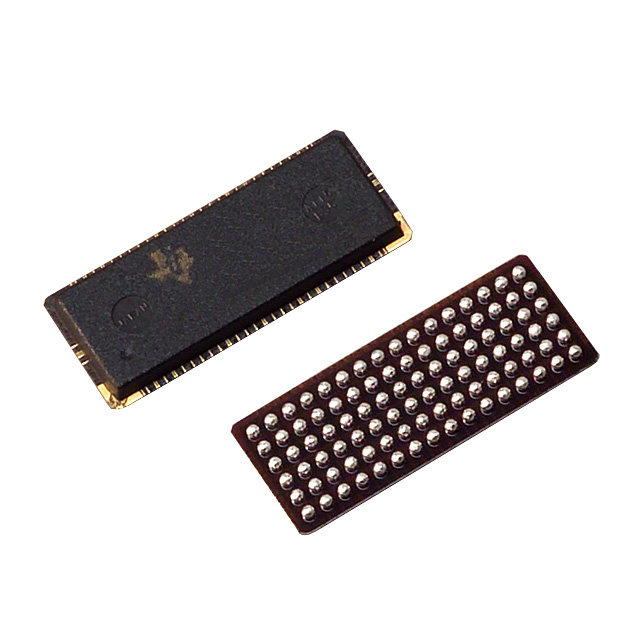
- High-Bandwidth Memory (HBM) packages stack DRAM dies using 3D interconnects and short, dense links to logic. This pushes colossal bandwidth to GPUs and AI accelerators while keeping power in check.
- 3D NAND flash stacks memory layers vertically—well beyond 100 layers in common devices—enabling huge SSD capacities without ballooning die area. It’s the storage version of skyscraper living: the same footprint, many more floors.
If your laptop boots fast and your favorite series streams without stuttering, tip your cap to the layered magic inside these 3D electronic components.
5) 3D Printed Electronics: When the Gadget Is the Circuit
Additive manufacturing turns “make a board and mount parts” into “print the circuit where you need it.” Aerosol-deposited inks, inkjet-printed conductors, and direct-write processes can lay down metals and dielectrics onto plastics, ceramics, or metals—including curved surfaces. Feature sizes in the tens of microns are achievable with careful process control, enabling 3D electronic antennas, sensors, and interconnects wrapped around housings.
On the PCB side, multi-material printers can build conductive and insulating layers in one go, letting teams prototype multilayer boards, embed passives, and even integrate simple RF features overnight. In 3D electronic design, that means form factor freedom: the case, the structure, and the circuit cooperate instead of competing.
Cinema analogy: if classic PCB assembly is building the Batmobile from parts, 3D electronic printing is Bruce Wayne’s suit fabricator—crafting the shell and the wiring in one seamless pass. (Sorry, Alfred.)
6) Design & Component Considerations: Thermals, Power Delivery, Test
Engineering a 3D electronic stack is exhilarating…and humbling. Challenges include:
- Heat: vertical piles concentrate power density; good thermal paths, heat spreaders, and smart floorplans matter. A 3D electronic win on bandwidth can become a thermal loss if you don’t plan heat escapes.
- Power delivery & IR drop: short, dense interconnects are great, but stacked rails need careful planning to avoid starving upper dies. Decoupling placement and via sharing are part of 3D electronic power-integrity hygiene.
- Signal integrity & coupling: less wire, fewer parasitics—but higher proximity. Return paths, reference planes, shielding, and skew budgets remain front-and-center in 3D electronic timing closure.
- Reliability & test: TSV stress, bonding interfaces, known-good-die logistics, and new DFT hooks complicate yield. Boundary-scan and built-in self-test evolve alongside 3D electronic assembly.
The punchline: it’s not enough to stack brilliant circuits—you have to cool them, feed them, and prove they work under pressure. (Basically, every superhero origin story.)

7) Tooling Up: EDA for 3D IC and System Co-Design
Traditional 2D flows can’t capture 3D parasitics, thermal gradients, or complex mechanical constraints. Modern 3D electronic design environments support package-aware floorplanning, TSV/hybrid-bond routing, cross-domain simulation (electrical + thermal + mechanical), and system-level sign-off so you don’t discover a hot spot after tape-out.
The best teams co-optimize chip, package, and board at once—because in 3D electronic land, the “package” is part of the circuit. Co-design stops the blame game between silicon and substrate and starts a feedback loop where everything gets better together.
8) Where 3D Electronic Designs Shine
- AI accelerators & high-end GPUs: stacked memory flings massive bandwidth at compute cores with excellent energy efficiency, a hallmark 3D electronic success story.
- Mobile & wearables: tight spaces reward 3D ICs and printed antennas wrapped around enclosures; 3D electronic packaging cuts thickness and weight.
- Edge/IoT & aerospace: conformal sensors and rugged interconnects reduce mass and wiring complexity; 3D electronic assemblies thrive where volume and reliability are brutal constraints.
- Storage: vertical NAND keeps pushing capacities and SSD throughput without enlarging devices—another practical 3D electronic payoff visible to everyday users.
If Wakanda designed smart contact lenses, they’d be 3D electronic: curved, thin, packed with sensors, and light enough to forget you’re wearing them.
9) A Practical Checklist: Choosing Your 3D Path
- Need bandwidth or memory proximity? Consider stacked memory or logic-on-logic—classic 3D electronic territory.
- Cramped, curved product? Explore printed interconnects and conformal antennas so the enclosure joins the circuit as a 3D electronic partner.
- Thermals scary? Consider 2.5D interposers or split power domains before going vertical; 3D electronic gains only matter if you can cool them.
- Prototyping speed a bottleneck? Additively manufactured boards can shave weeks—print, test, iterate within a 3D electronic workflow.
Remember: the “best” 3D electronic solution is the one that balances performance gains with manufacturability and reliability for your product.
.png?x-oss-process=image/auto-orient,1/quality,q_70/format,webp)
10) Pop-Culture Break (Because Engineers Need Coffee)
- Spider-Verse: parallel dies, stacked universes—shorter interconnects when the storylines line up. Very 3D electronic.
- The Mandalorian’s armor: conformal printed antennas hidden in the plates. This is the (signal) way—another 3D electronic cameo.
- Iron Man’s suit: bonded compute tiles feeding nearby memory… and a thermal model Pepper insists you run first. Classic 3D electronic priorities.
Artistic license aside, the point stands: 3D electronic design blends creativity with physics—just like good storytelling.
11) The Road Ahead
As transistor scaling slows, vertical integration and additive manufacturing are stepping into the lead. Foundry flows continue refining wafer/die stacking and hybrid bonding; storage keeps layering flash; and printers keep laying copper where flat boards can’t go. From phones to servers to satellites, 3D electronic architectures are becoming the default way to pack more value into less space.
The plot twist? The smartest products won’t just be smaller—they’ll be smarter about space. And that, in a sentence, is the promise of 3D electronic engineering.

 FAQ
FAQ






.png?x-oss-process=image/format,webp/resize,h_32)


