
 German
 Japanese
 Portuguese
 Korea
Korea
 Mexico
 Dutch
Dutch


Instrumentation Amplifier: Definition, Working Principle, ICs & Applications

Instrumentation Amplifier: Principles, ICs, and Applications
An instrumentation amplifier is a precision differential amplifier designed with high input impedance, low offset, and excellent common-mode rejection ratio (CMRR). It is widely used to amplify weak sensor signals while rejecting noise, making it essential in automotive electronics, medical monitoring systems, and industrial measurement. This guide explains instrumentation amplifiers in detail—covering their principles, working circuits, key parameters, IC selection, and real-world applications—so engineers can confidently choose the right ICs for practical designs.

Definition & Working Principle
An instrumentation amplifier (IA) is a precision differential amplifier optimized for low-level sensor signals. It provides very high input impedance, low offset/drift, and excellent common-mode rejection (CMRR), so you can amplify tiny differential voltages while rejecting large common-mode noise from bridges and transducers.
The classic three-op-amp topology uses two non-inverting input stages (for high input impedance and adjustable gain via a shared Rg) feeding a precision differential stage (matched resistor ratios boost CMRR). This architecture separates input buffering from common-mode rejection, enabling stable, accurate gain.
Instrumentation amplifier gain (general form)
G = ( 1 + 2R / Rg ) × ( R2 / R1 )
When the differential stage is unity-gain (matched ratios), a common simplification is: G ≈ 1 + 2R / Rg
- instrumentation amplifier definition & instrumentation amplifier gain hinge on precise resistor ratios.
- As G increases, usable bandwidth typically decreases (GBW limitation) — balance gain vs. bandwidth.
Quick example
If R = 10 kΩ and Rg = 1 kΩ, then G ≈ 1 + 2×10k/1k = 21. A 5 mV differential input yields about 105 mV at the output (ignoring offset and headroom limits).
Why IA vs. Op-Amp or Simple Differential Amplifier
- High input impedance: non-inverting inputs avoid loading sensitive sensors/bridges.
- High CMRR: matched differential stage rejects common-mode interference better than a basic diff-amp.
- Predictable gain setting: external
Rgcleanly sets gain; zero-drift IA ICs minimize offset/drift.
Engineering Notes
- Check input common-mode range (ICMR) vs. supply rails; verify output swing headroom.
- Higher gain usually means lower bandwidth; watch stability and input-referred noise density.
- Resistor ratio matching and layout directly affect CMRR; keep thermals symmetrical.


Next, see how these principles map to real performance targets and part choices in Selection Guide & Cross-Brand IC Table.
Op-Amp vs Instrumentation Amplifier vs Differential Amplifier
Quick verdict — op-amp vs instrumentation amplifier:
- Op-amp: a general-purpose building block; performance depends on external topology and resistor matching.
- Differential amplifier (single-op-amp + resistor network): amplifies differential signals but input impedance and CMRR rely heavily on resistor matching.
- Instrumentation amplifier: purpose-built precision differential amplifier with very high input impedance, very high CMRR, and predictable gain setting via
Rg.
What each one is (and isn’t)
An op-amp is a universal active device used to build amplifiers, filters, and comparators. A differential amplifier (diff-amp) uses a single op-amp with a resistor network to amplify the difference between two inputs. An instrumentation amplifier (IA) is a precision differential amplifier IC—often a three-op-amp architecture—optimized for low-level sensor signals in noisy, high common-mode environments.
An isolated amplifier serves a different goal (safety/common-mode isolation across domains). It can be combined with an IA or ADC; it is not a direct substitute for a high-CMRR, high-input-impedance IA.
| Dimension | Op-amp | Differential amplifier | Instrumentation amplifier |
|---|---|---|---|
| Input impedance | Depends on configuration; can be high in non-inverting use | Limited by resistor network (often tens of kΩ) | Very high (buffered non-inverting inputs) |
| CMRR | Not defined for single-ended use | Moderate; strongly depends on resistor matching/tolerance | Very high; precision-trimmed ratios, optimized topology |
| Gain setting | Feedback resistor network | Resistor ratios set both gain and balance | Single external Rg (predictable, convenient) |
| Input type | Typically single-ended | Differential | Differential (optimized for low-level signals) |
| Common-mode tolerance | Limited by topology and rails | Fair; limited by resistor mismatch | High within ICMR; strong common-mode rejection |
| Sensitivity to matching | Low (unless used as diff-amp) | High (resistor tolerance dominates) | Low to moderate (internal laser-trimmed networks) |
| BW / noise trade-off | Set by op-amp GBW and configuration | Moderate; depends on gain and resistor values | Moderate; bandwidth falls as gain increases (design for target SNR) |
| Cost / complexity | Low / Low | Low / Low-Medium | Medium-High / Low (single IC integration) |
| Typical use | Buffers, single-ended gain, filters, comparators | Simple differential measurements (moderate levels) | Sensors/bridges in automotive, medical, industrial (mV signals) |
When to use which
- Choose an instrumentation amplifier for low-level differential sensor outputs, strong common-mode interference, or when drift/offset must be minimized.
- Choose a differential amplifier when requirements are modest, cost is tight, and input impedance/CMRR needs are moderate.
- Choose just an op-amp for single-ended gain, buffering, filtering, or comparator roles.
- Add an isolated amplifier when safety/common-mode isolation across domains is required; pair with IA/ADC as needed.


Ready to translate differences into concrete parts? Continue to Selection Guide & Cross-Brand IC Table.
Key Parameters (Gain, Offset, Input Impedance…)
This section distills the essentials behind gain of an instrumentation amplifier, input offset, input bias current, bandwidth/CMRR, and supply/I/O constraints—so you can map requirements for automotive, medical, and industrial designs.
| Parameter | Why it matters | Typical / Target | Application hints | Keywords |
|---|---|---|---|---|
| Gain | Sets signal amplitude; interacts with bandwidth/noise | Low–High (via Rg) | ECG/EEG → high gain & low BW; automotive → moderate gain & margin | gain of an instrumentation amplifier |
| Input Offset Voltage | Limits smallest resolvable input; scales with gain | tens of μV (zero-drift) to hundreds of μV | Precision metrology/medical prefer zero-drift | input offset, low input offset |
| Input Bias Current | Creates error with high source impedance | pA–nA class | Bridge sensors: match input resistances to reduce error | current amplifier (clarification), bias current |
| Input Impedance | Prevents sensor loading | Very high (MΩ–GΩ effective) | Key advantage vs. simple diff-amp | high input impedance |
| Bandwidth / GBW & Slew Rate | Defines fidelity at target frequency | BW falls as gain rises | Leave 3–5× margin in noisy automotive environments | instrumentation amplifier gain, bandwidth |
| CMRR | Rejects common-mode noise; protects accuracy | >100 dB (low freq), falls with frequency | Layout symmetry and grounding are critical | differential amplifiers, CMRR |
| Supply & I/O Range | Determines dynamic headroom & ICMR | Low-voltage or high-voltage variants | Wearables → low voltage instrumentation amplifier; industry → wide rails | low voltage instrumentation amplifier, high voltage |
| Noise | Sets SNR; 1/f dominates at low freq | nV/√Hz (voltage) & fA–pA/√Hz (current) | Limit bandwidth to what you need; pick low 1/f parts | instrumentation amplifier circuit, noise |
Gain
The gain of an instrumentation amplifier is primarily set by an external resistor Rg. Higher gain improves small-signal readability but reduces effective bandwidth and can amplify offset/noise.
Useful relations
Vout ≈ G · Vdiff | BWeffective ≈ GBW / G
Input Offset Voltage
Input offset defines the smallest useful signal after gain. Zero-drift parts minimize offset/drift for precision sensing in medical and metrology applications.
Input-referred error (simplified)
Verr,in ≈ VOS + IB · RS,eq → Verr,out ≈ G · Verr,in
Input Bias Current
Input bias current flowing through high source impedance creates additional offset. Balance input resistances and keep leakage paths clean. (Note: an IA is a voltage amplifier; for true current-to-voltage conversion use a TIA rather than treating an IA as a “current amplifier”.)
Vbias,error ≈ IB · RS,eq | Match R at +/− inputs to cancel IB effects
Input Impedance
Front-end non-inverting buffers yield very high input impedance, avoiding sensor loading—one of the biggest advantages over simple differential amplifiers for bridge sensors and biopotential pickups.
Bandwidth, GBW & Slew Rate
Effective bandwidth shrinks as gain rises. Ensure adequate slew rate for large steps and preserve stability with proper layout and clean supplies.
fmax (slew) ≈ SR / (2π · Vp) | BWeffective ≈ GBW / G
CMRR (Common-Mode Rejection Ratio)
High CMRR protects low-level signals from cable/ground noise. It typically degrades with frequency—use short return paths and symmetric layout.
Vout,CM-error ≈ VCM · 10−CMRR/20 · G
Supply & I/O Range (Low-Voltage / High-Voltage)
Check supply rails, input common-mode range (ICMR), and output swing headroom. A low voltage instrumentation amplifier suits battery/wearable designs (rail-to-rail may be required); industrial environments may prefer wide-supply parts with robust I/O.
Noise (Voltage / Current, 1/f)
Total noise depends on voltage noise, current noise with source impedance, and the integrated bandwidth. Limit BW to the necessary band and mind low-frequency 1/f behavior.
Vn,rms ≈ √( en2·BW + (in·RS)2·BW ) + 1/f contribution


Map these targets to concrete parts in Selection Guide & Cross-Brand IC Table.
Applications (Automotive / Medical / Industrial)
Typical application of instrumentation amplifier designs include sensor/bridge front-ends across automotive ECUs, medical biopotentials, and industrial measurement. Use an automotive instrumentation amplifier for noisy harness environments, a medical amplifier for μV-level signals, and a weighing system amplifier for precision bridge measurements.
Automotive
Use cases: ABS/pressure sensors, bus/motor current sensing, intake/boost pressure, battery management.
Pain points → Why an instrumentation amplifier helps
- Harness/common-mode noise: IA offers very high CMRR to reject cable and ground disturbances.
- Sensor loading: Very high input impedance prevents loading bridges and transducers.
- Wide temperature and reliability: IA families include AEC-Q100 options with trimmed ratios for stability.
- Predictable gain: External
Rgsets gain cleanly; zero-drift variants minimize offset/drift.
Design targets (directional)
- CMRR ≥ 90–110 dB (low-frequency) with good high-frequency behavior; keep symmetrical routing.
- Gain ×10–×200 depending on sensor sensitivity; leave 3–5× bandwidth margin in noisy environments.
- Supply & I/O: verify input common-mode range (ICMR) and output swing for 5 V/3.3 V rails.
- Qualification: prioritize automotive instrumentation amplifier families with AEC-Q100/PPAP.
Typical signal chain: Sensor/Bridge → Instrumentation Amplifier → Anti-alias/Filter → ADC → ECU/MCU.
Part picks (directional): choose IA families with auto-grade options; for very high common-mode current sensing, compare IA vs. dedicated current-sense amplifiers.

Medical
Use cases: ECG/EEG/EMG biopotentials, non-invasive blood-pressure transducers, wearable vital-sign monitors.
Pain points → Why an instrumentation amplifier helps
- Microvolt-level signals: IA’s low offset/low drift/low noise preserve tiny differentials.
- Power/portability: Low-voltage IA variants reduce current for wearables.
- Mains interference: High CMRR suppresses 50/60 Hz; complements RLD/notch filters.
Design targets (directional)
- Offset: tens of μV or lower (zero-drift preferred); low tempco for long-term stability.
- Gain: ×100–×1000 depending on ADC range; bandwidth typically 0.05–150 Hz (ECG) or lower (EEG).
- Supply: low voltage instrumentation amplifier for battery-powered systems; consider rail-to-rail I/O.
- Safety: input protection, ESD, patient leakage limits handled at system level.
Typical signal chain: Electrodes → Instrumentation Amplifier → Notch/LPF → Σ-Δ ADC → MCU.
Part picks (directional): prioritize medical amplifier-class IAs featuring zero-drift/low noise/low power; full ECG AFEs are alternatives when integration is preferred.

Industrial
Use cases: load-cell weighing, pressure/flow/temperature bridge sensing, PLC/DAQ front-ends.
Pain points → Why an instrumentation amplifier helps
- Long cables & mains hum: high CMRR maintains accuracy in noisy plants.
- Bridge sensitivity: IA provides high gain with minimal loading for mV/V bridges.
- Stability & drift: zero-drift options improve long-term zero and span stability.
Design targets (directional)
- Load cell: 1–3 mV/V at 5 V excitation → 5–15 mV full-scale; gain commonly ×100–×1000.
- Bandwidth: static weighing low BW; dynamic weighing higher BW; anti-alias filtering recommended.
- Interface: pair IA with Σ-Δ ADC for high resolution; check reference and ratiometric excitation.
- Supply: industrial 5/12/24 V domains; level-match IA output to ADC input range.
Typical signal chain: Load Cell (Wheatstone Bridge) → Instrumentation Amplifier → LPF/Σ-Δ ADC → MCU/PLC.
Part picks (directional): select a weighing system amplifier grade IA with low offset/low drift and adequate BW; consider ADCs with integrated PGA/reference to simplify BOM.

Ready to translate these scenarios into concrete parts? Continue to Selection Guide & Cross-Brand IC Table.
Have a design in progress? Submit your BOM for cross-brand alternatives and lead-time checks.
Selection Guide & Cross-Brand IC Table
This guide explains how to select an instrumentation amplifier and what a “good” instrumentation amplifier IC looks like in practice. It then maps options across brands (TI amplifier, ADI instrumentation amplifier, Microchip, ST, onsemi) with a cross brand comparison to accelerate design and procurement.
5-Step Decision Framework — how to select an instrumentation amplifier
- Signal & sensor: input level (μV–mV), source impedance, bridge or transducer type, expected common-mode (ICMR).
- Performance targets: required gain, bandwidth/GBW & slew rate, input offset & drift, noise density, CMRR @ frequency.
- Environment & compliance: temperature range, EMC/ESD, safety; for automotive consider AEC-Q100.
- Interface & rails: ADC type (Σ-Δ/PGA), low-voltage vs high-voltage rails, output swing headroom.
- Practicalities: package, quiescent current, BOM cost, availability/lead time, cross brand second source.
Scenario shortcuts
- Medical: prefer low-noise, zero-drift (auto-zero) parts; low bandwidth, low power.
- Automotive: wide-temp + AEC-Q100; high CMRR; adequate bandwidth and margin.
- Industrial/Weighing: low offset/drift for bridges; pair with Σ-Δ ADC; robust mains/EMI rejection.
What a “good” instrumentation amplifier IC looks like
- ICMR and output swing fit your rails; GBW & slew support target gain/bandwidth.
- Input offset & drift within resolution budget (offset × gain won’t dominate).
- High CMRR at the frequencies that matter for your harness/plant.
- Input bias current acceptable for your source impedance; matched input resistances.
- Noise density & 1/f consistent with integrated bandwidth/SNR goals.
- Supply current and package fit system power/size limits.
- Compliance/qualification as required (e.g., AEC-Q100).
- Second-source options via cross brand alternatives to hedge lead-time risk.
Cross-Brand IC Table
Use this comparison to shortlist devices. Values below are directional descriptors; finalize with the latest datasheet.
| Brand | Model | Architecture / Notes | Vos (typ) | Drift (typ) | CMRR (dB) | BW / GBW | Supply (V) | ICMR | Iq | IB | AEC-Q100 | Packages | Cross-brand alternatives |
|---|---|---|---|---|---|---|---|---|---|---|---|---|---|
| TI | INA333 | Zero-drift Micropower | very low | very low | very high | low-mid | low-voltage | wide (check) | very low | pA–nA | option* | MSOP/TSSOP/SOIC | AD8237, MCP6N11 |
| TI | INA826 / INA828 | Precision Mainstream | low | low | high | mid | single/dual | check | low | nA | option* | SOIC/TSSOP | AD8221, MCP6N16 |
| TI | INA851 / INA849 | Wideband High-performance | low | low | high | high | single/dual | check | moderate | nA | — | SOIC | AD8421 |
| ADI | AD620 | Classic Mainstream | low | low | high | mid | single/dual | check | low | nA | — | DIP/SOIC | INA826, MCP6N16 |
| ADI | AD8221 | Precision Rail-to-rail* | low | low | very high | mid | single/dual | check | low-mod | nA | — | SOIC/TSSOP | INA828, MCP6N11 |
| ADI | AD8421 | Wideband Low-noise | low | low | high | high | single/dual | check | mod | nA | — | SOIC | INA851 |
| ADI | AD8237 | Zero-drift Micropower | very low | very low | high | low-mid | low-voltage | wide (check) | very low | pA–nA | — | MSOP/TSSOP | INA333, MCP6N11 |
| Microchip | MCP6N11 | Zero-drift Low-power | very low | very low | high | low-mid | low-voltage | wide (check) | very low | pA–nA | — | MSOP/SOIC | INA333, AD8237 |
| Microchip | MCP6N16 | Zero-drift Mainstream | low | low | high | mid | single/dual | check | low | nA | — | SOIC/TSSOP | INA826, AD8221 |
| ST | Solution path | Precision/zero-drift op-amp + matched diff stage (IA-like front end) | — | — | depends | config-dependent | low-voltage/wide | design-dependent | op-amp-dependent | — | — | various | INA333, AD8237, MCP6N11 |
| onsemi | Solution path | Precision/automotive op-amp + diff stage; evaluate IA alternatives for precision bridge | — | — | depends | config-dependent | auto/industrial | design-dependent | op-amp-dependent | option* | — | various | INA826, AD8221, MCP6N16 |
How to use: filter by tags (Zero-drift / Wideband / Low-voltage / AEC-Q100), shortlist within your brand, then check the cross brand column for second-source options. Always confirm exact specs in the latest datasheet.
Procurement tips
- Watch EOL/NRND notices; prefer families with long-life and multiple packages.
- For automotive, verify AEC-Q100 grade and PPAP availability.
- Maintain a second source list via cross brand equivalents to reduce lead-time risk.

Next: validate shortlisted parts in Testing & Troubleshooting.
Want a tailored shortlist with availability? Submit your BOM for cross-brand alternatives and lead-time checks.
Common Problems & Limitations
This section answers the FAA topics “disadvantages of instrumentation amplifier” and “problems with instrumentation amplifier”. It lists typical failure modes, the structural limits of IAs, and actionable fixes—including selection and cross-brand alternatives.
Quick diagnosis
- Cost/Power vs Precision: IA delivers precision and high CMRR, but per-channel cost and quiescent current can be higher than a simple diff-amp.
- Gain ↑ → Bandwidth ↓: GBW limits mean high gains reduce effective bandwidth and may stress stability.
- Offset/Drift & Bias: Input offset, temperature drift, and bias currents combined with high source impedance can dominate real-world error.
Structural limitations
- Bandwidth & CMRR vs Frequency: three-op-amp IAs lose bandwidth as gain rises; CMRR typically degrades at higher frequency.
- ICMR & Output Swing: input common-mode range and output headroom are rail-limited—especially in low-voltage designs.
- Bias Current with High Source Z: IB · RS creates input-referred error; protection/filter resistors can worsen it.
- Zero-drift side effects: chopper ripple/fold-back noise and slower step recovery can matter in fast or very high-Z nodes.
- Cost/Power: high-precision, wideband, or automotive (AEC-Q100) parts often cost more and draw more current.
Problem → Cause → Fix
| Problem (symptom) | Likely cause | Engineering fixes | Selection / Alternative |
|---|---|---|---|
| High gain but poor frequency response / ringing | GBW limit; compensation & layout | Lower front-end gain; split gain with PGA/ADC; ensure decoupling & short loops | Wideband IA family (e.g., AD8421, INA851) |
| Zero drifts over minutes / with temperature | Offset + drift; thermal asymmetry | Use zero-drift; improve thermal symmetry; add periodic offset calibration | Zero-drift IA (e.g., INA333, AD8237, MCP6N11) |
| Output saturates / hits rail at valid inputs | ICMR or output headroom insufficient | Shift input bias; use higher rails; choose rail-to-rail / wider ICMR device | Check “low-voltage / rail-to-rail” variants in the selection table |
| Large low-frequency noise / 50–60 Hz hum | 1/f noise; insufficient CMRR at mains freq; grounding | Limit BW; notch/LPF; improve symmetry/ground; differential + common-mode RC | Low 1/f IA; consider Σ-Δ ADC front-end pairing |
| Unexpected offset with high source impedance | IB · RS,eq and input resistance mismatch | Match input resistances; minimize series R; keep leakage paths clean | Low-IB IA (pA–nA); zero-drift options help |
| Chopper ripple / beat interference appears | Auto-zero modulation artifacts | Add RC post-filter; move chopper tone outside band; pick low-ripple variant | Zero-drift with ripple control, or precision non-chopper IA |
| Fails automotive EMC / qualification | No AEC-Q100; protection/layout gaps | Add input protection/EMI filters; tighten grounding; validate with CISPR/ISO tests | AEC-Q100 IA families; see cross-brand options |
| Part cost / lead time is a blocker | Hot SKU / supply constraints | Maintain second source; allow pin/footprint-compatible alternates | Use the Cross-Brand IC Table |
Cost & power trade-offs
Medical/metrology favor zero-drift and low noise (higher cost/power). Industrial can balance precision and price with mainstream precision IAs. Automotive prioritizes qualification, robustness, and lifecycle assurance (AEC-Q100, PPAP).
Layout & EMI checklist
- Short, symmetric input routing; match source impedance on +/− paths.
- Star returns; separate analog ground; guard rings on high-Z nodes.
- Series protection/RC at the inputs; ESD/TVS where required.
- Decouple rails locally; keep references and analog returns quiet.
- Use both differential and common-mode filtering around mains/EMI bands.
When an IA is not ideal
- True current sensing (pA–μA, photodiodes): use a TIA rather than an IA.
- Galvanic isolation needed: use an isolated amplifier or isolated ADC, optionally with an IA ahead/behind.
- Very high-bandwidth differential chains: consider dedicated high-speed differential amplifiers.
- Simple single-ended gain/buffer: a standard op-amp stage is sufficient.

Need to solve these with concrete parts? Jump to Selection Guide & Cross-Brand IC Table.
Ready to verify on the bench? Continue to Testing & Troubleshooting.
Testing & Troubleshooting
This hands-on guide shows how to test an instrumentation amplifier on the bench and with a DMM only, how to run a quick multimeter amplifier test, and what usually fails in an amplifier. Follow the step-by-step checks below to validate gain, offset, bandwidth, CMRR, ICMR, noise, and bias current.
Test matrix overview
| Metric | Why it matters | Setup | Quick check | Pass/Fail (directional) |
|---|---|---|---|---|
| Power & Iq | Confirms rails and quiescent current | PSU + DMM in series | Measure Iq at nominal rails/temp | ≈ datasheet typ/lim; stable vs temp |
| Offset (VOS) | Sets smallest resolvable signal | Inputs shorted to Vref | Measure Vout; back-calc VOS | Matches spec; low drift vs time/temp |
| Gain & linearity | Accuracy across input range | Known ΔVdiff source/bridge | Slope = ΔVout/ΔVdiff | Slope ≈ target G; high R² |
| Bandwidth (−3 dB) | Fidelity at frequency | Sine sweep + scope | Find f where |Vout/Vin| drops 3 dB | ≥ target BW at chosen G |
| CMRR | Rejects cable/ground noise | Common-mode sine + tiny Δ | Measure residual at output | High at mains/EMI bands |
| ICMR & swing | Avoids saturation | Shift Vcm across range | Locate linear region | Covers application Vcm |
| Noise | SNR in band | Inputs shorted; RMS measure | Measure Vn,out and refer to input | Within budget for BW |
| Bias current (IB) | Error with high source Z | Series R; observe ΔVout | Back-calc IB from shift | pA–nA typical; symmetric effects |
Quick start: multimeter-only tests
- Power & Iq: place DMM in series with the supply; verify quiescent current at nominal rails and ambient.
- Offset (shorted-input method): short +/− inputs to the reference node (Vref or mid-rail). Measure Vout and back-calculate input offset.
- Coarse gain check: create a known mV-level differential (divider or small battery + resistor), measure ΔVout/ΔVdiff.
Formulas (multimeter amplifier test)
VOS,in ≈ Vout / G | G ≈ ΔVout / ΔVdiff
Bench tests: generator + scope
- Gain & linearity: sweep small ΔVdiff, fit slope (G) and R².
- Bandwidth (−3 dB): sine sweep; find f where |Vout/Vin| drops by 3 dB at target gain.
- Step/Slew/Settling: apply step; observe overshoot and settling time.
- CMRR: drive both inputs with the same sine (VCM) plus a tiny Δ; measure residual at output to compute CMRR.
- ICMR: vary input common-mode DC; identify linear region and saturation edges.
- Noise: short inputs; measure RMS Vn,out and refer to input over the intended bandwidth.
- Bias current: insert known series R at inputs; infer IB from output shift.
Useful relations
CMRR(dB) ≈ 20·log10 ( VCM / ( Vout,CM / G ) )
f−3dB: frequency where |Vout/Vin| falls by 3 dB at target G
Vn,rms ≈ √( en2·BW + (in·RS)2·BW ) | Vbias,error ≈ IB·RS,eq
What usually fails in an amplifier?
- Rail hitting / saturation: ICMR or output swing insufficient for chosen VCM and Vout.
- Gain but no bandwidth: GBW limit; excessive front-end gain; capacitive load instability.
- Offset drift: thermal gradients; IB×RS; chopper ripple coupling.
- Poor CMRR on bench: resistor mismatch, asymmetrical routing, ground injection.
- Too much noise: 1/f dominance, bandwidth too wide, shielding/grounding issues.
Troubleshooting playbook
| Symptom | Likely cause | Fix | Re-check |
|---|---|---|---|
| Vout near rails at normal inputs | ICMR/swing too small | Shift Vref/Vcm; use wider-ICMR or rail-to-rail IA; raise rails | ICMR sweep; output headroom |
| Ringing/peaking at high gain | GBW/compensation; capacitive load | Reduce front-end G; add series R/C at output; consider wideband IA | −3 dB BW; step response |
| Offset shifts with temp/time | Vos drift; IB×RS; thermal asymmetry | Zero-drift IA; match input Rs; improve thermal symmetry | Offset vs temp/time log |
| Poor 50/60 Hz rejection | CMRR@LF; grounding; layout | Symmetric routing; diff+CM filters; notch/LPF | CMRR test at mains |
| Noisy output at low freq | 1/f; wide BW; EMI pickup | Limit BW; choose low 1/f part; shield/ground | RMS noise in-band |


Record & acceptance
Log conditions (rails, temp, target G/BW), raw readings, input-referred values, and verdicts. Capture worst-case corners (temp/rails/load). If a metric fails, revisit the Selection Guide for zero-drift / wideband / AEC-Q100 options, or iterate layout per the Common Problems checklist.
Need help picking samples with stock? Submit your BOM for cross-brand alternatives and lead-time checks.
Best ICs from TI, ADI, ST, Microchip
Curated picks of instrumentation amplifier ICs for fast procurement and design-in. Each card lists positioning, quick highlights, and a link to your product page—plus cross-brand alternates for supply flexibility.
Texas Instruments (TI)

Go-to for low-offset, low-drift applications (wearables, metrology, medical front-ends). Excellent choice when battery life and accuracy matter.
- Very low offset/drift; high CMRR
- Low-voltage friendly; simple
Rggain set

Balanced cost/precision for industrial bridges (weighing, pressure, DAQ). Solid performance with wide ecosystem support.
- Low offset; strong CMRR; broad supply options
- Great fit for load-cell and process sensors

For higher-speed precision (vibration, test measurement) where bandwidth and low noise are critical.
- Higher small-signal BW at moderate gains
- Pair with low-noise ADCs for dynamic sensing
Cross-brand: AD8421
Analog Devices (ADI)

Widely taught and used; dependable choice for general industrial/educational projects with abundant reference designs.
- Simple
Rggain set; strong ecosystem - Great starter for DAQ/bridge interfaces

Strong all-rounder for industrial DAQ and bridge conditioning where precision and bandwidth balance is key.
- Low offset; high CMRR; flexible supply
- Popular alternative to INA828/INA826
Ideal for dynamic sensing and test/measurement where fast response and noise performance are prioritized.
- Higher bandwidth at moderate gain
- Pairs well with high-speed precision ADCs
Cross-brand: INA851
Microchip

Cost-effective precision for battery devices and compact industrial sensors. A popular counterpart to INA333.
- Very low offset/drift; low Iq
- Great for wearables & low-speed precision

Industrial bridge/front-end favorite with good price/performance for weighing and general DAQ.
- Low offset; flexible gain; practical bandwidth
- Easy drop-in for many bridge designs
STMicroelectronics (Solution Paths)
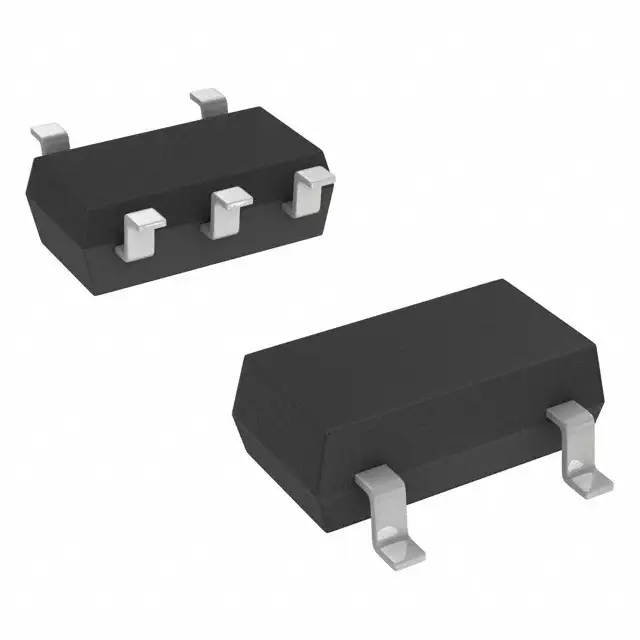
Build IA-like precision buffers for bridges/sensors when you need ST ecosystem or custom bandwidth. For ready-made IA, see cross-brand picks below.
- Very low offset; good for pre-buffering high-impedance sources
- Combine with matched diff-stage for IA behavior

When you need ST supply chain/qualification but a dedicated IA isn’t required—assemble a differential stage with precision resistors.
- Flexible bandwidth/supply planning
- Useful for DAQ front-ends & conditioning
Package comparison (for PCB planning)
| Model | Brand | Common packages | Pins (typ.) | Board footprint (relative) | Notes |
|---|---|---|---|---|---|
| INA333 | TI | MSOP, TSSOP, SOIC | 8 | Small → Medium | Zero-drift; ideal for compact boards |
| AD620 | ADI | DIP, SOIC | 8 | Medium → Large (DIP) | Education/retrofit friendly |
| AD8221 | ADI | SOIC, TSSOP | 8 | Medium | Precision industrial staple |
| AD8421 | ADI | SOIC | 8 | Medium | Wideband/low-noise |
| MCP6N11 | Microchip | MSOP, SOIC | 8 | Small → Medium | Zero-drift/low-power |
| MCP6N16 | Microchip | SOIC, TSSOP | 8 | Medium | Mainstream precision |
| TSZ121/TSZ122* | ST | SOT-23, SO-8 | 5 / 8 | Very small → Medium | Zero-drift op-amp for IA-like front ends |

Procurement tips
- Keep a second source list (see “Cross-brand” on each card) to mitigate lead-time swings.
- For automotive programs, verify AEC-Q100 options and PPAP early.
- Always confirm latest datasheets (offset, drift, CMRR, ICMR, BW) before final lock.
Want a shortlist matched to your rails, gain, and bandwidth? Submit your BOM for cross-brand alternatives and in-stock options.
FAQ
Quick answers to common questions—each links to a deeper section of this guide.
What is the instrumentation amplifier?
A precision differential voltage amplifier with very high input impedance, low offset, and high CMRR for tiny signals; see Definition & Working Principle.
What is the working principle of instrumentation?
Two input buffers plus a differential stage set gain via Rg (e.g., G ≈ 1 + 2R/Rg) to amplify only the differential signal; see Definition & Working Principle.
What is the difference between op-amp and instrumentation amplifier?
An op-amp is a building block; an IA is an op-amp–based IC optimized for differential sensing with fixed topology and easy gain set; see Op-Amp vs IA vs Diff-Amp.
Why is an instrumentation amplifier better than a differential amplifier?
IA offers much higher input impedance and typically better low-frequency CMRR with simple external gain setting; see Op-Amp vs IA vs Diff-Amp.
What is an instrumentation amplifier typically used for?
Bridge sensors, biopotentials (ECG/EEG), industrial/automotive measurements where μV–mV signals need clean gain; see Applications.
When to use an instrumentation amplifier?
Use an IA when your source is high-impedance or differential and you need high CMRR, low offset, and predictable gain; see Applications.
What is the practical use of instrumentation amplifier?
Conditioning small differential voltages for ADCs in medical, industrial, and automotive systems; see Applications.
What are the advantages of instrumentation amplifier?
High input impedance, high CMRR, low offset/drift, easy gain configuration, and sensor-friendly buffering; see Key Parameters.
What are the disadvantages of an instrumentation amplifier?
Cost/power can be higher, bandwidth falls at high gain, and zero-drift may add ripple—mitigations here: Common Problems & Limitations.
What are the problems with instrumentation amplifier?
Typical issues include rail saturation, CMRR shortfall, drift, and IB×R errors; fixes and checklists in Common Problems.
How to select an instrumentation amplifier?
Define signal/BW/offset/CMRR/ICMR needs, then shortlist via our cross-brand table; see Selection Guide.
How to identify a good amplifier?
Check that offset/drift/noise/CMRR meet targets at your gain and rails, with second-source availability; see Selection Guide.
How to test an instrumentation amplifier?
Verify Iq, offset (shorted-input), gain, −3 dB BW, CMRR, ICMR, noise, and IB using DMM/scope steps in Testing & Troubleshooting.
How to use a multimeter to test an amplifier?
Measure Iq in series, short inputs to read Vout for offset, and apply a known ΔV to check gain; steps in Testing & Troubleshooting.
What usually fails in an amplifier?
Saturation from ICMR/swing limits, instability at high gain, drift/1-f noise, and poor CMRR from layout; see Common Problems.
What are the three ideal characteristics of an instrumentation amplifier?
Very high input impedance, very high CMRR, and very low offset/drift at the required gain/bandwidth; see Key Parameters.
What instruments need an amp?
Load cells, pressure/flow bridges, ECG/EEG/EMG front-ends, and automotive sensors typically require an IA; see Applications.
Is an instrumentation amplifier an IC?
Yes—most IAs are monolithic ICs (e.g., INA333, AD620, MCP6N11) ready for drop-in use; see Best ICs.
Is an IA similar to a Transimpedance Amplifier (TIA)?
No—an IA amplifies differential voltage; a TIA converts current to voltage for sensors like photodiodes; see Op-Amp vs IA vs Diff-Amp.
How do I choose between zero-drift and wideband IAs?
Pick zero-drift for μV precision/low BW, wideband for faster dynamics—map needs in the Selection Guide.
Still unsure which part fits? Submit your BOM for a tailored shortlist and cross-brand alternatives.
Submit Your BOM
Turn supply risk into options with lead-time comparison, IC replacement checks, and instrumentation amplifier alternatives across brands. We review packages, pin-compatibility, and compliance, then return a shortlist tailored to your specs.
- Lead-time comparison: in-stock vs. second-source vs. buildable timelines.
- IC replacement: footprint/pin-compatible swaps and cross-brand equivalents.
- Compliance: AEC-Q100, industrial temp, and documentation readiness.
- Risk notes: EOL/NRND flags, lifecycle and supply volatility indicators.

Not sure about specs? See Key Parameters, shortlist parts in the Selection Guide, and check Best ICs before submitting.

Related Articles
- ·DDR4 vs DDR5 for Industrial Embedded Systems
- ·How to Choose Industrial DDR4 Memory for Medical Devices
- ·Memory Chip Price Increase: 2026 Market Trends, Samsung Pricing, Key Drivers and FAQ
- ·Memory Chip Manufacturers: Who Makes Memory Chips and Where
- ·Memory Chips: Materials, Applications, Types, and On-Chip Memory Explained
- ·Memory Chip Complete Guide: Definition, Manufacturers, Shortage, Manufacturing Process and Working Principles
- ·Fiber Optic Switch Guide: Definition, Connection Methods, Cabling, Disconnection and FAQ
- ·Optical Fiber Transmitter and Receiver Guide
- ·ICD Driver, LCD Driver & LCD Panel Driver Board Guide
- ·Touch Screen Overlay Guide for Commercial & Industrial Applications







.png?x-oss-process=image/format,webp/resize,h_32)


