
 German
 Japanese
 Portuguese
 Korea
Korea
 Mexico
 Dutch
Dutch


amp100 Transimpedance Amplifier: A Pop-Culture Powered, Engineer-Friendly Mega-Guide

If Tony Stark built a photodiode front-end for the Avengers’ next sensor suit, he’d reach for a transimpedance amplifier. If Batman wanted quieter night-vision optics, he’d obsess over the feedback resistor. And if Eleven needed to hear the softest whisper coming through the Upside Down of your PCB, she’d ask for one thing by name: the amp100 transimpedance amplifier.
Table of Contents
- The Cinematic Pitch: Why a Transimpedance Amplifier?
- Meet the Hero: amp100 transimpedance amplifier at a Glance
- Core Math, Zero Drama: Gain, Bandwidth, and Noise
- Choosing Rf and Cf like Bruce Wayne Chooses Gadgets
- Photodiode + amp100 Transimpedance Amplifier: Biasing, Reverse Current, and Capacitance
- PCB Layout: The “Don’t Be the Villain” Checklist
- Stability & Compensation: Taming the Capacitance Monster
- Noise: Who Invited the Demogorgon? (And How to Kick It Out)
- Application Playbooks (LiDAR, Oximetry, Spectroscopy, Particle Sensing)
- Troubleshooting Scenes: From Flicker to Full-Scale
- BOM & Component Tiering: Pragmatic Choices
- Production Tips, Test Hooks, and Calibration
- Bonus: Quick Reference Cards

1) The Cinematic Pitch: Why a Transimpedance Amplifier?
Voltage amplifiers love voltages. Current-mode sensors don’t. A transimpedance amplifier (TIA)—and specifically the amp100 transimpedance amplifier—converts whisper-small input currents from photodiodes, PMTs, and ionization detectors into clean, useful voltages with an inverting topology and predictable behavior.
- Voltage amp? Great when a voltage already exists.
- TIA? Essential for current-output sensors with tiny signals.
- amp100 transimpedance amplifier? Low input bias current, low noise, and stable when compensated correctly.
2) Meet the Hero: amp100 Transimpedance Amplifier at a Glance
The amp100 transimpedance amplifier is built to transform picoamp-to-milliamp sensor currents into precise voltages. Engineers like it for its balance of gain, bandwidth, and noise, plus layout-friendly traits.
Low Input Bias
Keeps dark current honest and preserves accuracy at high Rf.
Noise Conscious
Low voltage and current noise—the right mix for high-impedance nodes.
GBW for Days
Healthy gain-bandwidth product enables bandwidth even with large Rf.
Single-Supply Friendly
Works with modern low-voltage rails; often rail-to-rail output.
3) Core Math, Zero Drama: Gain, Bandwidth, and Noise
3.1 Transimpedance Gain
V_out = - I_in · R_fChoose Rf so the largest expected sensor current maps into your usable output swing with margin for headroom.
3.2 Bandwidth (First-Order View)
f_{-3dB} ≈ GBW / (2π · R_f · C_T), where C_T ≈ C_s + C_in + C_strayLarge diodes (big Cs) plus big Rf require either more GBW or careful compensation on the amp100 transimpedance amplifier.
3.3 Feedback Capacitor 101
Add Cf across Rf to shape response and secure phase margin. Start from estimates tied to total input capacitance and bench-tune with the real sensor.
3.4 Noise Sources
- Johnson noise (Rf):
√(4 k T R_f Δf) - Op-amp voltage noise en: Multiplied by noise gain
- Op-amp current noise in: Converted by Rf
- Shot noise (with light):
√(2 q I_photo Δf)

4) Choosing Rf and Cf like Bruce Wayne Chooses Gadgets
Step A: Define Dynamic Range
R_f ≤ V_FS,usable / I_max and R_f ≥ V_min,detect / I_minStep B: Estimate Total Capacitance
CT = photodiode junction capacitance (vs. bias) + amp input capacitance + strays.
Step C: Place Cf
Start from calculation; tune via transient response. Increase Cf to quell overshoot/ringing.
Step D: Sanity-Check Stability
- Probe output using a low-C tip (< 2 pF).
- Inject a known current step; confirm damping.
- Iterate until your amp100 transimpedance amplifier is well-behaved across light levels.
5) Photodiode + amp100 Transimpedance Amplifier: Biasing, Reverse Current, and Capacitance
Photoconductive mode (reverse bias) reduces capacitance and increases speed; photovoltaic mode (zero bias) can achieve lowest noise at the cost of bandwidth. The amp100 transimpedance amplifier supports both—pick based on speed versus noise priorities.
- Use a clean, filtered reverse bias for speed-critical designs.
- Add a guard ring around the inverting input to suppress leakage.
- Characterize dark performance and ambient IR sensitivity early.
6) PCB Layout: The “Don’t Be the Villain” Checklist
- Micro-loop feedback: Place Rf/Cf kissing the amp100 transimpedance amplifier pins.
- Ground strategy: Quiet analog return; keep digital currents away.
- Guard ring: Surround the inverting input node.
- No 90° turns: Keep critical nets short and shielded.
- Decoupling: 0.1 µF + 1 µF at the pins; bulk 10–47 µF nearby.
- Probe pads: Add pads for current injection and output monitoring.
.png?x-oss-process=image/auto-orient,1/quality,q_70/format,webp)
7) Stability & Compensation: Taming the Capacitance Monster
- Estimate CT = Cs + Cin + Cstray.
- Pick Rf from range and noise targets.
- Choose Cf so
f_z = 1 / (2π R_f C_f)sits well below crossover. - Measure the step response; increase Cf if you see overshoot.
- Re-validate bandwidth versus requirements—don’t over-damp.
8) Noise: Who Invited the Demogorgon? (And How to Kick It Out)
- Use metal-film Rf for low excess noise.
- Keep the inverting node immaculate and guarded.
- Shield from EMI; make an analog island for the amp100 transimpedance amplifier.
- Limit bandwidth to what you actually need; extra MHz invite noise.
9) Application Playbooks Featuring the amp100 Transimpedance Amplifier
9.1 LiDAR / Time-of-Flight
- Reverse-biased APD/PD, carefully tuned Cf, tiny loop area.
- Consider a small series resistor at the diode to tame HF peaking.
- amp100 transimpedance amplifier perk: fast rise with controlled tails.
9.2 Pulse Oximetry / Biomedical
- Microamp-scale signals; suppress 50/60 Hz; average LED pulses.
- Constrain bandwidth to physiological range; shield aggressively.
- amp100 transimpedance amplifier perk: low noise with reasonable Rf.
9.3 Spectroscopy / Colorimetry
- Stable DC + AC response, low drift across temperature.
- Photovoltaic mode if speed allows; compensate in firmware.
- amp100 transimpedance amplifier perk: predictable noise floor for long integration.
9.4 Particle / Smoke Detection
- Very high Rf, meticulous guarding, robust supply filtering.
- Shield enclosure; keep sensor cabling low-C and well-grounded.
- amp100 transimpedance amplifier perk: quiet operation in noisy boxes.
.png?x-oss-process=image/auto-orient,1/quality,q_70/format,webp)
10) Troubleshooting Scenes: From Flicker to Full-Scale
Ringing / Overshoot
Cause: Cf too small, ignored parasitics
Fix: Increase Cf; shorten loop; shield sensor lead.
Oscillation at High Light
Cause: Loop gain shift, rail sag
Fix: Add bulk cap; check headroom; re-confirm phase margin.
Low-Frequency Wander
Cause: Temp drift, ambient IR, leakage
Fix: Guard ring; optical baffling; temperature logging.
Excess Noise Floor
Cause: Rf excess noise, EMI, wide bandwidth
Fix: Metal-film Rf; shielding; bandwidth limiting.
ADC Clips Early
Cause: Rf too large, bias point off, headroom limit
Fix: Reduce Rf; verify bias; respect rail specs.
11) BOM & Component Tiering: Pragmatic Choices
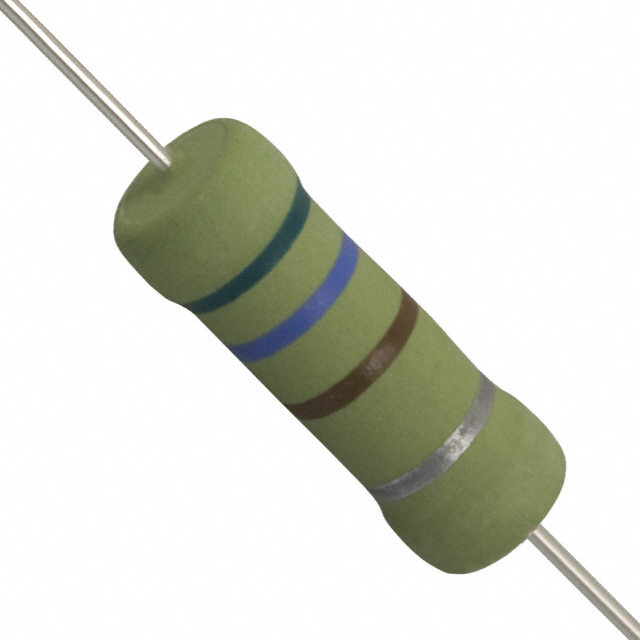
- Rf (Feedback Resistor): Precision metal-film, low tempco, e.g., 0.1%.
- Cf (Feedback Capacitor): C0G/NP0 ceramic or quality film.
- Bias Network: Low-leakage parts and RC filtering for reverse bias.
- Decoupling: 0.1 µF + 1 µF at pins; bulk 10–47 µF nearby.
- Shielding: Grounded copper pours or a small metal can over the TIA region.
- Connectors/Cabling: Low-capacitance, shielded, especially for off-board sensors.
12) Production Tips, Test Hooks, and Calibration
- Build 3–5 golden units with the amp100 transimpedance amplifier and characterize across supply and temperature.
- Add pads for current injection, output monitoring, and a nearby ground.
- Standardize optical fixtures for repeatable measurements.
- Store per-unit trims (gain/offset) in non-volatile memory.
- Run elevated temp/humidity aging to catch drift near the inverting node.
- Use ESD protection for external connectors and sensor cables.
.png?x-oss-process=image/auto-orient,1/quality,q_70/format,webp)
Bonus: Quick Reference Cards
Design Formulae
V_out = - I_in · R_f
f_{-3dB} ≈ GBW / (2π · R_f · C_T)
Shot noise current = √(2 q I_photo Δf)
Johnson noise (R_f) = √(4 k T R_f Δf)
Layout Top-5
- Keep Rf/Cf at the op-amp pins.
- Guard ring the inverting node.
- Decouple at the pins: 0.1 µF + 1 µF.
- Shield the sensor lead; keep nodes short.
- Clean analog ground return.
Bring-Up Steps
- Check idle output in the dark.
- Verify reverse-bias stability (if used).
- Inject fast current step and tune Cf.
- Sweep light; confirm linearity and headroom.
- FFT the noise with bandwidth limiting engaged.

 FAQ
FAQ








.png?x-oss-process=image/format,webp/resize,h_32)


