
 German
 Japanese
 Portuguese
 Korea
Korea
 Mexico
 Dutch
Dutch


Analog Optoisolator: How to Choose Linear Isolation That Doesn’t Drift, Clip, or Ghost Your Signal

This is not a “what is an optocoupler” encyclopedia page. It’s a decision guide for engineers and buyers who need analog isolation that behaves like a signal path—not like a moody flashlight. A wrong analog optoisolator choice rarely fails loudly. It fails as: gain drift, calibration headaches, weird distortion at temperature, noisy readings, and “it worked in validation… until production.”
.png?x-oss-process=image/auto-orient,1/quality,q_70/format,webp)
One-Screen Answer (Selection + Procurement)
When people say “analog optoisolator,” they usually mean one of two goals: (1) pass an analog signal across an isolation barrier or (2) measure something analog on the high side and deliver a clean representation to the low side. The best choice depends on what you are protecting: accuracy, bandwidth, noise immunity, or qualification time.
- Simple linear transfer, low/medium bandwidth: linear optocoupler + op-amp servo loop.
- Accuracy & drift matter (industrial sensing): isolation amplifier or isolated ADC/modulator is the safer default.
- Harsh switching noise (inverters/SMPS): prioritize high CMTI + good layout; don’t blame “random noise” on firmware.
- Supply pressure: qualify footprint-compatible alternates early; define calibration scope upfront.
Treating an analog optoisolator like a commodity “isolation part.” Two parts can both isolate 3–5 kVrms, yet behave wildly differently in linearity, gain drift, CTR aging, and noise under fast dv/dt. That’s how “drop-in replacement” quietly becomes “why did our ADC readings move 3% at 60°C?”
Don’t spec “optoisolator, analog.” Spec: transfer accuracy (gain/offset/nonlinearity), temperature drift, bandwidth, noise density, CMTI, isolation rating, plus whether you will allow calibration (and at what stage: factory, field, per-unit, or per-batch).
Where an Analog Optoisolator Actually Makes Sense
The phrase analog optoisolator gets used for a lot of circuits. Before you pick a part, pin down your use case, because it dictates the failure mode you’ll see later.
Motor drives, inverters, and industrial power supplies often need isolated current measurement. Here the enemy is switching noise (fast dv/dt and di/dt) and drift over temperature. If your current reading wobbles when the PWM switches, your “analog path” is actually an EMC experiment.
Offline SMPS feedback, high-voltage measurement, and precision regulation loops. Here you care about loop stability, bandwidth, and long-term drift. “It regulates in the lab” is not the same as “it regulates after 1,000 hours at high temperature.”
Medical/industrial sensors, thermocouples, strain gauges, and analog control signals. Here you care about linearity and noise floor. The isolation part becomes part of your measurement chain, so drift and noise are first-class requirements.
.png?x-oss-process=image/auto-orient,1/quality,q_70/format,webp)
Which “Analog Optoisolator” Type Are You Actually Buying?
Not all analog isolation is the same. Some solutions are truly optical and analog; others convert analog to a different representation and then isolate it. From a procurement view, these are different “risk profiles.”
- Pros: True analog path; can be elegant for isolated feedback loops.
- Cons: Needs external op-amps; gain depends on loop design; CTR/aging still matters.
- When it wins: You can afford calibration/trim and want a flexible analog transfer.
- Pros: Easier qualification; datasheet accuracy/drift is clearer; fewer analog “gotchas.”
- Cons: May require isolated power; bandwidth may be capped depending on architecture.
- When it wins: Industrial measurement where drift and EMC must be predictable.
- Pros: Strong noise immunity; easy digital filtering; good for harsh switching nodes.
- Cons: Needs digital processing (Sinc filters, decimation); latency matters in control loops.
- When it wins: Current sensing in inverters/SMPS where CMTI is king.
If your program can’t tolerate “analog surprises,” prefer solutions with explicit gain/offset/drift specs. If you’re optimizing cost and you control calibration, a linear optocoupler can be excellent—just don’t pretend it’s plug-and-play.
Decision Question: What Accuracy and Linearity Do You Need (and Who Pays for It)?
The biggest misconception about an analog optoisolator is that isolation is the hard part. In reality, transfer fidelity is the hard part. You’re moving an analog quantity across a barrier and hoping it comes out with the same meaning.
- Gain error: your slope is wrong (everything reads high/low).
- Offset error: zero isn’t zero (critical for low-level sensing).
- Nonlinearity: mid-scale bends (looks like “mystery distortion”).
- Temp drift: it moves with temperature even if room-temp calibration is perfect.
If you can do per-unit calibration (factory), you can tolerate more raw gain spread. If you cannot calibrate (or you must meet spec out of the box), you need a solution with tighter guaranteed transfer specs. That choice changes which “analog optoisolator” family is even viable.
Your RFQ should state whether calibration is allowed and at what points. Otherwise quotes are not comparable: one supplier assumes “calibrate in firmware,” another assumes “no calibration,” and the BOM looks misleadingly similar.
.png?x-oss-process=image/auto-orient,1/quality,q_70/format,webp)
Decision Question: How Much Bandwidth Do You Need (and What’s Your Loop Stability)?
Bandwidth is not just “can it pass a fast signal.” It’s also “will my feedback loop remain stable.” Many analog optoisolator circuits are used in control loops (power supplies, drives). The isolation element adds phase shift and limits; your compensation must match reality, not hope.
- Define signal content: DC-only sensing, slow control, audio-band, or fast transient capture?
- Define acceptable latency: control loops hate long delays; monitoring systems tolerate it.
- Choose architecture accordingly: linear optocoupler loops can be tuned; isolated modulators add filtering latency; isolation amps vary by design.
- Validate with real parasitics: layout, load, and isolated supply noise can reduce effective bandwidth.
Decision Question: Is Your Limit Noise Floor or Noise Immunity?
Analog isolation has two noise enemies: (1) intrinsic noise (device + amplifier noise) and (2) coupled noise (common-mode transients from switching nodes). Many “noisy measurement” bugs come from confusing these two.
Shows up as random jitter in ADC codes even when the system is electrically quiet. Reduce with better front-end design, bandwidth limiting, proper filtering, and appropriate gain staging.
Shows up synchronized with PWM edges (you can almost “hear” it if you stare at the scope long enough). This is where CMTI, creepage/clearance, capacitance across the barrier, and layout discipline dominate.
If you don’t specify environment (inverter? fast MOSFETs? cable length?), the part selection can be correct on paper and wrong in the system. Include switching edge rates and expected common-mode events in your RFQ checklist.
.png?x-oss-process=image/auto-orient,1/quality,q_70/format,webp)
Decision Question: Can You Live with Drift, CTR Aging, and “Calibration Debt”?
Optical devices are wonderful—and also living creatures compared to resistors. LED output changes with temperature, current, and time. In classic optocouplers this is expressed as CTR (current transfer ratio), but for an analog optoisolator the real effect you see is: gain moves.
- Short term: gain changes with temperature → different readings between cold and warm.
- Medium term: LED aging → unit-to-unit variation grows over time.
- Long term: calibration tables become invalid → field updates or service cycles.
Isolation Ratings, Creepage, and CMTI: The Specs That Prevent “Weird Spikes”
Isolation is not one number. For an analog optoisolator to behave under real switching conditions, you care about: withstand voltage, creepage/clearance, and common-mode transient immunity (CMTI). The classic failure mode here is a measurement that “glitches” exactly when a MOSFET switches.
Good for safety categorization, but it won’t automatically save you from fast transients. Don’t confuse “kVrms rating” with “immune to inverter edges.”
This is where PCB layout becomes part of the safety rating. Slots, keepouts, conformal coat assumptions, pollution degree—these can dominate approval.
If you’re near fast switching nodes, CMTI is often the spec that decides success. If you can correlate glitches with PWM edges, treat it as a CMTI/layout problem first.
.png?x-oss-process=image/auto-orient,1/quality,q_70/format,webp)
Layout & EMC: How PCB Reality Alters Your “Analog” Transfer
An analog optoisolator circuit is not only the isolator IC. It’s also the return paths, the isolated supply, and the coupling capacitance across the barrier. If your board “works until you add the motor cable,” that’s EMC physics, not bad luck.
- Keep the isolation barrier clean: no copper sneaking under it.
- Route analog inputs as a controlled, quiet loop; avoid sharing return with switching currents.
- Decouple isolated supplies aggressively and locally; treat the isolator like a mixed-signal IC.
- If using op-amp servo loops, keep compensation components tight and protect high-impedance nodes.
Separate “measurement ground” from “power ground” intentionally, then connect only where your system architecture says it should. Add input RC filtering where it protects bandwidth without breaking control response.
If an alternate package changes creepage or barrier capacitance, EMC behavior can change. For analog optoisolator alternates, treat package + barrier geometry as a functional parameter, not just mechanical.
Troubleshooting Path: When the “Analog Optoisolator” Signal Looks Wrong
Most field failures present as one of four symptoms: gain error, offset, clipping/distortion, or noise spikes synchronized to switching. Use this path to isolate root cause quickly.
- Confirm input range: are you overdriving the LED/op-amp and hitting a nonlinear region?
- Check isolated supply: ripple or brownouts can look like “random analog errors.”
- Separate intrinsic vs coupled noise: does noise correlate with PWM edges?
- Verify compensation: servo loops that are marginal can ring or overshoot under load changes.
- Temperature sweep: if gain moves with temperature, suspect drift/CTR aging assumptions.
- Alternate part test: if the problem appears only with a new lot, treat it as transfer-characteristic change, not “mystery firmware.”
.png?x-oss-process=image/auto-orient,1/quality,q_70/format,webp)
Popular Part Numbers (No Brand Names)
Below are commonly referenced starting-point part numbers used in analog isolation conversations. This is not an endorsement list and not a guarantee of fit. Always confirm: transfer specs, temperature range, bandwidth, package creepage, and your system’s switching-noise environment.
| Part number | Category | Signal style | Package hint | Why people start here |
|---|---|---|---|---|
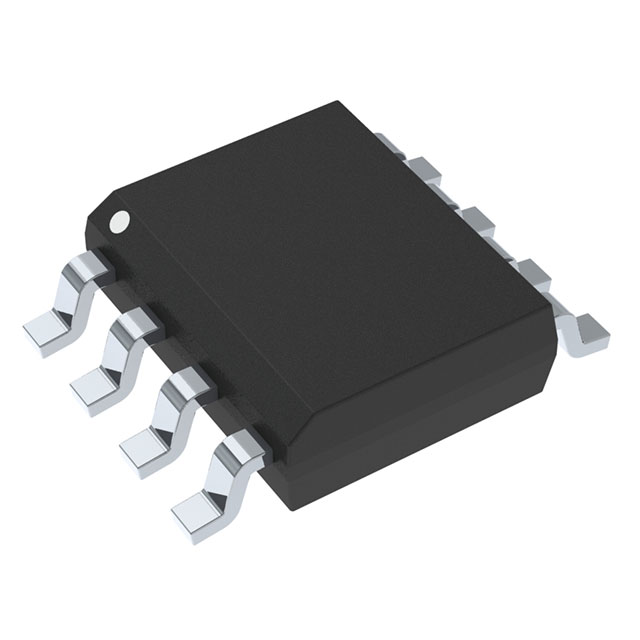
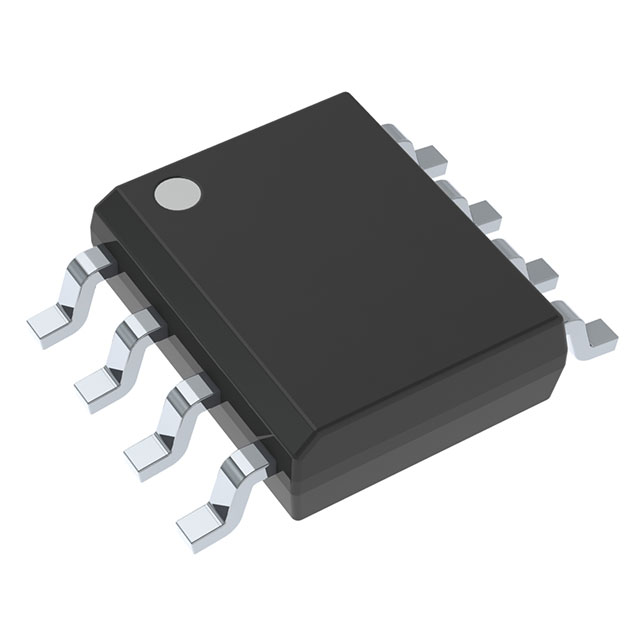
| IL300 | Linear optocoupler | Analog transfer w/ feedback photodiode | DIP/SMD variants | Classic “analog optoisolator” reference for servo-loop designs. |
| HCNR200 | Linear optocoupler | Analog, dual photodiode | DIP/SMD variants | Used for linear transfer where external op-amps handle accuracy. |
| HCNR201 | Linear optocoupler | Analog, dual photodiode | DIP/SMD variants | Often paired with app-note servo topologies for better linearity. |
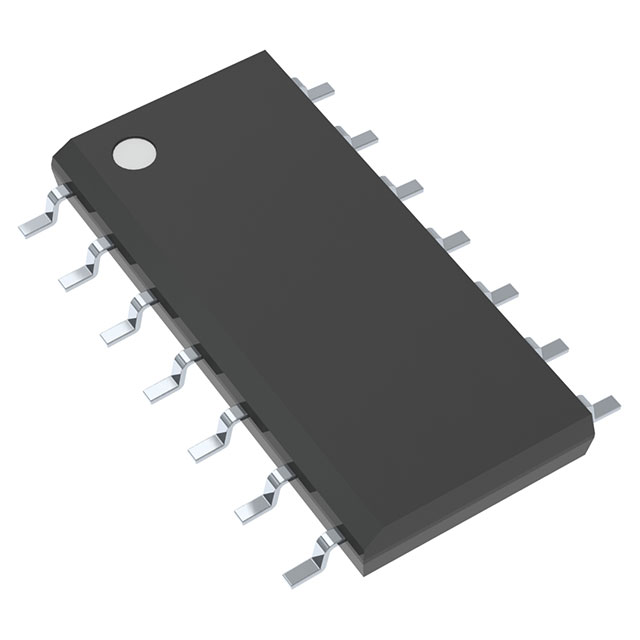
| ACPL-7900 | Isolation amplifier | Analog output, specified transfer | SOIC wide-body class | Industrial current sensing reference in many designs. |
| AMC1200 | Isolation amplifier | Analog output, specified transfer | SOIC wide-body class | Common isolated measurement building block for drives/inverters. |
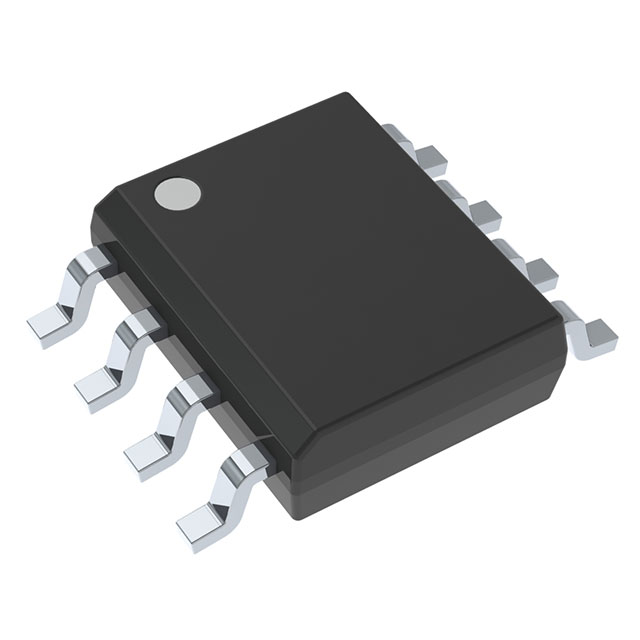
| ADuM3190 | Isolated error amplifier | Feedback/control oriented | SOIC class | Used in isolated regulation loops where linear behavior matters. |
| ACPL-C87B | Isolated modulator | Bitstream output (digital filter/decimation) | SOIC wide-body class | Favored for harsh switching environments and robust current sensing paths. |
“Same category” does not guarantee the same behavior. For analog optoisolator alternates, validate: gain/offset/nonlinearity across temperature, noise under switching, and loop stability (if used in feedback). Treat package creepage and barrier capacitance as functional parameters.
Analog Optoisolator Selection Checklist (RFQ-Ready)
Copy/paste this into an RFQ so suppliers respond with comparable options—without hidden assumptions.
| Decision question | Why it affects selection | What to specify in RFQ |
|---|---|---|
| Use case | Defines accuracy, bandwidth, and noise requirements. | Current sense / voltage feedback / sensor isolation / control loop. |
| Transfer accuracy | Avoids calibration debt and field drift surprises. | Max gain error, offset error, nonlinearity (over temp). |
| Temperature range | Drift is where “bench OK” becomes “field wrong.” | Min/max operating temp, drift targets, aging expectations. |
| Bandwidth & latency | Controls loop stability and signal fidelity. | Required bandwidth, acceptable delay/latency, loop type (if any). |
| Noise environment | Switching noise can dominate in power systems. | PWM edge rates, common-mode events, cable lengths, EMC constraints. |
| Isolation & package | Safety approval and EMC behavior depend on geometry. | Withstand rating, creepage/clearance, package type/footprint constraints. |
| Supply continuity | Prevents redesign and re-qualification surprises. | Lifecycle/lead time, alternates plan, minimal validation scope for alternates. |
.png?x-oss-process=image/auto-orient,1/quality,q_70/format,webp)
CTA: Get Analog Isolation Matched to Accuracy + Noise + Footprint
If you’re locking a BOM, replacing an EOL isolation part, or debugging drift/noise issues, send an RFQ with your transfer accuracy, temperature range, bandwidth/latency, and noise environment. You’ll receive options that protect your validation schedule and reduce sourcing risk.
- Signal type + range (voltage/current)
- Max gain/offset/nonlinearity over temp
- Bandwidth + latency limits
- Switching environment (PWM edge rates, dv/dt)
- Package/creepage + alternates strategy
FAQ: Analog Optoisolator Selection & Sourcing
What is an analog optoisolator used for?
An analog optoisolator is used to transfer an analog signal across an isolation barrier for safety and noise reasons. Common uses include isolated current sensing, isolated voltage feedback in power supplies, and isolating sensitive sensor signals from noisy power domains.
Linear optocoupler vs isolation amplifier: which should I choose?
Choose a linear optocoupler when you can design a closed-loop servo and accept calibration/trim for best results. Choose an isolation amplifier (or isolated modulator path) when you need clearer guaranteed accuracy and drift, faster qualification, and predictable behavior under switching noise.
Why does my isolated analog measurement glitch during PWM switching?
If glitches correlate with PWM edges, treat it as a CMTI/layout problem first. Improve return paths, isolate noisy currents, decouple isolated supplies locally, add appropriate filtering, and validate the isolation part’s immunity in your real dv/dt environment.
Do analog optoisolators drift over time?
Many optical solutions can drift because LED output changes with temperature and aging. Closed-loop configurations and architectures with specified gain drift reduce this risk. If you rely on open-loop CTR-like behavior, expect gain variation and plan calibration accordingly.
What should I include in an RFQ for analog optoisolators?
Include use case, input range, required gain/offset/nonlinearity over temperature, bandwidth/latency needs, switching noise environment (dv/dt), isolation and package constraints (creepage/clearance), and your alternates validation plan.

Related Articles
- ·Optoisolator Relay: How to Choose, Drive, and Troubleshoot Solid-State Relay Circuits
- ·Optoisolator Board: How to Choose the Right Isolation Module for MCU, PLC, and Noisy Power Systems
- ·Analog Optoisolator: How to Choose Linear Isolation That Doesn’t Drift, Clip, or Ghost Your Signal
- ·Triac Optoisolator: How to Choose the Right Part for AC Switching, Dimming, and Industrial Control








.png?x-oss-process=image/format,webp/resize,h_32)


