German
 Japanese
 Portuguese
 Korea
 Mexico
 Dutch


MKE06Z64VLH4 vs Other 32-bit MCUs: A Detailed Comparison

What is MKE06Z64VLH4?
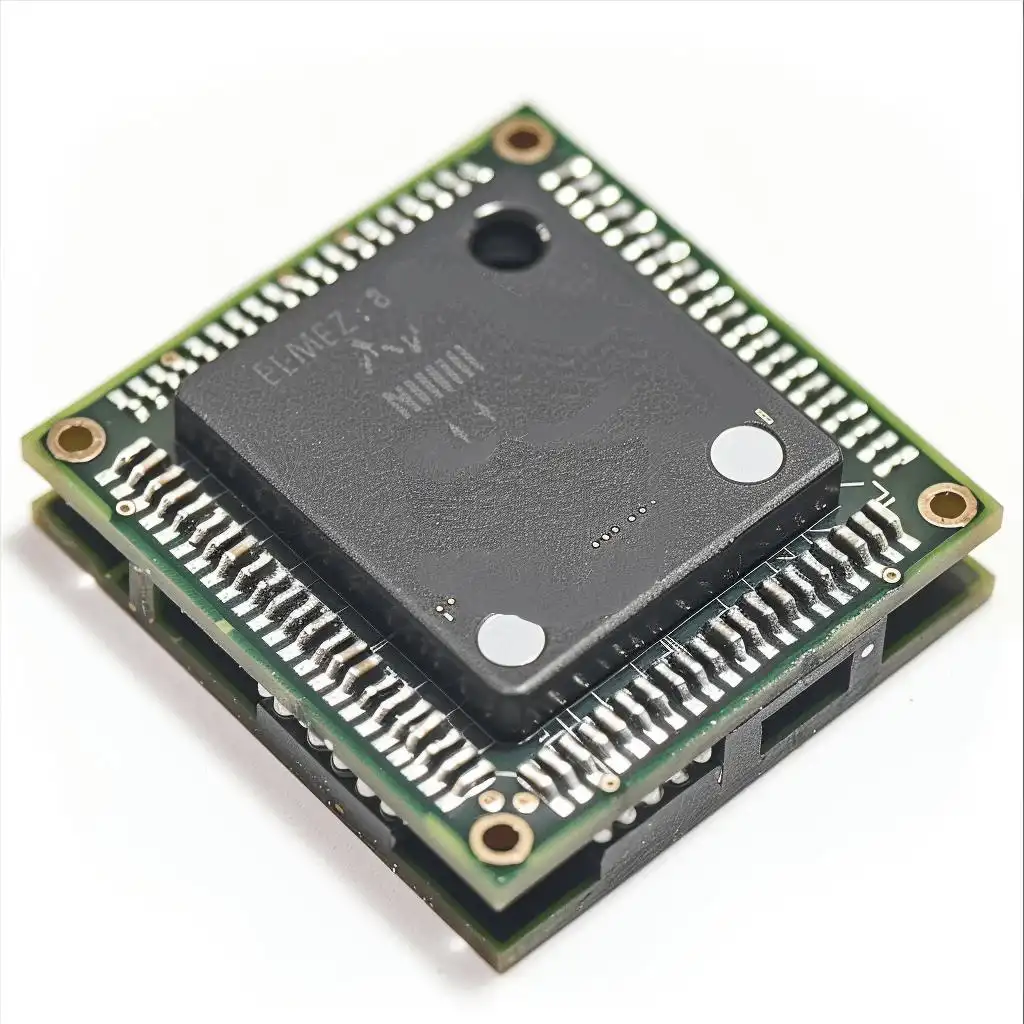
A NXP's Kinetis E family member, the MKE06Z64VLH4 is intended for applications needing strong performance but on a budget. Its 32-bit ARM Cortex-M0+ processor provides a decent mix of cost, performance, and power efficiency.
Features of MKE06Z64VLH4
Microcontroller (MCU): A microcontroller, or MCU, is a tiny computer that resides on a single chip and is utilized to operate various electrical devices. It can analyze data, follow instructions, and communicate with outside elements.
ARM Cortex-M0+ Core: The "brain" or processing core of the microcontroller is referred to as the ARM Cortex-M0+ Core. This kind of CPU architecture is intended for low-power and economical uses.
32-Bit Single-Core: With only one core and the ability to process 32 bits of data at once, it can only perform one task or instruction at a time.
48 MHz Clock Speed: This is the rate at which instructions can be carried out by the microcontroller. 48 million cycles per second are represented by 48 MHz.
64KB Flash Memory: The microcontroller stores data and programs in this non-volatile memory that remains active even when the power is turned off. 64KB is an abbreviation for 64 kilobytes, a unit of data storage.
MKE06Z64VLH4 vs Other 32-bit MCUs: Comparison Criteria
Taking into account the following factors, we will compare the MKE06Z64VLH4 to comparable 32-bit MCUs in an efficient manner:
Core Performance: Processing capacity and clock speed.
Memory Capacity: the availability of SRAM and flash memory.
Peripheral Support: Peripheral types and numbers.
Power Consumption: Energy-efficient use of power.
Operational Voltage Range: Variability based on power source circumstances.
Cost: Total cost-effectiveness across a range of uses.
Video related to 32-bit MCU
MKE06Z64VLH4 vs STM32F103C8T6
STM32F103C8T6 Overview
The STM32F103C8T6 is a popular microcontroller from STMicroelectronics, featuring a 32-bit ARM Cortex-M3 core. It is widely used in industrial and consumer applications.
Key Features
Core: 32-bit ARM Cortex-M3
Flash Memory: 64 KB
SRAM: 20 KB
Operating Voltage: 2.0V to 3.6V
Peripherals: ADC, UART, I2C, SPI, GPIO
Package: 48 LQFP
Comparison
Core Performance: The ARM Cortex-M3 core of the STM32F103C8T6 has greater power than the MKE06Z64VLH4's M0+ core, making it more suitable for compute-intensive workloads.
Memory: Applications needing additional temporary data storage may find the STM32F103C8T6's 20 KB of SRAM more advantageous than the MKE06Z64VLH4's 4 KB.
Peripheral Support: The peripheral sets provided by both MCUs are comparable, however, the STM32F103C8T6 has a greater selection of sophisticated peripherals.
Power Consumption: Because of its Cortex-M0+ CPU, the MKE06Z64VLH4 has a usually lower power consumption.
Operating Voltage Range: With a larger support range for voltage, the MKE06Z64VLH4 offers additional alternatives for power supplies.
Cost: In general, the MKE06Z64VLH4 is more affordable, particularly for applications that do not require the advanced features of the Cortex-M3.
MKE06Z64VLH4 vs ATmega328P
ATmega328P Overview
The ATmega328P is an 8-bit microcontroller from Microchip Technology, well-known for its use in Arduino boards.
Key Features
Core: 8-bit AVR
Flash Memory: 32 KB
SRAM: 2 KB
Operating Voltage: 1.8V to 5.5V
Peripherals: ADC, UART, I2C, SPI, GPIO
Package: 28 PDIP
Comparison
Core Performance: In terms of computing power, the MKE06Z64VLH4's 32-bit ARM Cortex-M0+ core performs noticeably better than the ATmega328P's 8-bit AVR core.
Memory: The MKE06Z64VLH4 has four KB of SRAM and 64 KB of Flash memory in comparison to the ATmega328P.
Peripheral Support: Although the MKE06Z64VLH4's peripherals are generally more sophisticated, both MCUs offer a comparable selection of peripherals.
Power Consumption: Although the ATmega328P is optimized for low power consumption and operates with great efficiency when in sleep mode, the MKE06Z64VLH4 additionally has effective power management capabilities.
Operating Voltage Range: A few low-power applications may benefit from the ATmega328P's somewhat broader voltage range capability.
Cost: The ATmega328P is a popular option for beginners and straightforward projects because it is frequently less expensive. Nevertheless, in more intricate applications, the MKE06Z64VLH4 provides better value.
MKE06Z64VLH4 vs PIC32MX250F128B
PIC32MX250F128B Overview
The PIC32MX250F128B is a 32-bit microcontroller from Microchip Technology, featuring a MIPS32 core. It is widely used in industrial and consumer applications.
Key Features
Core: 32-bit MIPS32
Flash Memory: 128 KB
SRAM: 32 KB
Operating Voltage: 2.3V to 3.6V
Peripherals: ADC, UART, I2C, SPI, GPIO
Package: 28 PDIP
Comparison
Core Performance: The ARM Cortex-M0+ core in the MKE06Z64VLH4 and the MIPS32 core in the PIC32MX250F128B both provide robust performance.
Memory: When compared to the MKE06Z64VLH4, the PIC32MX250F128B has substantially greater SRAM (32 KB) and Flash memory (128 KB).
Peripheral Support: Both MCUs provide a wide range of peripherals, although in terms of sophistication and variety, the PIC32MX250F128B has a minor advantage.
Power Consumption: In general, the MKE06Z64VLH4 uses less power, which is important for applications that run on batteries.
Operating Voltage Range: With a larger voltage range supported, the MKE06Z64VLH4 is more adaptable to a variety of power supply circumstances.
Cost: The MKE06Z64VLH4 offers a better mix of performance and cost, making it generally more economical.
MKE06Z64VLH4 vs MSP430F5529
MSP430F5529 Overview
The MSP430F5529 is a 16-bit microcontroller from Texas Instruments, known for its ultra-low power consumption.
Key Features
Core: 16-bit MSP430
Flash Memory: 128 KB
SRAM: 8 KB
Operating Voltage: 1.8V to 3.6V
Peripherals: ADC, UART, I2C, SPI, GPIO
Package: 64 LQFP
Comparison
Core Performance: The MKE06Z64VLH4's 32-bit ARM Cortex-M0+ core performs better than the 16-bit MSP430 core.
Memory: In comparison to the MKE06Z64VLH4, the MSP430F5529 has greater Flash memory (128 KB) and SRAM (8 KB).
Peripheral Support: The peripherals provided by both MCUs are comparable, while the MKE06Z64VLH4 has a generally more sophisticated peripheral set.
Power Consumption: The extremely low power consumption of the MSP430F5529 makes it perfect for battery-operated applications.
Operating Voltage Range: A wider range of voltages is supported by the MKE06Z64VLH4, giving power supply options greater flexibility.
Cost: The MKE06Z64VLH4 offers a solid combination of performance, power efficiency, and cost, making it generally more economical.
MKE06Z64VLH4 vs SAMD21G18A
SAMD21G18A Overview
The SAMD21G18A is a 32-bit microcontroller from Microchip Technology, featuring an ARM Cortex-M0+ core. It is widely used in consumer electronics and IoT applications.
Key Features
Core: 32-bit ARM Cortex-M0+
Flash Memory: 256 KB
SRAM: 32 KB
Operating Voltage: 1.62V to 3.63V
Peripherals: ADC, UART, I2C, SPI, GPIO
Package: 48 LQFP
Comparison
Core Performance: The ARM Cortex-M0+ core, which powers the MKE06Z64VLH4 and SAMD21G18A, offers comparable performance.
Memory: In comparison to the MKE06Z64VLH4, the SAMD21G18A has substantially greater Flash memory (256 KB) and SRAM (32 KB).
Peripheral Support: Both MCUs have a wide range of peripherals, however, the SAMD21G18A has more memory and a wider selection of peripherals than the other.
Power Consumption: Because of their low power consumption designs, both MCUs are appropriate for battery-operated applications.
Operating Voltage Range: By supporting a little broader voltage range, the MKE06Z64VLH4 offers a greater selection of power supply alternatives.
Cost: Usually more affordable, the MKE06Z64VLH4 provides a decent performance-to-cost ratio for applications that don't need a lot of memory.
Conclusion
NXP's MKE06Z64VLH4 microcontroller is an affordable and adaptable option for a variety of embedded uses. It is competitive with other well-known 32-bit MCUs due to its strong performance, effective power management, and extensive peripheral selection. The MKE06Z64VLH4 microcontroller is a great option for many developers since it offers a well-balanced collection of functions, unlike other microcontrollers that might specialize in certain areas, such as memory capacity or extremely low power consumption.

Related Articles
- ·MediaTek MT6366 vs. MT6373: Features, Architecture, Applications, and Design Considerations
- ·Qualcomm PM8550 vs. PM8550B vs. PM8550VS: Features, Differences, Applications, and Selection Guide
- ·Qualcomm PM8350 vs. PM8350C: Architecture, Features, Applications, and Selection Guide
- ·Qualcomm PM8150 vs. PM8150B vs. PM8150L: Functions, Architecture, Applications, and Selection Guide
- ·SGM41541 vs. SGM6605: Battery Charger and Synchronous Boost Converter Comparison
- ·ADI LTM4630A vs. LT8645S: Power Module and Silent Switcher Regulator Comparison
- ·Richtek RT8206A vs. RT9013: Architecture, Specifications, Applications, and Design Considerations
- ·MPS MP2657, MPQ6610GJ-AEC1-Z, and MP2856: Identification, Functions, and Application Comparison
- ·TPS6594-Q1 vs. TPS65219-Q1 vs. TPS653860-Q1 vs. LP87745-Q1: TI Automotive PMIC Comparison
- ·Electronic Components Monthly Market Report
 FAQ