German
 Japanese
 Portuguese
 Korea
 Mexico
 Dutch


MKE06Z64VLH4 in Embedded Systems: Benefits and Use Cases

What is MKE06Z64VLH4?
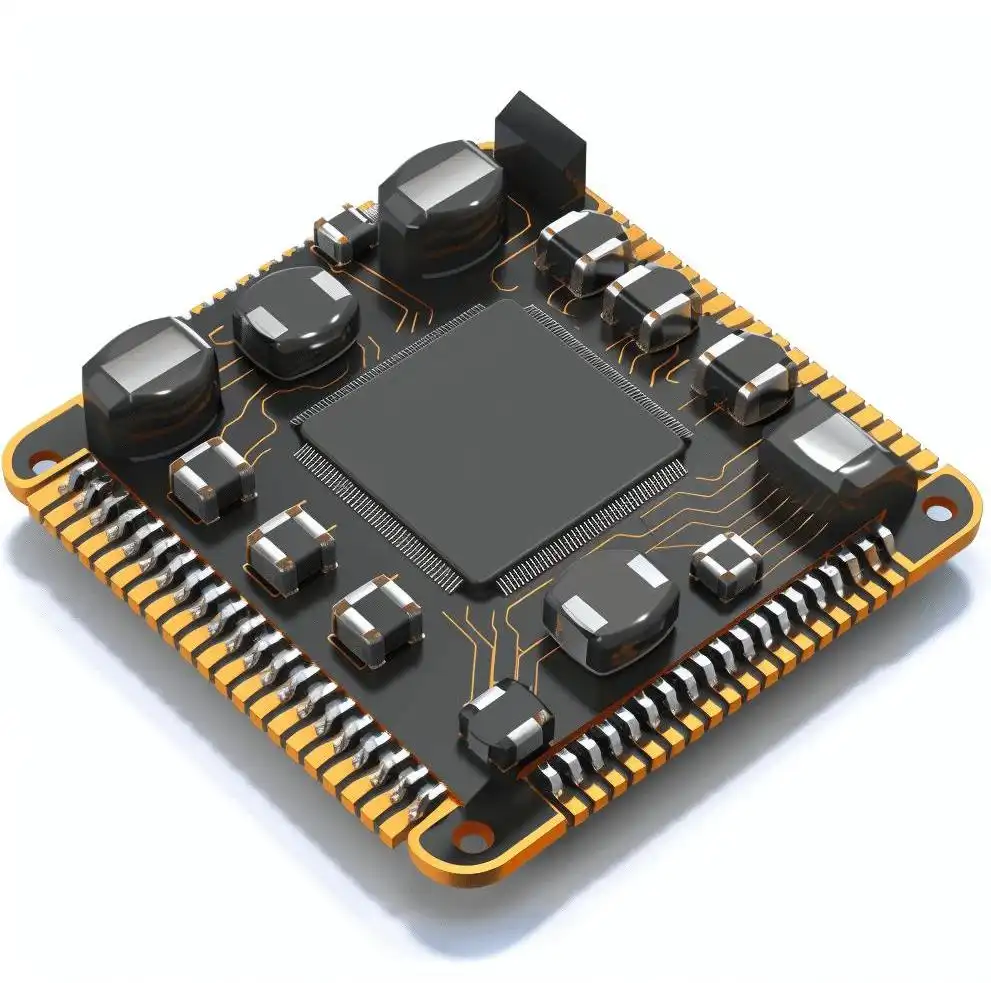
A member of NXP's Kinetis E series, the MKE06Z64VLH4 Microcontroller is intended to provide an affordable option for a variety of uses. This microcontroller, with its 32-bit ARM Cortex-M0+ core, offers the ideal compromise between cost, power consumption, and performance.
Overview of the MKE06Z64VLH4
Core: 32-bit ARM Cortex-M0+
Flash Memory: 64 KB
SRAM: 4 KB
Operating Voltage: 2.7V to 5.5V
Peripherals: ADC, UART, I2C, SPI, GPIO
Package: 64 LQFP
Because of its design to provide dependable performance even in the most challenging electrical settings, this microcontroller is perfect for use in consumer, industrial, and automotive applications.
Features of MKE06Z64VLH4
Robust Core Performance: With a maximum frequency of 48 MHz, the ARM Cortex-M0+ core offers effective processing capability for various applications.
Flexible Memory Options: The MKE06Z64VLH4 provides plenty of space for code and data storage with 64 KB of Flash memory and 4 KB of SRAM.
Wide Operating Voltage Range: An operating voltage range of 2.7V to 5.5V may be used with various power supply setups.
Rich Peripheral Set: Consists of numerous UARTs for serial communication, I2C, and SPI interfaces for peripheral connectivity, GPIOs for digital input/output, and ADCs for processing analog signals.
Specifications of MKE06Z64VLH4
CPU: ARM Cortex-M0+ core, up to 48 MHz
Memory: 64 KB Flash, 4 KB SRAM
I/O Pins: 53 GPIO pins
Communication Interfaces: 2x UART, 2x SPI, 2x I2C
Analog Peripherals: 12-bit ADC, 6-channel
Benefits of MKE06Z64VLH4
The MKE06Z64VLH4 microcontroller is a desirable option for embedded system designers due to its many advantages.
High Performance at Low Cost
Cost-Effective Solution: The MKE06Z64VLH4 is the perfect choice for situations where budget is a concern because it offers great performance at an affordable price.
Efficient Processing: Its ARM Cortex-M0+ CPU provides strong processing power for intricate jobs.
Versatile Peripheral Support
Rich Peripheral Set: A wide range of applications are made possible by the microcontroller's broad peripheral support, which includes ADCs, UARTs, I2Cs, and SPIs.
Flexibility: The MKE06Z64VLH4 can be utilized in a variety of industries, including consumer electronics and the automotive sector, thanks to its broad range of peripherals.
Robust Design for Harsh Environments
Reliability: The MKE06Z64VLH4 is ideally suited for industrial and automotive applications because it is made to function dependably in challenging electrical environments.
Wide Voltage Range: Its versatility in various power supply situations is improved by its ability to function across a wide voltage range.
Power Efficiency
Low Power Consumption: The microcontroller can be used in energy-efficient and battery-operated applications because of its low power consumption.
Power Management Features: Advanced power management features help to maximize energy efficiency and prolong the life of batteries in portable electronics.
Video related to NXP Microcontroller
MKE06Z64VLH4 Power Management and Efficiency
Effective power management is crucial for battery-powered applications. The MKE06Z64VLH4 offers several power-saving features:
Run Mode
Full Performance: With the CPU and peripherals running nonstop, the microcontroller performs at maximum capacity.
Wait Mode
Reduced Power Consumption: By stopping the CPU clock while peripheral clocks keep running, power consumption is decreased.
Stop Mode
Minimum Power Consumption: To achieve the lowest power consumption, both the CPU and peripheral clocks are stopped.
Implementation of Power Modes
Code Example: This code shows you how to add different power modes to your application.
How to Set Up the Development Environment?
To begin working with the MKE06Z64VLH4, a development environment must be set up. Here's a detailed how-to:
Step 1: Install the IDE
MCUXpresso IDE: Go to NXP's website to download and install the MCUXpresso IDE. This IDE offers a complete development environment and is made especially for NXP microcontrollers.
Step 2: Install the SDK
NXP SDK: Visit the NXP website to download the software development kit (SDK) for the MKE06Z64VLH4. Middleware, drivers, and sample projects are all included in the SDK.
Step 3: Connect the Development Board
Hardware Setup: Use a USB cable to link your PC and the MKE06Z64VLH4 development board. Verify that the required drivers are loaded.
Step 4: Create a New Project
Project Configuration: Launch the MCUXpresso IDE and start a fresh project. Choose the MKE06Z64VLH4 as your intended device and build up your project in such a way.
MKE06Z64VLH4 Programming Techniques
It is possible to fully leverage the MKE06Z64VLH4's capabilities by using advanced programming approaches.
Interrupt Handling
Effective Event Response: To respond to events more effectively and increase system responsiveness, use interruptions.
Direct Memory Access (DMA)
Reduced CPU Load: Transfer data between peripherals and memory using DMA to cut down on processing overhead by doing it without using the CPU.
Low Power Modes
Power Efficiency: Use low power modes to cut down on energy use when the machine is not in use.
Applications of MKE06Z64VLH4
The MKE06Z64VLH4 is used in various real-world applications, demonstrating its versatility and performance.
Automotive Applications
Engine Control Units: To effectively handle engine operations, engine control units, or ECUs, use the MKE06Z64VLH4.
Infotainment Systems: It provides strong multimedia processing performance, powering infotainment systems.
Industrial Automation
Motor Control: Industrial motors are operated precisely and effectively thanks to the use of microcontrollers in motor control applications.
Sensor Interfaces: It allows data processing and acquisition in industrial automation systems by integrating with a variety of sensors.
Consumer Electronics
Smart Home Devices: The MKE06Z64VLH4 is a processor that is used in smart home devices to enable home automation.
Wearables: It provides dependable performance and minimal power usage for monitoring fitness and health.
Medical Devices
Portable Medical Equipment: Reliability and longer battery life are ensured by the use of microcontrollers in these devices.
Diagnostic Tools: It powers diagnostic tools, providing accurate and efficient data processing.
MKE06Z64VLH4 Debugging and Troubleshooting
Debugging and troubleshooting are crucial steps in the development process. Here are some pointers to assist you in efficiently debugging and troubleshooting:
Use Breakpoints
Pause Execution: To pause and check the state of variables and registers, place breakpoints throughout your code.
Serial Debugging
Debug Messages: To gain insight into the program flow and variable states, send debug messages to your computer via UART.
Watchdog Timer
System Recovery: To assist in recovering from unexpected conditions, include a watchdog timer that will reset the microcontroller if it becomes unresponsive.
Conclusion
Powerful and adaptable, the MKE06Z64VLH4 microcontroller has many advantages for embedded system applications. Its strong performance, extensive peripheral set, and low power consumption make it a great option for a variety of applications, from consumer electronics to industrial automation and automotive. Utilizing the methods and strategies described in this guide, you can make the most of the MKE06Z64VLH4 and develop dependable, effective applications.
FAQs
What is the MKE06Z64VLH4 used for?
The MKE06Z64VLH4 is used in automotive, industrial, and consumer electronics applications due to its robust performance and low power consumption.
How do I set up the development environment for the MKE06Z64VLH4?
Install the MKE06Z64VLH4 SDK and the MCUXpresso IDE from the NXP website. After connecting your development board to your PC, launch the IDE and start a new project.
Can I use DMA with the MKE06Z64VLH4?
Yes, the MKE06Z64VLH4 supports DMA for efficient data transfers between peripherals and memory, reducing CPU load.

Related Articles
- ·MediaTek MT6366 vs. MT6373: Features, Architecture, Applications, and Design Considerations
- ·Qualcomm PM8550 vs. PM8550B vs. PM8550VS: Features, Differences, Applications, and Selection Guide
- ·Qualcomm PM8350 vs. PM8350C: Architecture, Features, Applications, and Selection Guide
- ·Qualcomm PM8150 vs. PM8150B vs. PM8150L: Functions, Architecture, Applications, and Selection Guide
- ·SGM41541 vs. SGM6605: Battery Charger and Synchronous Boost Converter Comparison
- ·ADI LTM4630A vs. LT8645S: Power Module and Silent Switcher Regulator Comparison
- ·Richtek RT8206A vs. RT9013: Architecture, Specifications, Applications, and Design Considerations
- ·MPS MP2657, MPQ6610GJ-AEC1-Z, and MP2856: Identification, Functions, and Application Comparison
- ·TPS6594-Q1 vs. TPS65219-Q1 vs. TPS653860-Q1 vs. LP87745-Q1: TI Automotive PMIC Comparison
- ·Electronic Components Monthly Market Report