German
 Japanese
 Portuguese
 Korea
 Mexico
 Dutch


EPCQ64SI16N: Description, Features, and Applications

What is an EPCQ64SI16N?
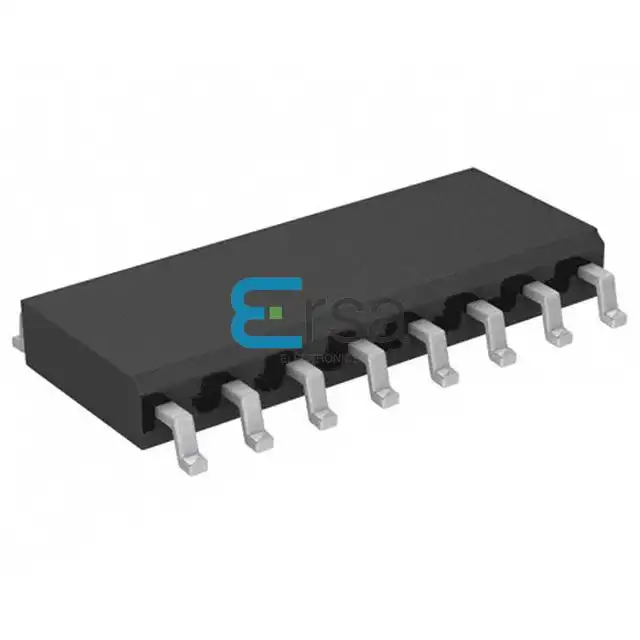
The EPCQ64SI16N is a high-performance configuration memory device, designed for use in a variety of embedded systems and field-programmable gate array (FPGA) applications. This model is part of the EPCQ series by Intel (formerly Altera), known for offering reliable non-volatile storage for configuration data in FPGA-based designs. The EPCQ64SI16N features a 64Mb storage capacity and utilizes a Serial Peripheral Interface (SPI) for fast, efficient communication with the FPGA.
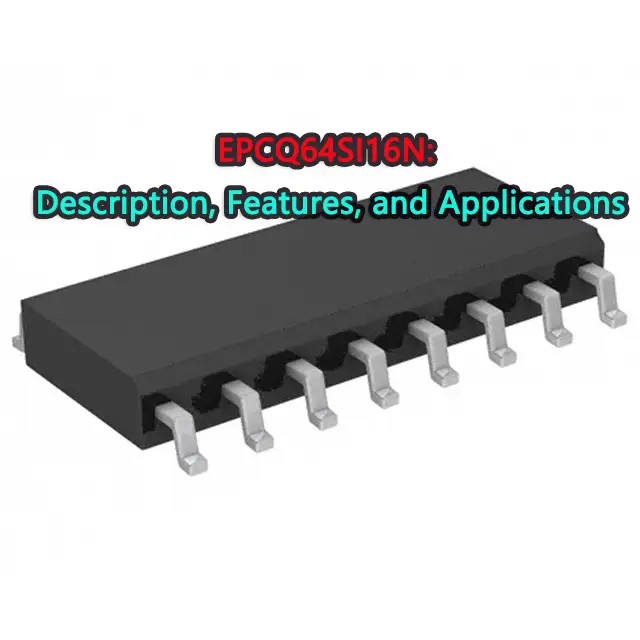
The EPCQ64SI16N is designed to meet the growing demand for high-density memory in compact, cost-effective configurations. It’s capable of providing seamless storage for large amounts of configuration data while ensuring quick, consistent read speeds. Ideal for applications in communications, automotive, industrial, and consumer electronics, the EPCQ64SI16N combines efficiency, performance, and ease of integration.
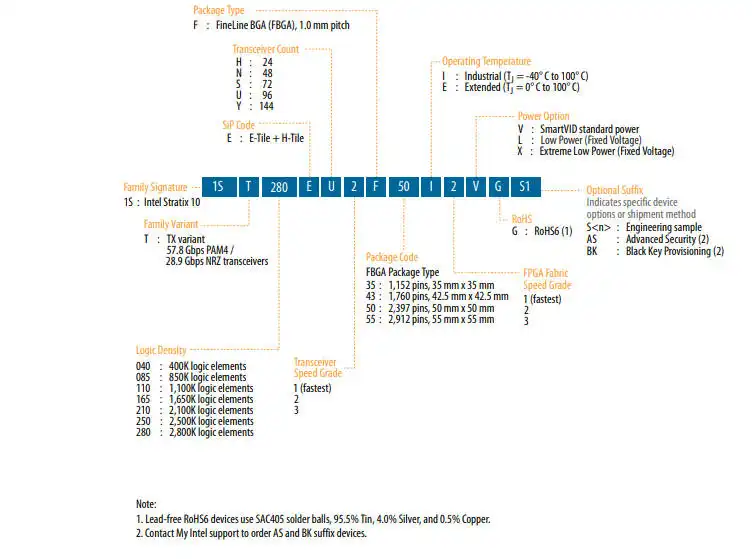
EPCQ64SI16N Naming Rules
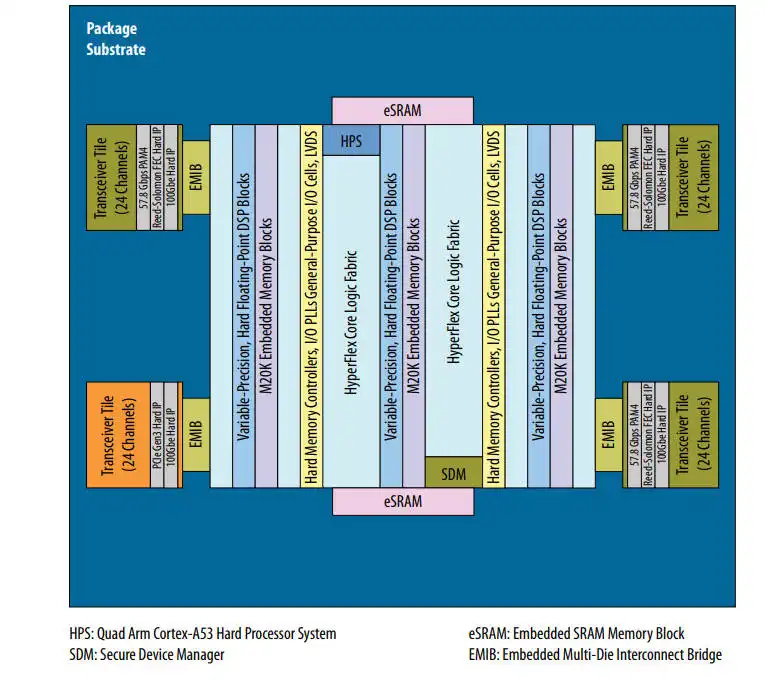
EPCQ64SI16N Block Diagram
Key Features of EPCQ64SI16N
The EPCQ64SI16N is a quad-serial configuration NOR flash memory device designed for in-system programmability. Here are its key features:
Memory Capacity: The EPCQ64SI16N has a storage capacity of 64 megabits (8 megabytes).
Interface: It utilizes a quad-SPI (Serial Peripheral Interface), allowing for high-speed data transfer.
Operating Voltage: The device operates within a voltage range of 2.7V to 3.6V, suitable for various applications.
Data Retention: It offers a data retention period of up to 20 years at 85°C.
Endurance: The device supports up to 100,000 program/erase cycles, ensuring durability for repeated use.
Programming Methods: Supports multiple programming methods, including:
- Standard Write
- Fast Read
- Extended Dual Input Fast Read
- Extended Quad Input Fast Read
Block Protection: Features block protection bits that can be configured to prevent accidental erasure or programming of specific memory blocks.
Erase Operations: Includes various erase operations such as:
- Bulk Erase
- Sector Erase
- Subsector Erase
Device Identification: Capable of reading device identification information, which is useful for system integration and debugging.
EPCQ64SI16N Specifications
The EPCQ64SI16N is a quad-serial configuration NOR flash memory device produced by Intel, designed for in-system programmability. Below are its detailed specifications:
| Specification | Value |
| Memory Type | Flash |
| Memory Size | 64 Mbit (8 MB) |
| Operating Frequency | 50 MHz |
| Supply Voltage (Min) | 2.7 V |
| Supply Voltage (Max) | 3.6 V |
| Supply Current | 100 µA |
| Operating Temperature Range | -40°C to +85°C |
| Mounting Style | SMD/SMT |
| Package / Case | SOIC-16 |
| Programmable Type | In-System Programmable |
| Block Protection | Yes, configurable |
| Erase Operations | Bulk, Sector, Subsector |
| Endurance | 100,000 program/erase cycles |
| Data Retention | Up to 20 years at 85°C |
Advantages of Using EPCQ64SI16N
The EPCQ64SI16N offers several advantages that make it a preferred choice for various applications, particularly in systems utilizing FPGAs and other programmable logic devices. Here are the key benefits:
High-Density Storage: With a capacity of 64 Mbits (8 MB), the EPCQ64SI16N provides ample storage for complex FPGA configurations, making it suitable for demanding applications in industrial, automotive, and telecommunications sectors.
Fast Data Transfer: The device supports a quad-SPI interface, enabling high-speed data transfer rates up to 50 MHz. This feature enhances the performance of applications requiring rapid access to configuration data.
Low Power Consumption: The EPCQ64SI16N is designed for low-power operation, which is essential for battery-powered devices and applications where energy efficiency is critical. This attribute contributes to extended battery life in portable devices.
Ease of Integration: The flexible interface and compact design simplify system integration, allowing developers to easily incorporate the EPCQ64SI16N into their designs without extensive modifications.
Robust Performance: The device is built to withstand harsh operating conditions, with an extended temperature range of -40°C to +85°C, making it suitable for use in automotive and industrial environments.
Advanced Security Features: The EPCQ64SI16N includes security features that protect sensitive configuration data from unauthorized access, which is crucial for applications requiring secure firmware storage.
Versatile Applications: It is ideal for a wide range of applications including embedded systems, industrial automation, consumer electronics, and telecommunications. Its ability to store configuration data and firmware updates makes it a versatile choice for developers.
These advantages position the EPCQ64SI16N as a reliable and efficient solution for modern electronic designs that require high-performance non-volatile memory.
Applications of EPCQ64SI16N
The EPCQ64SI16N is utilized in various applications across multiple industries due to its high-density storage, fast data transfer capabilities, and reliability. Here are the primary applications of the EPCQ64SI16N:
FPGA Configuration: The EPCQ64SI16N is primarily used for configuring FPGAs (Field-Programmable Gate Arrays). Its ability to store configuration data allows for quick reprogramming and updates, making it essential in applications that require flexibility and adaptability.
Industrial Control Systems: In industrial environments, the device is employed in Programmable Logic Controllers (PLCs) and automation systems. It stores critical firmware and control algorithms that ensure reliable operation of machinery and processes.
Automotive Electronics: The automotive industry uses the EPCQ64SI16N for storing firmware in electronic control units (ECUs). Its robustness in harsh conditions makes it ideal for applications such as engine management systems, infotainment systems, and advanced driver-assistance systems (ADAS).
Telecommunications: The device is also used in telecommunications equipment, such as routers and base stations, where it stores firmware and software necessary for network operations. Its reliability ensures consistent performance over long periods.
Consumer Electronics: In consumer devices like smartphones, digital cameras, and smart home products, the EPCQ64SI16N serves as a storage medium for firmware. Its fast read speeds enable quick boot times and efficient operation of these devices.
Internet of Things (IoT): The device supports various IoT applications by storing firmware that enables connectivity and functionality in smart devices, including security cameras, smart thermostats, and wearable technology.
Medical Equipment: In the medical field, the EPCQ64SI16N is utilized in diagnostic machines and wearable health monitors. It stores critical operating code and patient data, ensuring reliability and data integrity in life-critical applications.
These diverse applications highlight the versatility of the EPCQ64SI16N as a reliable memory solution across multiple sectors, emphasizing its importance in modern electronic systems.
EPCQ64SI16N Equivalents
The EPCQ64SI16N is similar to other models in the EPCQ series, such as the EPCQ128SI16N and EPCQ32SI16N. While these equivalents offer similar SPI interfaces and voltage ranges, they differ in memory sizes. The EPCQ128SI16N provides double the storage, while the EPCQ32SI16N offers a smaller memory footprint. All of these options provide the same high-speed performance and security features, allowing designers to select the appropriate model based on their specific storage needs:
| Model | Memory Size | Interface | Voltage Range | Package |
| EPCQ64SI16N | 64Mb | SPI | 2.7V to 3.6V | SOIC, QFN |
| EPCQ128SI16N | 128Mb | SPI | 2.7V to 3.6V | SOIC, QFN |
| EPCQ32SI16N | 32Mb | SPI | 2.7V to 3.6V | SOIC, QFN |
| EPCS64SI16N | 64Mb | SPI | 2.7V to 3.6V | SOIC, QFN |
MRAM Compared to the EPCQ64SI16N in terms of Performance and Cost
When comparing MRAM (Magnetoresistive Random Access Memory) to the EPCQ64SI16N in terms of performance and cost, several critical differences emerge:
Performance Comparison
Speed: MRAM significantly outperforms the EPCQ64SI16N in terms of access speed. For instance, Everspin's MRAM can achieve read and write speeds up to 400 MB/s in optimal configurations, while the EPCQ64SI16N operates at a maximum frequency of 50 MHz, translating to lower data transfer rates. MRAM's average write throughput is reported to be 500 times higher than that of NOR flash, which includes devices like the EPCQ64SI16N.
Latency: MRAM offers low and consistent write latencies since it does not require block erasing, unlike flash memory technologies. The EPCQ64SI16N experiences longer write latencies due to the need for erasing blocks before writing new data. This makes MRAM more suitable for applications requiring frequent updates or writes.
Endurance: MRAM boasts a much higher endurance level, with write cycles reaching up to 1014 compared to the EPCQ64SI16N's 100,000 program/erase cycles. This makes MRAM a better option for applications that involve constant writing and erasing.
Energy Consumption: MRAM consumes significantly less energy during write operations compared to flash memory. For example, Everspin's MRAM can have a write energy consumption that is approximately 10 times lower than NAND flash and about 200 times lower than NOR flash.
Cost Comparison
Cost per Bit: Generally, MRAM is considered more expensive per bit compared to traditional flash memory like the EPCQ64SI16N. While specific cost figures can vary based on market conditions and production volumes, MRAM's advanced technology and manufacturing processes contribute to its higher price point.
Total Cost of Ownership: Despite its higher initial cost, MRAM may offer a better total cost of ownership in certain applications due to its lower energy consumption, higher endurance, and reduced need for additional components (such as batteries or supercapacitors for power loss protection). These factors can lead to savings in system design and operational costs over time.
In summary, while MRAM provides superior performance characteristics—such as speed, latency, endurance, and energy efficiency—its higher cost may limit its adoption in some price-sensitive applications compared to the more established EPCQ64SI16N. However, for applications where performance and longevity are critical, MRAM presents a compelling alternative.
Working Principle of EPCQ64SI16N
The EPCQ64SI16N is a high-density serial configuration device designed for configuring and storing data for FPGAs (Field-Programmable Gate Arrays) and other programmable devices. Its working principle involves several key processes that leverage its flash memory architecture and quad-SPI interface.
Memory Structure
The EPCQ64SI16N utilizes a NOR flash memory structure, which allows for random access to memory locations. This architecture is particularly beneficial for applications requiring quick read access to configuration data.
Quad-SPI Interface
The device employs a Quad Serial Peripheral Interface (Quad-SPI), which enhances data transfer rates by using four data lines instead of one. This enables higher bandwidth and faster communication between the memory device and the host system. The Quad-SPI protocol allows for simultaneous data transmission, effectively increasing the speed of read operations compared to standard SPI.
Data Operations
- Read Operations: The EPCQ64SI16N supports various read commands, including standard read, fast read, and extended quad input fast read operations. These commands allow the device to quickly retrieve configuration data stored in memory.
- Write Operations: The device allows for programming through multiple write commands, including standard write and extended write operations. However, before new data can be written, existing data must be erased, typically at the block or sector level.
- Erase Operations: The EPCQ64SI16N supports bulk erase, sector erase, and subsector erase commands. These operations clear specified areas of memory to prepare them for new data, which is a crucial step in managing the flash memory lifecycle.
In-System Programmability
One of the standout features of the EPCQ64SI16N is its ability to be programmed in-system, meaning it can be configured while integrated into a circuit board. This capability allows for easy updates and reconfigurations of FPGA designs without needing to remove the device from its application environment.
Block Protection
The device includes block protection features that prevent accidental erasure or programming of critical memory sections. This is particularly important in applications where firmware integrity is essential.
Applications
Due to these capabilities, the EPCQ64SI16N is widely used in various sectors, including industrial control systems, automotive electronics, telecommunications, and consumer electronics. Its ability to provide fast, reliable storage for configuration data makes it an ideal choice for modern electronic designs.
In summary, the working principle of the EPCQ64SI16N revolves around its advanced flash memory architecture, efficient quad-SPI interface for high-speed data transfer, and robust programmability features that cater to the dynamic needs of FPGA configurations and other programmable devices.
EPCQ64SI16N Datasheet
Conclusion of EPCQ64SI16N
The EPCQ64SI16N is a versatile and high-performance memory solution, perfect for FPGA-based systems that require fast configuration, low power consumption, and robust security. With its ample storage capacity, ease of integration, and wide range of applications, the EPCQ64SI16N is an ideal choice for a variety of industries, including communications, automotive, and industrial automation. Whether you're working on complex designs or need reliable memory for consumer electronics, the EPCQ64SI16N offers the performance and security you need.

Related Articles
- ·Qualcomm PM8550 vs. PM8550B vs. PM8550VS: Features, Differences, Applications, and Selection Guide
- ·Qualcomm PM8350 vs. PM8350C: Architecture, Features, Applications, and Selection Guide
- ·Qualcomm PM8150 vs. PM8150B vs. PM8150L: Functions, Architecture, Applications, and Selection Guide
- ·SGM41541 vs. SGM6605: Battery Charger and Synchronous Boost Converter Comparison
- ·ADI LTM4630A vs. LT8645S: Power Module and Silent Switcher Regulator Comparison
- ·Richtek RT8206A vs. RT9013: Architecture, Specifications, Applications, and Design Considerations
- ·MPS MP2657, MPQ6610GJ-AEC1-Z, and MP2856: Identification, Functions, and Application Comparison
- ·TPS6594-Q1 vs. TPS65219-Q1 vs. TPS653860-Q1 vs. LP87745-Q1: TI Automotive PMIC Comparison
- ·Electronic Components Monthly Market Report
- ·MediaTek MT6369, MT6360, MT6365, and MT6375: Functions, Architecture, and Selection Guide
 FAQ