
 German
 Japanese
 Portuguese
 Korea
Korea
 Mexico
 Dutch
Dutch


Parking Sensors Explained: How Parking Sensors See the Invisible and Save Your Bumpers

.png?x-oss-process=image/auto-orient,1/quality,q_70/format,webp)
Part 1 — What Are Parking Sensors and Why Parking Sensors Matter More Than Ever
At the most basic level, parking sensors are proximity detection systems designed to measure the distance between a vehicle and nearby obstacles during low-speed maneuvers.
But in modern cars, parking sensors are no longer “basic.”
Why parking sensors are everywhere now
- Larger vehicles, tighter cities
- Higher repair costs for minor collisions
- Driver expectation for convenience and safety
- Integration with reversing cameras and infotainment systems
In Europe and North America, parking sensors have become almost as expected as airbags. They’re not flashy, but they are used every single day.
From an electronics standpoint, parking sensors are fascinating because they sit at the intersection of:
- Sensing technology
- Analog signal processing
- Embedded control
- Automotive-grade reliability
Part 2 — How Parking Sensors Work (Without the Marketing Fluff)
Most automotive parking sensors rely on ultrasonic sensing.
The basic parking sensor principle
- A parking sensor emits an ultrasonic pulse (typically around 40 kHz)
- The sound wave hits an object
- The echo returns to the sensor
- The system calculates distance based on time-of-flight
Simple in theory. Brutal in practice.
Why? Because real-world parking environments include:
- Angled surfaces
- Soft obstacles (plants, clothing)
- Rain, snow, mud
- Electrical noise from the vehicle itself
This is where electronics design quality determines whether parking sensors feel “premium” or painfully annoying.
.png?x-oss-process=image/auto-orient,1/quality,q_70/format,webp)
Part 3 — Types of Parking Sensors: Not All Parking Sensors Are Equal
1. Ultrasonic Parking Sensors (Most Common)
These are the classic round sensors embedded in bumpers.
Key traits:
- Short to medium range (20 cm – 2.5 m)
- Cost-effective
- Works in darkness
- Sensitive to environmental conditions
Most parking sensors you interact with daily fall into this category.
2. Electromagnetic Parking Sensors
These use electromagnetic fields rather than sound.
Pros:
- No visible holes in bumper
- Continuous detection zone
Cons:
- Less precise distance resolution
- More sensitive to metal structures
Electromagnetic parking sensors are niche but interesting from a signal-processing standpoint.
3. Camera + Parking Sensors Fusion
Modern vehicles often combine parking sensors with cameras.
Here, parking sensors provide distance accuracy, while cameras provide context.
This fusion approach feels very “modern sci-fi,” like something straight out of Minority Report—except it actually works in a rainy supermarket parking lot.
Part 4 — Inside a Parking Sensor System: The Electronics That Make It Work
Now we get to the good stuff.
A typical parking sensor system includes:
Ultrasonic Transducer
- Resonant around 40 kHz
- Converts electrical signals ↔ sound waves
- Often epoxy-sealed for automotive durability
Analog Front-End (AFE)
This is where parking sensors live or die.
The AFE handles:
- Echo amplification
- Band-pass filtering
- Noise rejection
Popular AFE IC architectures often resemble:
- Dedicated ultrasonic receiver ICs
- Op-amp chains with comparators
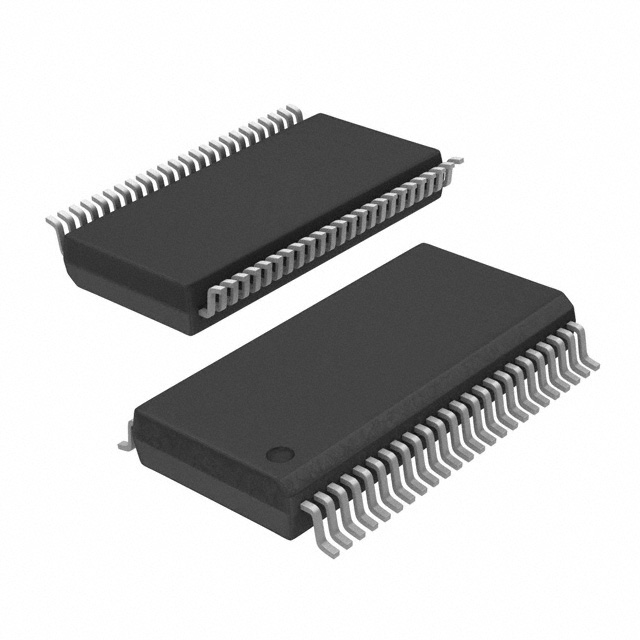
Commonly used IC model families (examples, no brands):
- 40 kHz ultrasonic receiver ICs
- Low-noise rail-to-rail op-amps
- Fast comparators with hysteresis
Microcontroller (MCU)
The MCU is the brain of the parking sensors.
Typical MCU tasks:
- Trigger pulse generation
- Echo timing measurement
- Temperature compensation
- CAN / LIN communication
Popular MCU classes used in parking sensors:
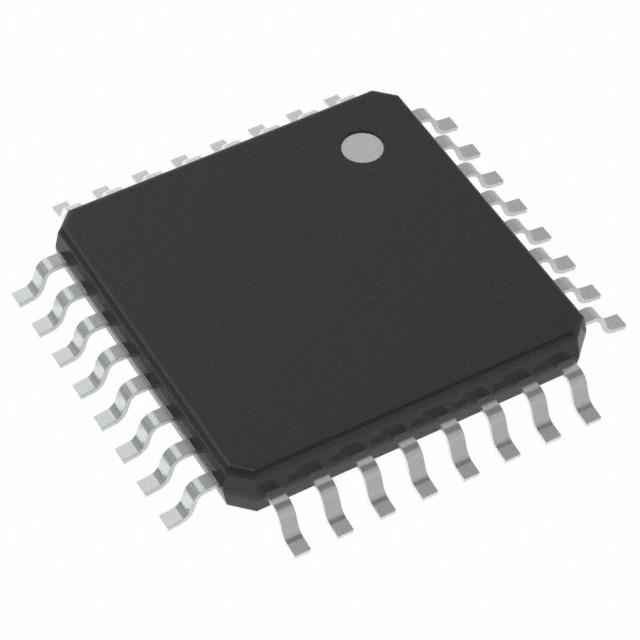
- Automotive-grade ARM Cortex-M0/M3
- Low-power 8-bit automotive MCUs
- Integrated LIN-enabled controllers
Power Management
Parking sensors must survive:
- Load dump
- Cold crank
- Reverse battery
Common supporting components:
- Automotive LDOs (5V → 3.3V)
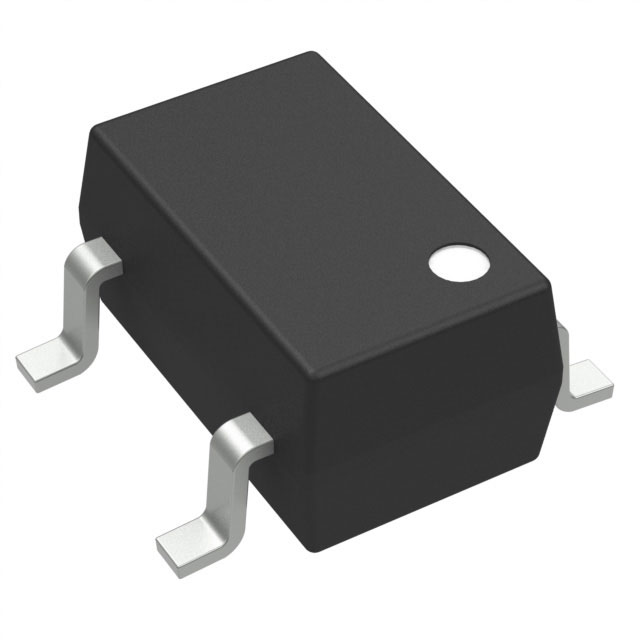
- TVS diodes
- Reverse polarity protection MOSFETs
Parking sensors are electrically paranoid by necessity.
.png?x-oss-process=image/auto-orient,1/quality,q_70/format,webp)
Part 5 — Signal Processing: Why Parking Sensors Don’t Panic at Every Leaf
Raw ultrasonic echoes are messy.
Good parking sensors rely on:
- Time-windowing
- Echo envelope detection
- Threshold adaptation
- False-echo suppression
This is where firmware meets analog design.
A poorly designed parking sensor system will:
- Beep constantly in rain
- Miss thin obstacles
- Give inconsistent distance warnings
A well-designed one feels calm, confident, almost… human.
Like a seasoned spy in Mission: Impossible—lots of chaos, but no visible panic.
Part 6 — Parking Sensors and Communication: LIN, CAN, and the Car’s Nervous System
Parking sensors rarely work alone.
Most systems use:
- LIN bus for sensor modules
- CAN bus to the central gateway
Why LIN is popular for parking sensors
- Low cost
- Deterministic timing
- Automotive-proven
A typical setup:
- Central parking ECU
- 4–8 parking sensor nodes
- LIN daisy-chain topology
From an electronics supply perspective, LIN transceivers and ESD protection components are just as critical as the sensor itself.
.png?x-oss-process=image/auto-orient,1/quality,q_70/format,webp)
Part 7 — Popular Electronic Components Used in Parking Sensors (Model-Level, No Brands)
You asked specifically for popular models without mentioning manufacturers. Here’s what commonly appears in real parking sensor designs:
Ultrasonic Section
- 40 kHz ultrasonic transducer modules
- Dedicated ultrasonic receiver ICs (40 kHz band)
Analog & Timing
- Low-noise op-amp models (automotive grade)
- Fast comparator ICs (µs-level response)
MCU & Logic
- Automotive ARM Cortex-M0/M3 MCUs
- LIN-enabled automotive MCUs
Power & Protection
- Automotive LDOs (5V/3.3V, low quiescent current)
- TVS diode models for ISO 7637 pulses
- Reverse polarity MOSFETs
These components form the electronic backbone of modern parking sensors.
Part 8 — Real-World Applications: Where Parking Sensors Prove Their Worth
Parking sensors shine in scenarios like:
- Parallel parking in dense cities
- Reversing SUVs with limited rear visibility
- Garage parking with tight tolerances
- Low-speed collision avoidance
And this is where parking sensors quietly outperform even advanced cameras—because distance is physics, not interpretation.
In storytelling terms, cameras are the flashy heroes.
Parking sensors are the reliable narrators who always know how close you really are.
.png?x-oss-process=image/auto-orient,1/quality,q_70/format,webp)
Part 9 — Common Failure Modes in Parking Sensors (From an Electronics View)
Parking sensors don’t fail randomly.
Typical issues include:
- Water ingress damaging transducers
- Connector corrosion
- ESD damage to AFEs
- Power rail instability
From a repair and diagnostics angle, parking sensors are excellent examples of environment-driven electronic failures.
Part 10 — Parking Sensors vs ADAS: Friends, Not Rivals
Parking sensors are not replaced by ADAS—they’re complementary.
ADAS handles:
- High-speed scenarios
- Object classification
Parking sensors handle:
- Near-field accuracy
- Low-speed precision
Together, they form a layered safety model that feels straight out of a hard sci-fi novel like Dune—complex systems, each with a specific role.
.png?x-oss-process=image/auto-orient,1/quality,q_70/format,webp)
Part 11 — Buying & Designing with Parking Sensors: What Engineers Actually Care About
When selecting parking sensors or designing systems around them, engineers focus on:
- Detection consistency
- Temperature stability
- EMI immunity
- Long-term reliability
This is why component quality matters just as much as algorithms.
Part 12 — Final Thoughts: Why Parking Sensors Are Small Systems with Big Impact
Parking sensors may not headline press releases, but they represent excellent automotive electronics design:
- Mixed-signal engineering
- Harsh-environment reliability
- Human-centered feedback
They turn invisible physics into intuitive human cues—and they do it millions of times per day without drama.
And honestly?
Any technology that saves bumpers, money, and dignity deserves respect.
.png?x-oss-process=image/auto-orient,1/quality,q_70/format,webp)
FAQ: Parking Sensors
What are parking sensors?
Parking sensors are proximity detection systems that help drivers measure the distance to nearby obstacles during low-speed maneuvers, typically using ultrasonic sensing.
How do parking sensors work?
Most parking sensors emit an ultrasonic pulse and measure the echo return time (time-of-flight) to estimate distance. The system then converts distance into warnings such as beeps or visual indicators.
Are all parking sensors ultrasonic?
No. While ultrasonic parking sensors are the most common, electromagnetic parking sensors also exist, and many modern cars fuse parking sensors with camera-based assistance.
Why do parking sensors beep incorrectly in rain or snow?
Rain, snow, mud, angled surfaces, and soft materials can distort echoes. Strong signal processing, filtering, and threshold adaptation help reduce false alerts, but environment still matters.
What electronics are typically inside parking sensors?
A typical parking sensor system includes an ultrasonic transducer, an analog front-end for amplification and filtering, a microcontroller for timing and communication, and power/protection components such as LDOs and TVS diodes.
How do parking sensors communicate with the vehicle?
Many parking sensor systems use LIN for sensor modules and CAN to interface with the vehicle’s central gateway or ECU.
What are common parking sensor failures?
Common failures include water ingress damaging transducers, connector corrosion, ESD damage to analog front-ends, and power rail instability.
Do parking sensors replace ADAS?
No. Parking sensors complement ADAS by delivering accurate near-field distance sensing at low speeds, while ADAS often focuses on higher-speed scenarios and object classification.

Related Articles
- ·Flex Fuel Sensor: How to Choose the Right One for ECU Integration
- ·How to Choose the Right Knock Sensor for Engine Control and Industrial Monitoring
- ·Capacitor Thin Film Temperature Sensor: Measuring Heat Like a Sci-Fi Minimalist
- ·Passive Infrared Sensor (PIR): The Engineer’s Playfully Serious Guide to Motion Detection
- ·Weight Sensor (Weight Sensor, Weight Sensor, Weight Sensor): The Playfully Serious Engineer’s 2026 Guide to Measuring Mass Like a Pro
- ·Inductive Proximity Sensors Explained: Why Inductive Proximity Sensors Power Industrial Automation
- ·Electrochemical Gas Sensor Explained: Why Electrochemical Gas Sensors Are the Quiet Heroes of Gas Detection
- ·Parking Sensors Explained: How Parking Sensors See the Invisible and Save Your Bumpers
- ·Color Sensors: The Not-So-Secret Agents of Modern Electronics
- ·Environmental Sensor — A Practical, Parts-Savvy, Pop-Culture-Sprinkled Guide
 FAQ
FAQ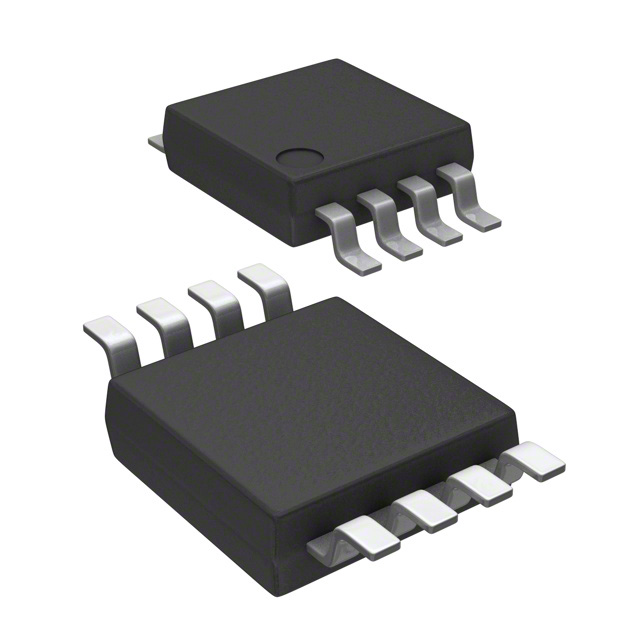







.png?x-oss-process=image/format,webp/resize,h_32)


